There is no relief here.
There is no sleep—at least not for outsiders, not for dusty wayfarers like us. No refuge. No relaxation. No peace. No rest. It is the wind.
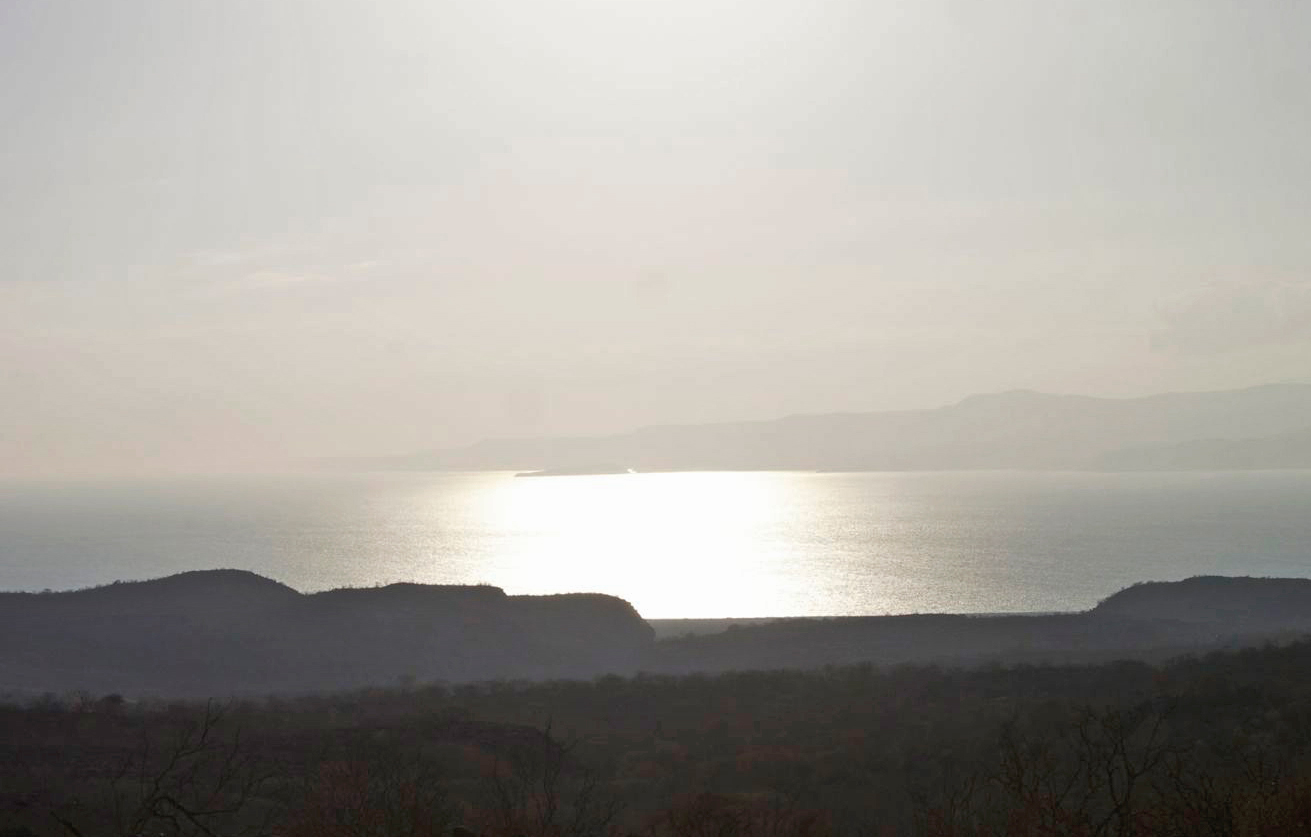
The heavy oceanic air gushes ceaselessly inland from the Red Sea—we can smell the salt!—sucked westward into the heart of the desert, into Africa, by the hot, dry bowl of Lac Assal, the lowest point on the continent. A trick of physics has turned this mountain pass into a perfect wind tunnel. It makes the lapels on my shirt whir like helicopter blades. And the tottering village of Leita—erected here of rusty scraps of corrugated metal, of odds and ends pried from an abandoned salt works—sounds as if it is rolling sideways across the land. Every tied-down, wired-together, rock-weighted shack rattles, bangs, squeaks, gongs, pings, taps, clangs, and scrapes. Constantly. A nerve-wracking rumpus. A 24-hour din.
No need for mothers and fathers to mask their intimate nights in Leita. Even in the tiniest hut packed with children, the incessant cymbals of wind and metal will drown the loudest cry of passion. The offspring of these noisy couplings must grow up half deaf. They must learn from birth to read lips. If the wind ever stopped in Leita, the 3,000 inhabitants of this poor, forgotten, cacophonous outpost—a village of windward-leaning, unemployed salt miners—will face a crisis. They will run about in amazed circles, wide-eyed, clapping the sides of their heads.
For the first time in their lives, they will hear their own voices clearly.
They will listen to the beating of their own hearts.
Silence will terrify them.