Yacob Delamo has been on my mind lately.
I met him at PK-12, an infamous truck stop outside Djibouti city, a vast place possessed of an ugliness so extreme, so spectacular, that it circles, slyly, back toward beauty. This was, of course, back in Africa—already a continent ago.
More than 3,000 Ethiopian rigs sit idling at PK-12, a raw scar scraped from the desert. They await cargo offloaded from ships. They rumble. They exhale black exhaust. They squeal and hiss. Coming and going incessantly, the trucks churn up a lunar dust so fine it glows pink in the sunset, like cotton candy.

Trucks from Ethiopia parked at the PK-12 lot in Djibouti city, waiting to clear customs.
John Stanmeyer-VII
Bored drivers, a hardened and often bitter lot, walk leglessly through this warm, rosy cloud like truckers who have died and gone to some internal combustion heaven. One of them was Yacob: small, energetic, bombastic, appealingly self-contradictory. (“I am a clean man. A good Christian. I do not visit prostitutes. No. No. No. All three of my AIDS tests have been negative.”)
He spoke of the dangers of African trucking. (The blacktop to Addis Ababa is lined with rotting big rigs, many rolled over, wheels-up.) “Everywhere a problem,” Yacob said. “Donkeys. Sheeps. People. Especially on market days. Drive slowly! Not Fast! If you go slowly, it is very good. You will live.”
He climbed into his cab to retrieve the newsletter of the Ethiopian Government Truck Drivers Association. It was printed in Amharic. One headline read, “Drive Slowly to Live.” Another: “Go Slowly, Work Slowly.” There seemed to be a theme, a concerted campaign, a civic mission, a re-educational effort, to pry Ethiopian truckers’ feet off the gas pedal.
What, I asked Yacob, was the name of this hectoring publication?
“Move Slowly!” he said, beaming the smile of a convert.
The Out of Eden Walk, of course, is an experiment in slowness.
For seven years, this foot journey in the wake of our ancestors will push the boundary of long-wave storytelling online. By slowing down to walking speed, I hope to rediscover the physical world as the first wandering humans had, one step at a time, exploring it through their skins. The walk’s journalism is a hybrid. It embraces the latest technology. (The laptop, the GPS, the satellite phone.) But its frame of reference hasn’t changed since the days of the wandering bard. This project intends to render current events as a form of pilgrimage, as the story of a quest, perhaps the oldest genre in history. The trail demands patience. And this is why, in the weeks and years ahead, the intervals between dispatches may stretch beyond days to one week, or two, or maybe even longer than that.
The inaugural writing on this site has been intentionally accelerated. My editors at National Geographic and I wished to lay down a trace of words, a set of cairns, signaling the way ahead. But the rigors of walking 10 or 20 miles a day along meandering mountain ranges and coasts, through the cycles of cities and seasons to come—all while preserving the quiet that incubates words—will occasionally require slowing down further. So I ask you pause with me along the path. Anticipation. Waiting. A tolerance for silences. In our frantic, interconnected world, these human traits are vanishing from the gene pool like red hair.
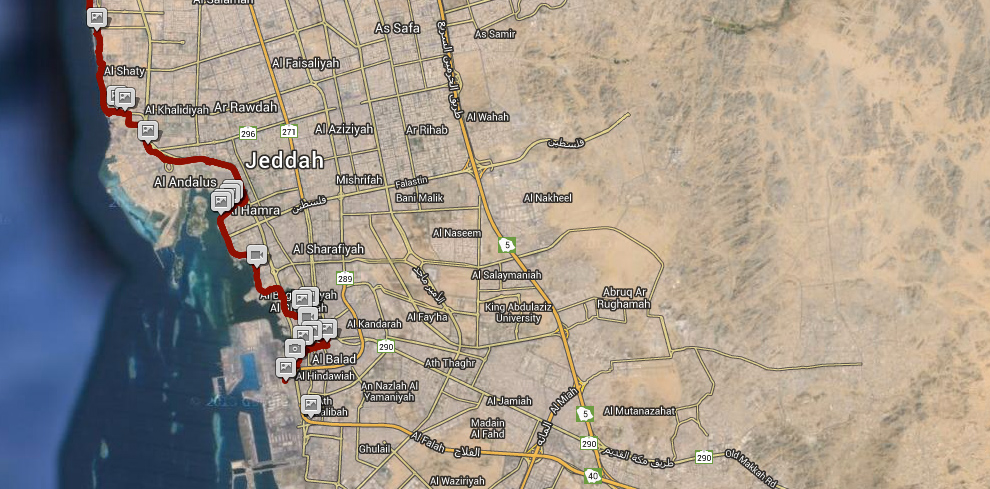
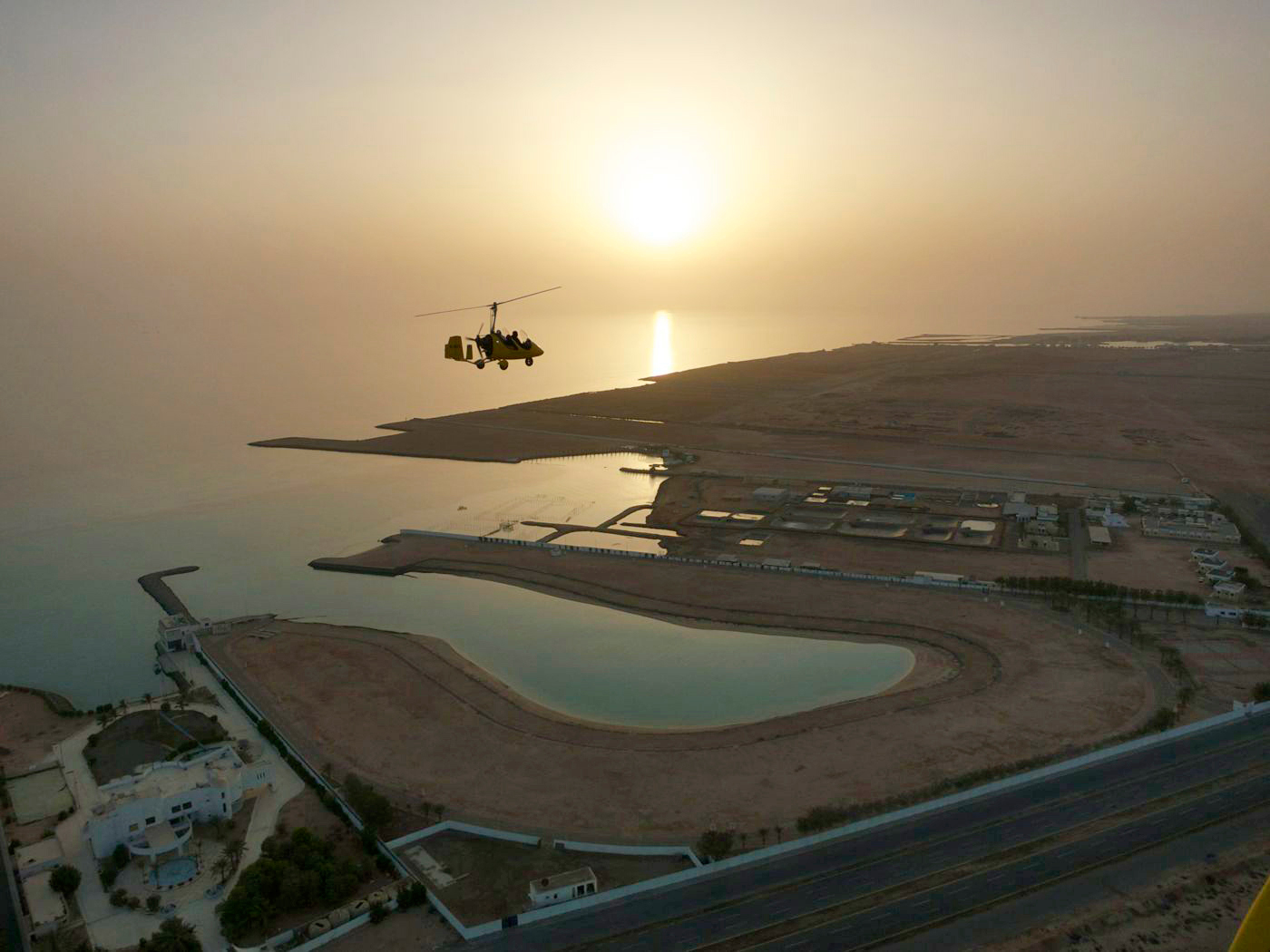
I am stepping now into Arabia. From a cargo ship in the Red Sea I glimpse its parchment coast. A haze of shimmering dust. Then cranes, derricks, immense towers, offices, the right angles of the modern world: the Port of Jeddah.
The Saudi officials forget themselves. They expose their humanity. They move momentarily from behind their desks—the defensive barricade erected by bureaucrats everywhere—to gape, to stare in surprise. Why? Has an American never before disembarked on these wharves, long the marine gateway to the land of the two holy mosques? Perhaps it is the rancid cowpuncher’s hat. Or the vessel that brought me—a rust-scabbed camel and sheep boatfrom Africa. I raise my sombrero. The officials wave back. But they seem startled to be noticed. They slip back behind their desks.
The sky is dazzling—matte white. I am strangely exhausted. Disoriented. Feeble as an astronaut crushed by the unfamiliar weight of gravity. I must drag my camel saddlebags across the concrete pier.
And then I understand.
For three days my boat has sailed 600 miles north from Djibouti: a snail’s pace in the age of jet travel. But it was still 10 times faster than walking. Night after night, day after day, unable to read or write, to concentrate, I prowled the deck for hours. I could not sit still. I could not sleep. There was something amiss with the world. The surface of the Earth—the sea: It slid by too quickly.
After walking 400 miles up the African Rift, I am glutted with unearned distances. I am overdosed with speed.