We are eating fresh yoghurt and sweet sesame paste atop an antique carpet. The carpet is in a house, and the house is made of coral block. It is about 130 years old. It has 106 rooms. A staircase as wide as a street, built of stone, scalloped with wear, spirals up into the house’s dim interior. Camels once climbed it. The kitchen was on the fourth floor. The camels carried the ingredients.
“Did you know that Eva was buried in Jeddah?”
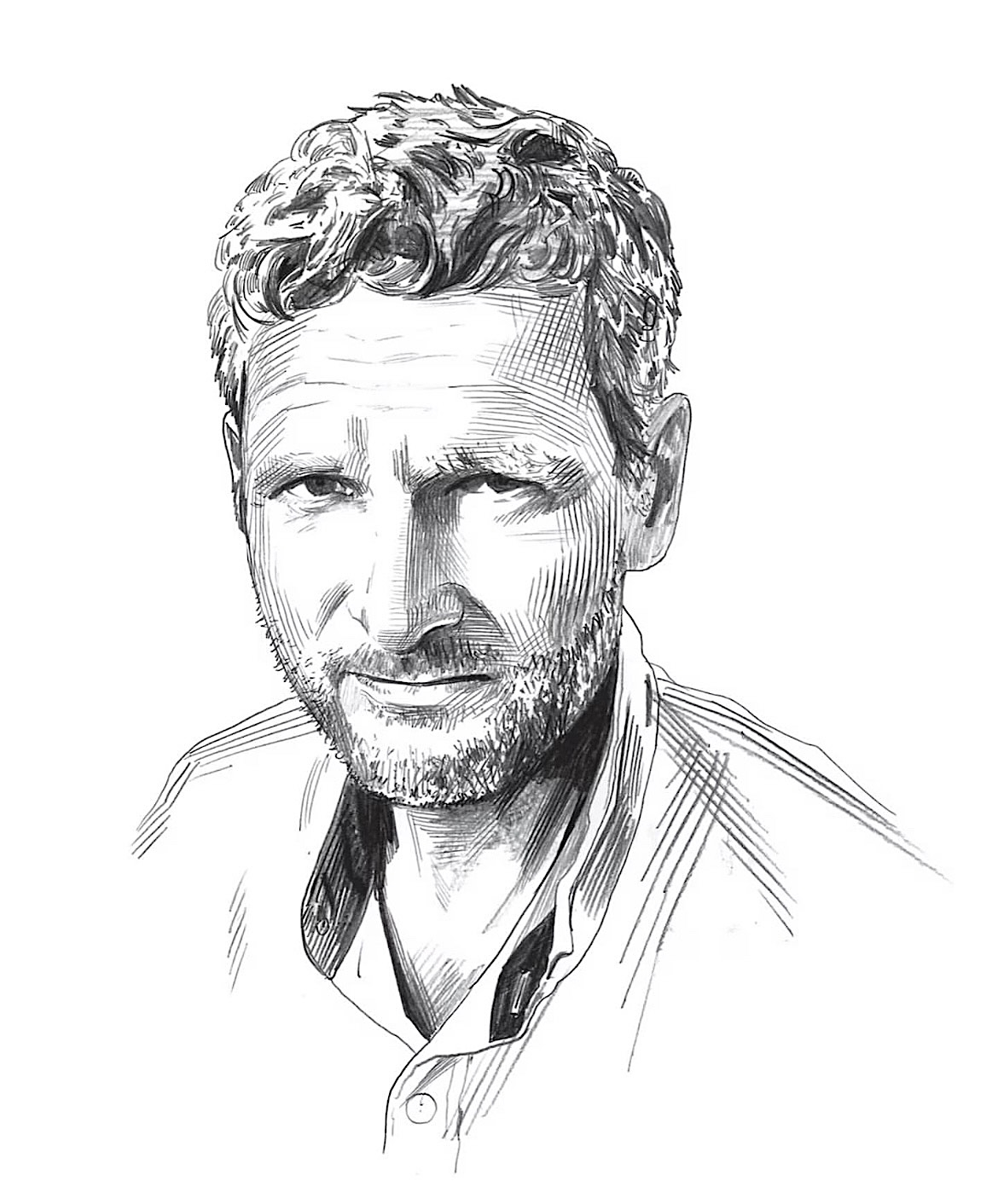
This is my host, Sami Nawar. Sami is the director of Al Balad, Jeddah’s famous historic district. He’s a compact, friendly, indefatigable man with a 1,001 plans, schemes, projects, ideas. “This is the only city on Earth with this claim,” Sami says. “Jeddah can be pronounced ‘jaddah.’ In Arabic this means grandmother. This is the city of humanity’s grandmother.”
I tell Sami I know. Earlier, I had gone looking for Eve’s grave.
According to the Koran, Eve alighted on a mountaintop near Jeddah after Allah exiled her from Paradise for eating the forbidden fruit. (Adam was exiled to another peak, nearer Mecca, where he spent 40 days and nights weeping in remorse.)
In 1853 the British explorer Sir Richard Francis Burton visited Eve’s purported tomb disguised as a Muslim pilgrim. The prickly Englishman measured the length of the sepulcher with his footsteps. It was laid out in the shape of a vast reclining body: a minor marvel of the medieval world dating back at least since the 10th century. “Our first parent measured a hundred and twenty paces from head to waist, and eighty from waist to heel,” Burton wrote, adding dismissively that, given such anatomy, “she must have presented the appearance of a duck.”
But at the modern “Tomb of Eve Cemetery” in Old Jeddah, I found no mausoleum, no shrine, only a sterile burial ground with simple concrete headstones. The Yemeni gravedigger was fed up with strangers asking for Eve’s grave. “Eve’s grave, Eve’s grave, Eves’ grave!” he said. He shook his head wearily. He doubted that such a tomb ever existed. He gave me a cold bottle of water in consolation.
Accounts differ as to the forgotten monument’s fate. A 1928 article in TIME magazine suggests that that Eve’s grave was demolished by religious authorities who feared it would lead Muslim faithful astray—into shirq, idolatry. Other sources report that the landmark vanished beneath urban development projects in the 1940s.

The shadow of a construction crane falls across a rebuilt gateway to Old Jeddah— the lifelong conservation project of Sami Nawar.
Paul Salopek
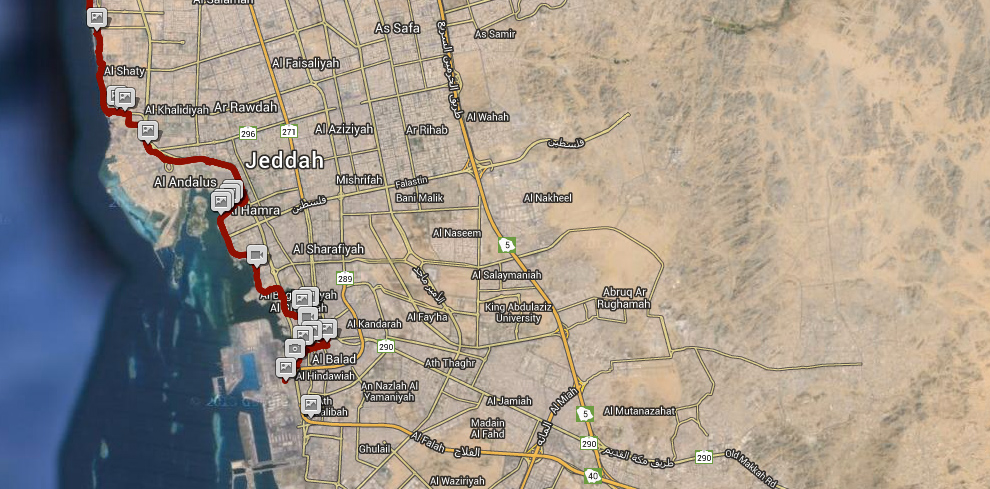
Sami Nawar holds up his hands. He doesn’t know. Nor does he care. He cannot worry about what is gone. He has spent too many years of his life cajoling, pleading, arguing—safeguarding what yet remains of Old Jeddah, a candidate UN World Heritage site. A remnant world of coral-block mosques. Of old merchants’ houses that lean akimbo over wriggling alleyways, casting watery blue shadows. Of souks that still teem with cart men hawking pyramids of golden dates from Qassim province, oranges from Egypt, bark from the incense trees of Yemen. Modern-day Saudi Arabia has lost so much of its memory beneath sleek highways, parking lots, subdivisions, hotels, malls. When I ask Sami how he’s accomplished this miracle—preserving a square kilometer of remembering—he just laughs.

Old Jeddah.
Paul Salopek
He tells me this story:
When he was a young boy—perhaps 12—he played soccer in the mazy lanes of his childhood home, Old Jeddah. He and his playmates often kicked the ball under the high windows of Maha, the pretty daughter of a rich Lebanese merchant. “I was small and ugly and poor,” says Sami. “I had nothing to impress her with.” Until, one day—that is—when he encountered a pamphleteer. His sole ware: How to Learn English in One Week. Here was Sami’s chance. Many Lebanese knew English. He pored through the booklet’s meager pages. He studied and practiced the strange letters. And with a charcoal stick, he scratched out a gigantic message on the street below the forbidding high windows:
M
A
H
A
“The only thing it did was make her father very angry,” Sami says laughing.
Yet this is no story of frustration—it is tale of endurance. A parable of how we rescue home, la querencia, the lost places we love. With empty tombs. With historic districts. With stories over tea. Eventually, Sami learned his English. He drove a taxi in Jeddah, hunting Western fares to practice the language. This led, many years later, to a civil engineering degree in Sacramento, California.
“Will you share this story of Maha?” Sami says anxiously. “My wife will complain.”
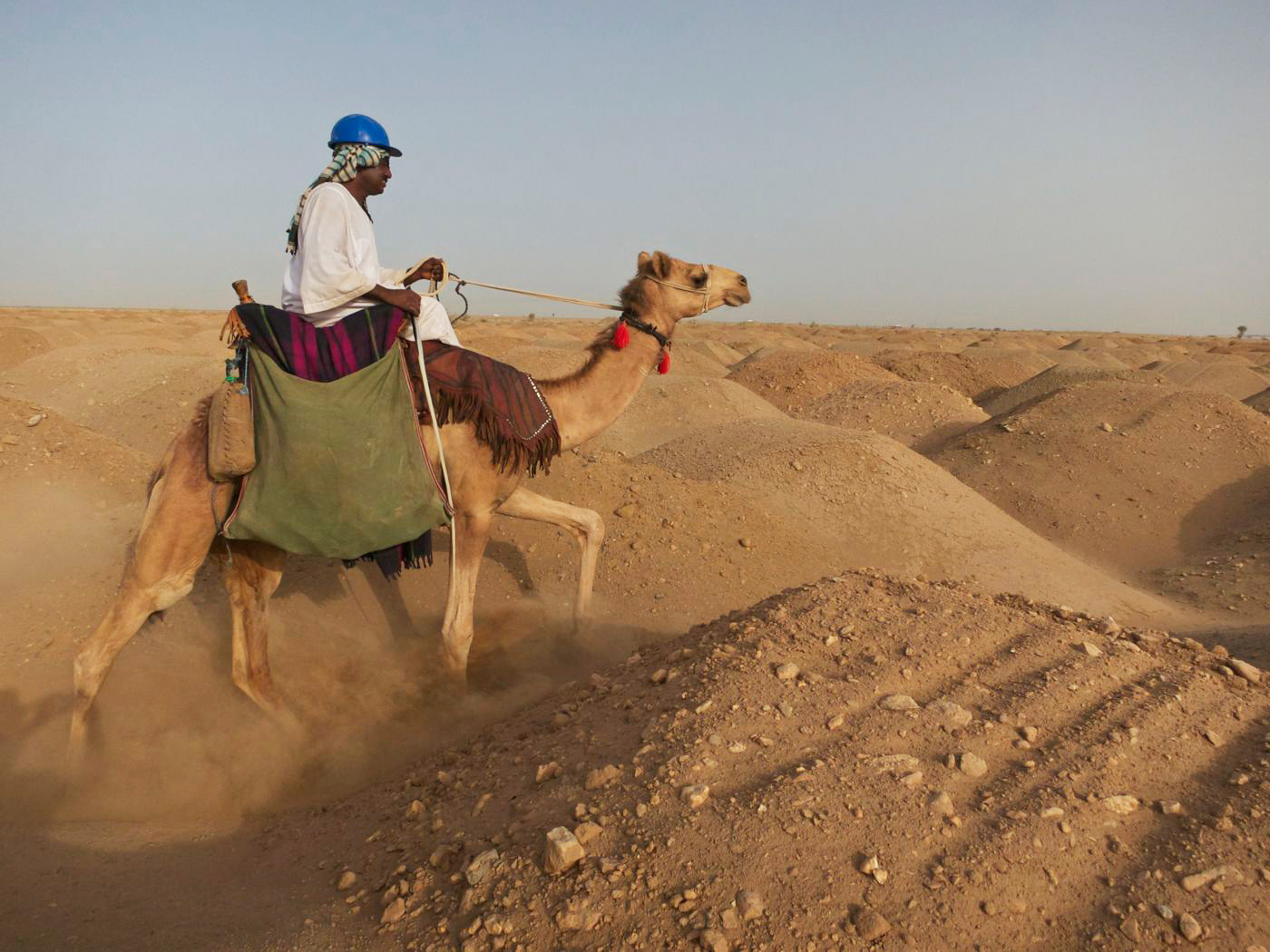
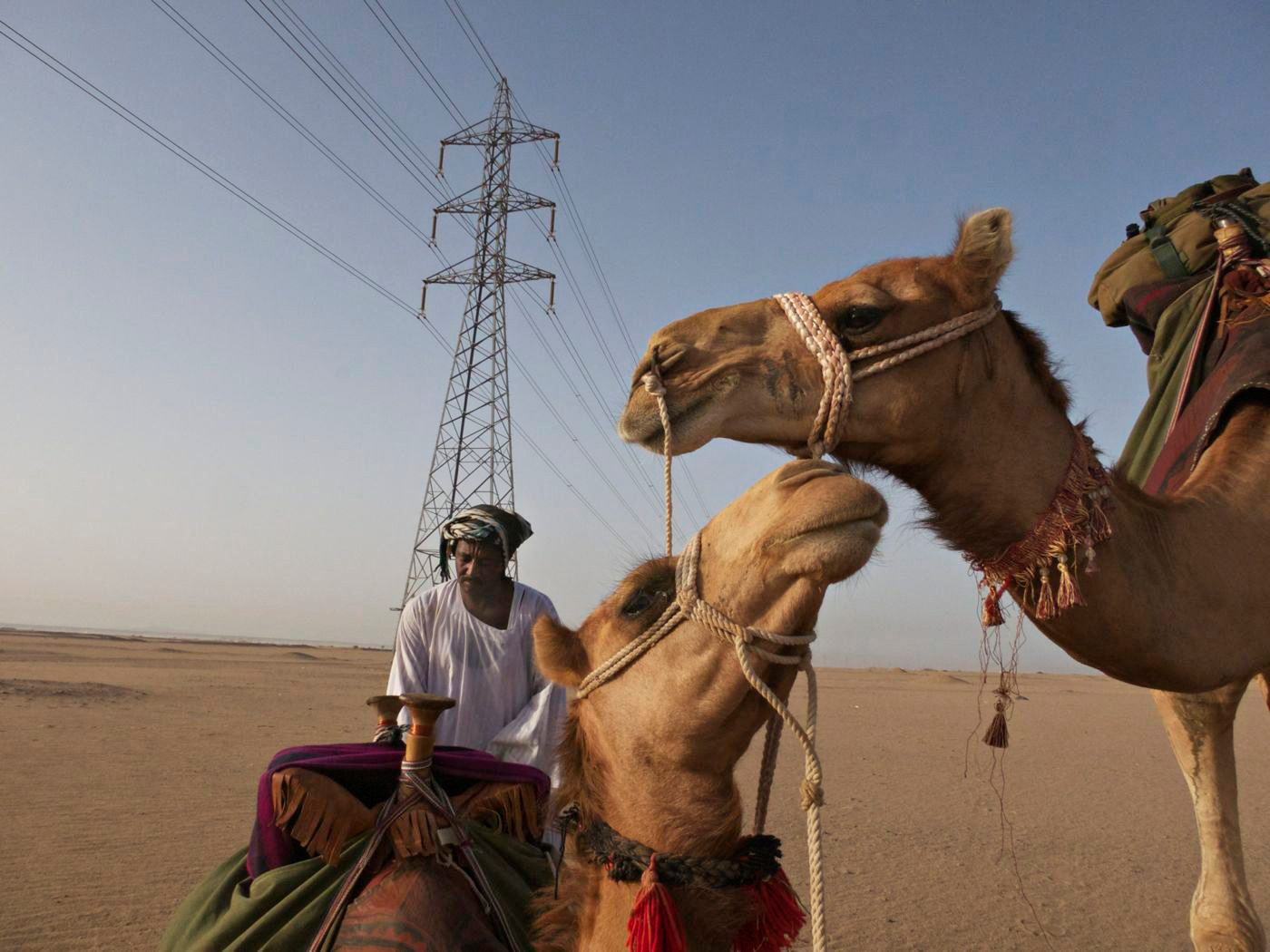
He is serving us a goodbye breakfast. We sit on a rug in the famed Nasseem House, a museum. I walk north today into the Levant: at least 700 miles along desert trails into the land of Nabataea.
“You were just a little boy,” I say. “It was a long time ago.”
“Time,” Sami reminds me, “is relative.” He smiles. It is a smile that says: We float in a river of time, yet time pools also within us. That each of us inhabits an Old Town. It is the smile of one who knows.
Video by Paul Salopek, Adam Jabari Jefferson