“How many camels are you looking for?”
I am sitting in the elegant café of the Four Seasons Hotel. I did not imagine that shopping for cargo camels in Saudi Arabia would involve a meeting at this exclusive oasis of sleek waiters, gleaming marble, beveled glass. In Africa, to acquire a camel, you must sweat: You squat in an Afar hut (or outside the hut’s door, if the cooking fire is too smoky) and tell a nomad who professes a deep spiritual love for his animals (“They are family! I will never sell them!”) that you have no interest in his livestock anyway; that they are bony, mere louse bags, and that you would not rub two birr together to buy one of his animals—thus opening the pathway for true negotiations.
But in Saudi Arabia I know nothing: I am unworldly, naïve, old-fashioned. A black lacquered table at the Four Seasons, with a china bowl of French truffles, is exactly the spot to begin a camel quest. Because my friends Fares Bugshan and Seema Khan, entrepreneurs and community leaders, are there. They have summoned me to talk about education. (I will be speaking to local schools.) When I mention, offhandedly, how difficult it is, in modern Saudi Arabia, the heartland of the famous Bedouin nomads, to find an ordinary work camel, Seema puts down her teacup. She pulls out a leather bound notepad. She clicks a pen. She asks: “How many camels are you looking for?”
“Well, two.”
“Is that all?”
“Males.”
“Two males.” She begins jotting. “Okay, anything else?”
“Five to seven years old would be good.”
“Five to seven. Yes.”
“And I’m afraid I can’t pay more than 2,500 riyals apiece.”
“Two thousand five hundred.” Seema nods. “Okay. Is that all? I know nothing of camels.”
“Well, preferably castrated.”
“Oh yes. Castrated. Of course.”
“Thank you, Seema.”
“You’re most welcome, Paul.”

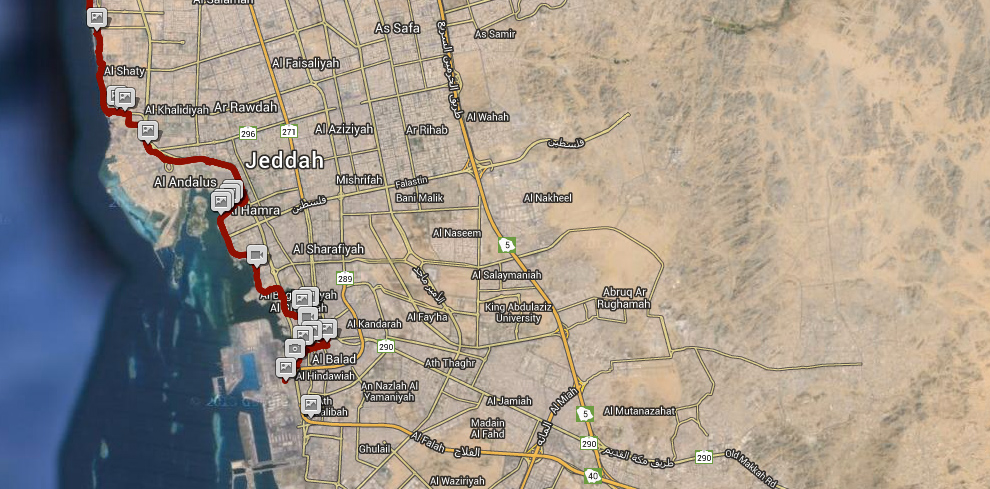
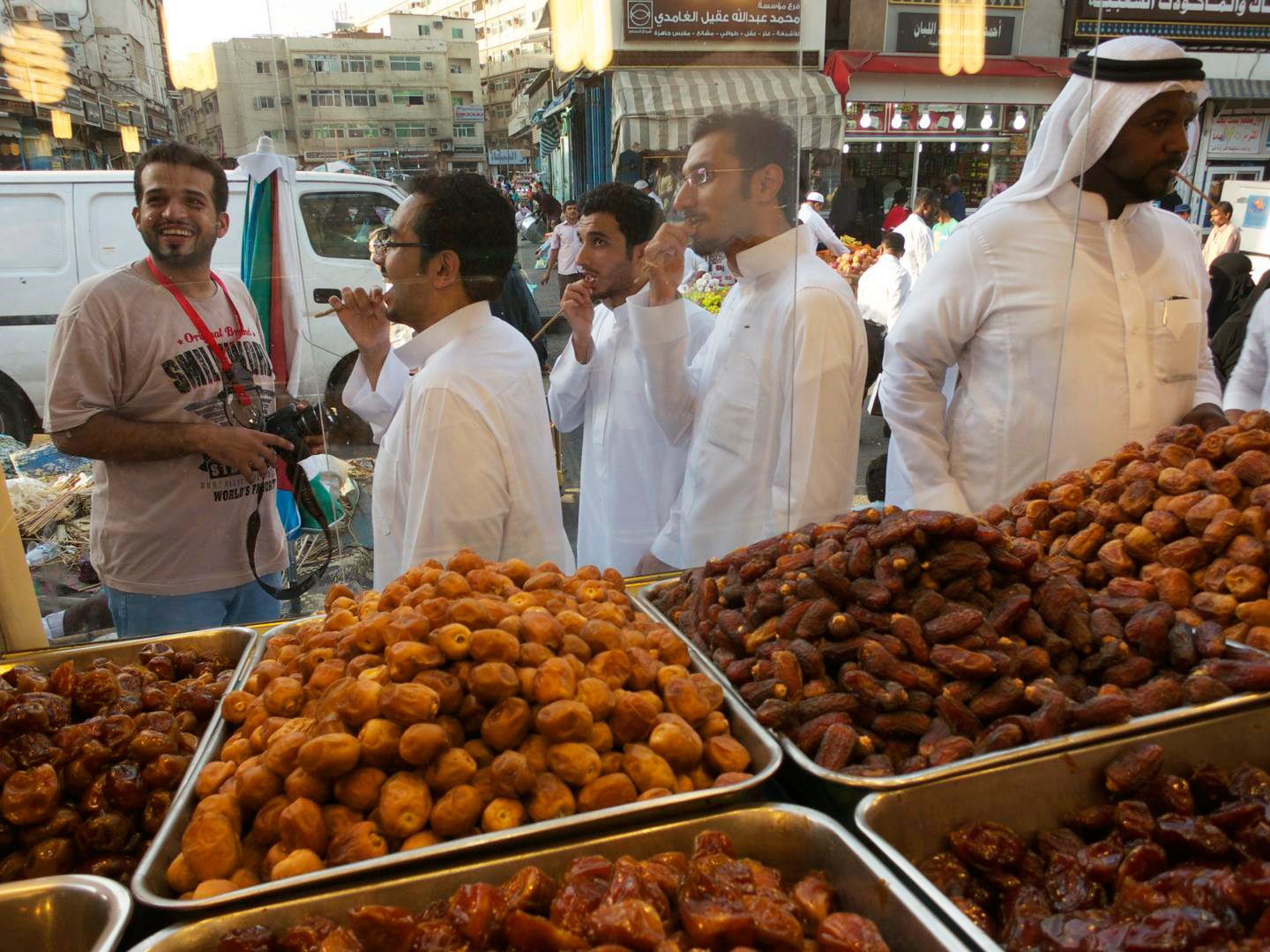
Slow sipping: tea and haggling over camels in Jeddah.
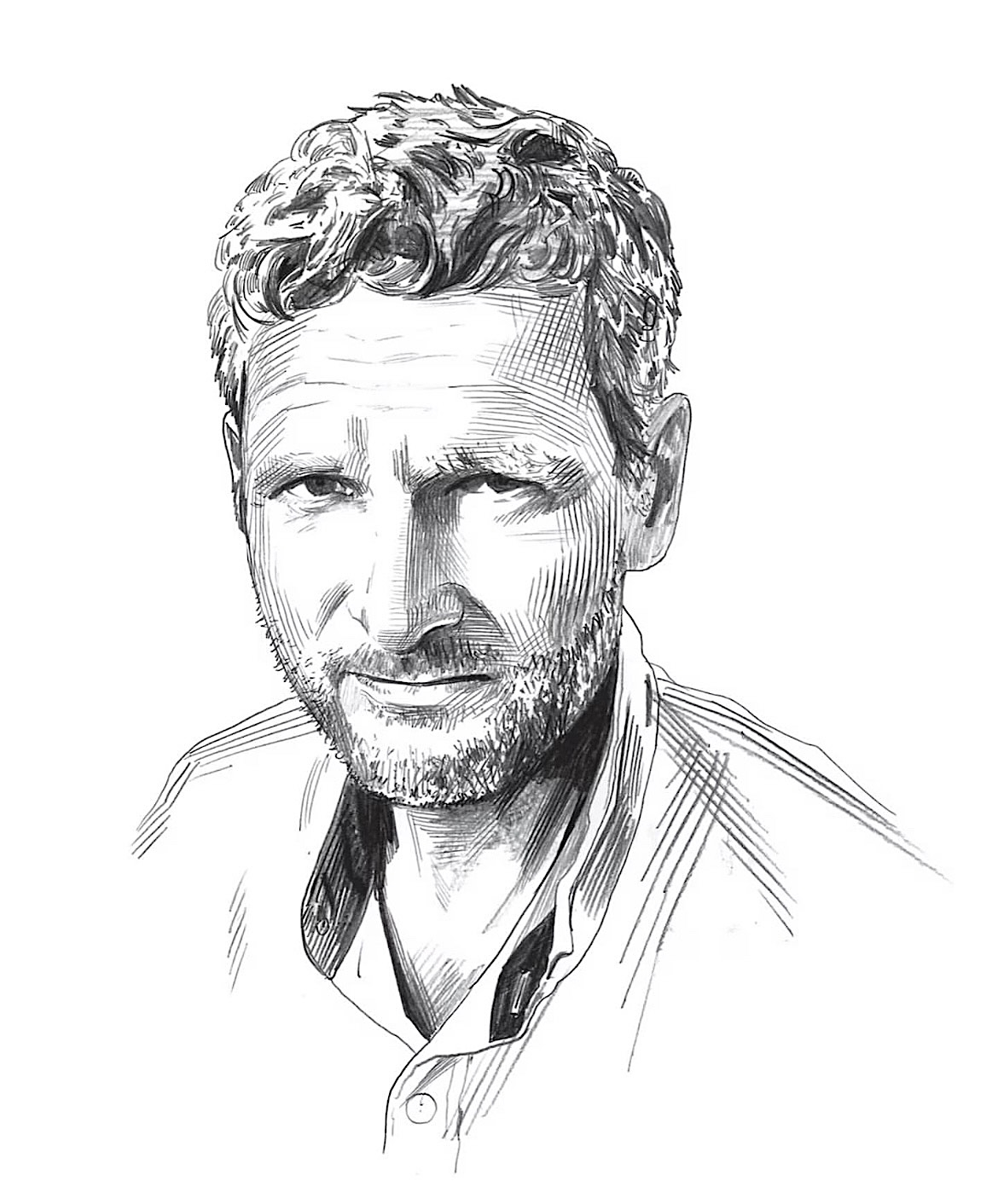
Paul Salopek
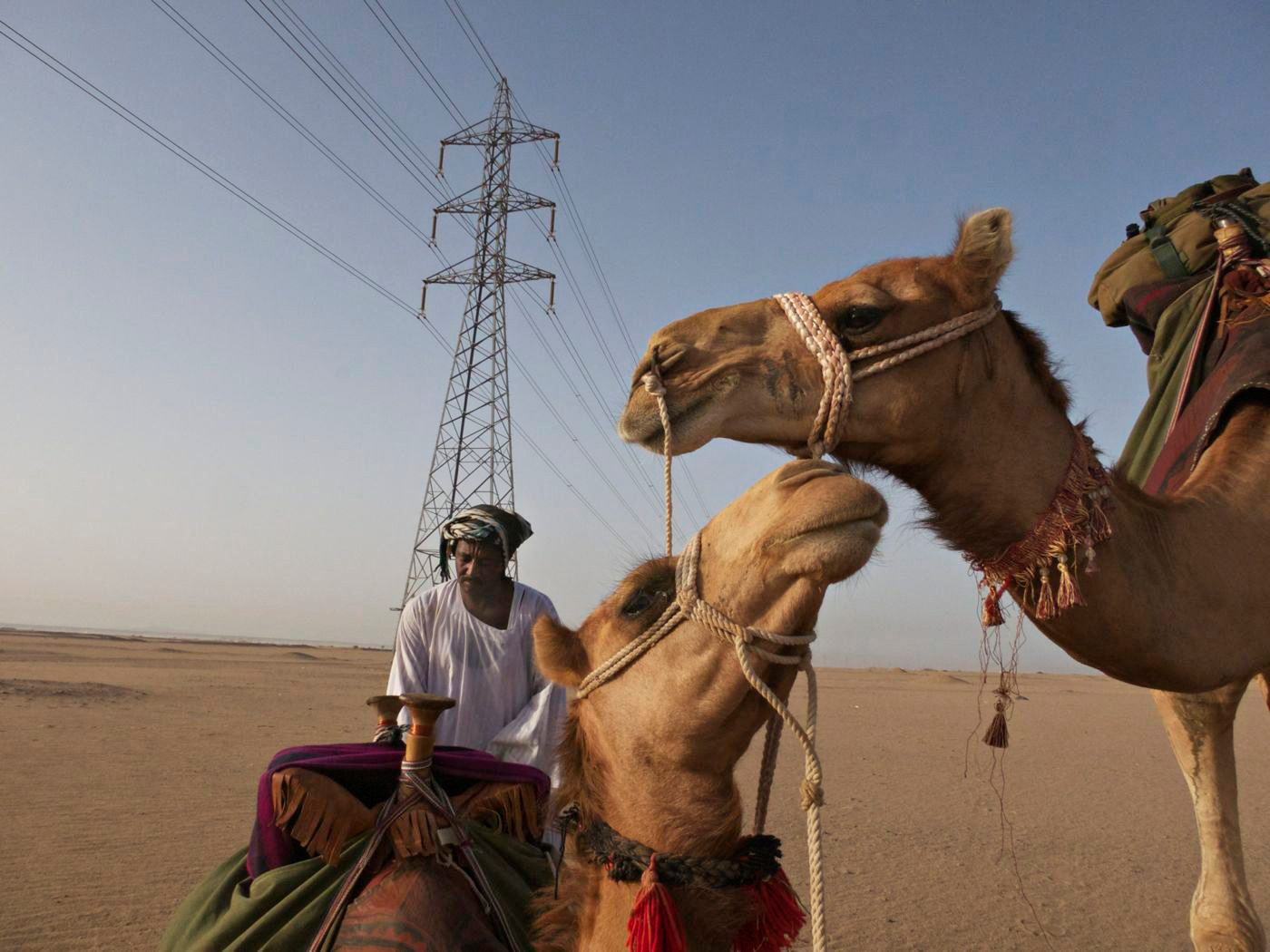
A few days later, I buy two male camels, five and seven years old, to walk with me out of Saudi Arabia. I find them at a cattle souk close to my starting line in the Arabian Peninsula, the coastal city of Jeddah. Or rather: Fares and Seema have found them for me. Dust. Dung. Wranglers hooting in rickety corrals. I am transported instantly back to Africa. I am back in my element. The sellers are bemused Sudanese. We haggle inside a canvas tent. It requires 14 glasses of tea to seal the deal. (My purchase has saved these two beasts, I suspect, from a fate worse than carrying my spare socks through the Nefud desert: Their fur is clotted with yellow paint applied by the meat graders at the port’s stockyard.) The next day, to celebrate my success, I ride a gyrocopter over Jeddah.
What is a gyrocopter? This is a natural question.
A gyrocopter is a cross between an airplane and a helicopter. I did not realize such machines still exist. (A snapshot from the basement of my memory: Amelia Earhart standing beside a gyrocopter.) There is a gyrocopter club in Jeddah. It flies the latest aircraft manufactured in Germany. It is managed by another Saudi friend, Colonel Doctor Mubarak Swilim Al Swilim. Mubarak is the Vice President of the Arab Air Sports Federation and the Parachuting Champion for Islamic Countries. He is one of two Saudis who have parachuted over the North Pole. (Wasn’t it very cold? I ask. No, no, he replies: He wore a special thermal suit that actually made him sweat.)

Amelia Earhart’s Beech-Nut Autogyro arrives in Denver, Colorado, June 3, 1931.
Harry M. Rhoads
“You must scout your route ahead,” Mubarak says. “Nobody has walked out of Saudi Arabia in a very long time.”
This is undeniably true. So I strap on gel-filled earphones. I ride a gyrocopter over Jeddah.
Saudi Arabia is a vast and complicated country. Ultramodern and very ancient. Traditional and experimental. Its archaeology is deep—back to the original Homo sapiens migrations out of Africa—and yet, in the clear desert air, its present and past are accordioned: They touch. Here you can walk centuries in a single day.
Along my planned route into the Middle East, small towns with old Islamic coral block architecture jostle multibillion-dollar instant cities designed to eventually house two million people. High-speed rail lines are laid near the antique Haj road traveled by kings and their entourages of 15,000 caparisoned camels. Top-end DNA sequencers hum away at a university along my path. In Old Town Jeddah, the ear picks up the beautiful call to prayer from 36 different mosques at sundown—another sort of humming altogether. And of course, there are the oil pipelines. I will cross several on my 900-mile foot journey in the Kingdom. They decant a quarter of the world’s petroleum supply onto thirstily waiting ships: a divine boon—or burden—depending on which Saudi you speak to, and on which day, and in what mood.

An instructor with the Jeddah gyrocopter club steers north for the open desert.
Paul Salopek
“You make us remember our past,” a friendly young pilot at the gyrocopter club tells me. He has learned of my caravan camels.
I smile. I thank him. He is too young by three generations, at least, to remember what he thinks he is remembering. Yet still (I want to tell him) we are connected by some things. Camels are North American mammals. They evolved 40 million years ago on the chilly plains of what is today Canada and the United States. Fossil records show they migrated westward in herds over the Bering Land Bridge to Eurasia, into Arabia, against the dawn tide of humans spreading east. The first ancestral people to enter the New World hunted them to extinction there about 10,000 years ago. These are the trailblazers whose footsteps I’m following.
“What are your two camels’ names?” the pilot asks.
My head is still spinning. It is the ocean of light I have just seen.
“Fares,” I tell him. “Fares and Seema.”

Fares (left), Seema (right).
Paul Salopek