People gathered at Yousef al Faidi’s butcher shop at night.
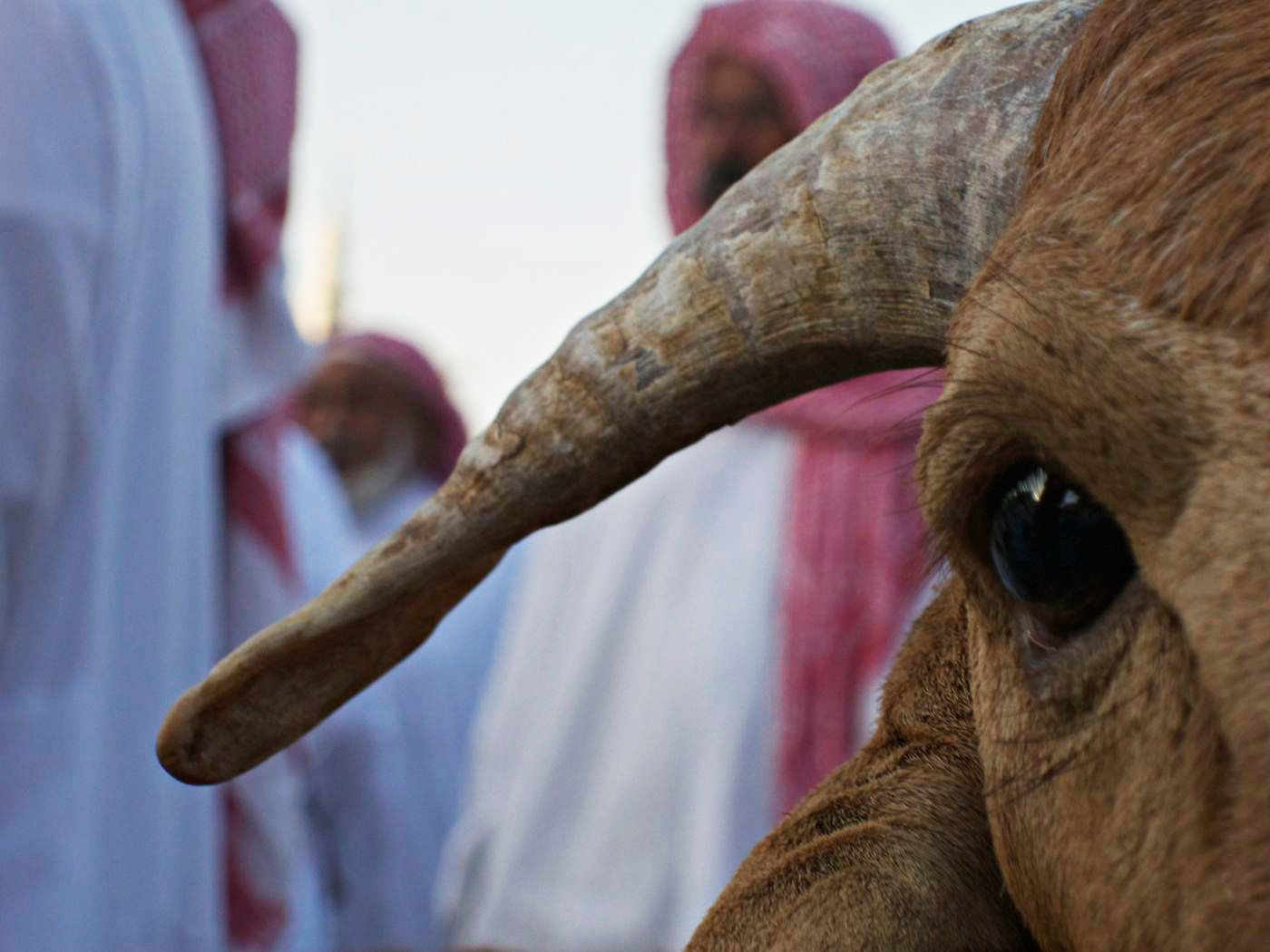
It was August, the fasting month of Ramadan, and the ancient oasis lay cupped in the rumpled hills of the Hejaz, a community of sleepwalkers who stayed awake long after dark. When God permitted the people to eat. When animals could be butchered to donate to the poor. When the sun could be escaped. It was like living at some darkened pole. Except it was still hot. The bone saws whined. Neighbors stopped by to sit in chairs to gossip, to drink sweet tea, to sweat in the open air.
Yousef cut up their sheep, goats, and camels with knives sharpened on grinding wheels, with knives stropped to razor sharpness on dry palm leaves. He had been crippled by a car accident for almost 20 years. But he could take off a camel’s head with two strokes. Hayat al Althagafi, his wife, taught local girls how to cook, how to paint, in the school. I never saw her until the last day in a month of visits. It was a great concession on her part—to be seen by a stranger in her home. She said she worried about her boy, Abdallah, who was a little wild in the ways of most 12-year-old boys. She wanted him to grow up to be an honorable man, if God willed it.
“You probably don’t have these problems in California,” said Yousef.
I had told Yousef that I was born in California. I let him know that they had such problems in that place, too.