We hunt and gather along the Red Sea.
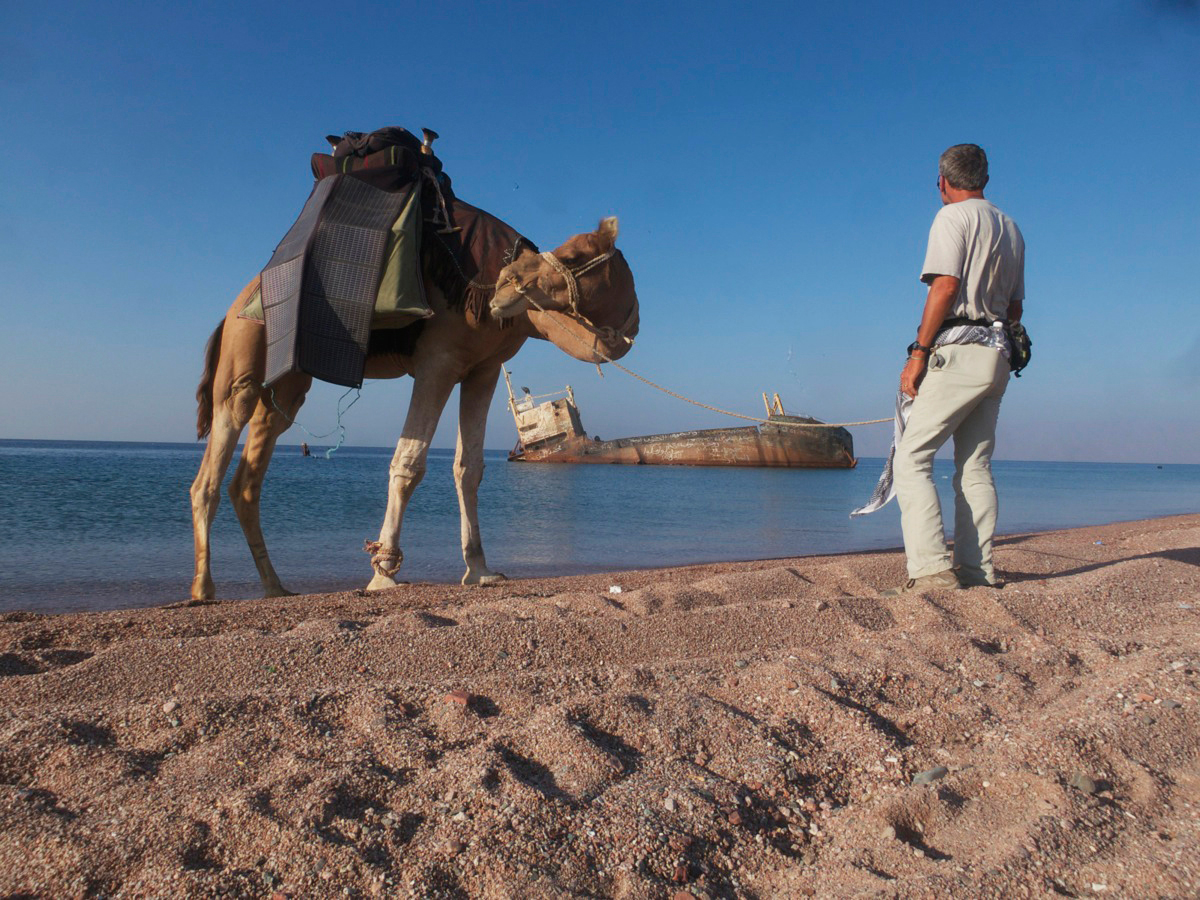
Hassan al Faidi, our new logistician, a charismatic young Hemingway, casts his fishing line into the darkling waves.

Angling: Hassan al Faidi and Awad Omran take a break from walking on the shores of the Red Sea.
Paul Salopek
He does this over and over. He holds the thin monofilament across the pad of his extended index finger. He is feeling the slow tug of the waves, the gravelly vibration of the hook as it drags across coral, the gentle nudge of a fish’s lips as it tests his bait 20 or 30 yards away under the saltwater. We have been doing this for a very long time—this communion with hope: The oldest fishing hook, made of shell, was found in a sea cave in East Timor and dates back 23,000 years.
But we have been beachcombing far longer.
Throughout much of the Pleistocene—including 60,000 years (and 22 million high tides) ago when anatomically modern humans exploded out of Africa and spread across the Earth—sea levels were generally lower than today. Prevailing theory holds that bands of wandering hunters shambled along the broad ramps created by newly exposed continental shelves. Land bridges emerged, facilitating our species’ global expansion. Beneath the Red Sea, a long mound called the Hanish Rill may have poked above the waves between Africa and Arabia, offering early humans a chain of steppingstones to swim or raft between as they abandoned the mother continent. Such recent marine discoveries are rewriting the textbooks on human migration. An improbably old coastal campsite in Chile dating back 14,600 years, for instance, suggests that at least some of the earliest Americans settled the New World by seagoing canoe and not on foot, as long believed.
There are some extravagant coastal migration theories.
A few researchers have hypothesized that foraging along beaches made us smart, which is to say fully human. By scavenging washed up seafood through thousands of generations, they say, we unwittingly dosed ourselves with Omega-3 fatty acids—a famous brain nutrient abundant in seafood. (“Fairy story,” Meave Leakey, the famous paleoathropologist, huffed when I asked her about this idea.) There is even a fringe school of thought that claims our ape ancestors returned to the sea. According to this Aquatic Ape Hypothesis, traits such as bipedalism, big brains, and hairlessness are relics not of African savannas but a lot of prehistoric swimming and wading.
Whatever the case, seashores haunt our consciousness. We are drawn to them. Most of humanity lives next to the ocean.

Coasting into Duba on a waterfront promenade.
Ali al Harbi
For much of my trek through Saudi Arabia, this has been so. Sleepy cinderblock villages. Sprawling industrial ports. The Red Sea has been almost always within sight. It is a vast blue eye, flat and lidless like that of a fish, staring up at the hot daytime sun. At night it becomes a separate sky, but a starless one. Leaning back against a camel saddle, I have peered into its darkness for hours. I remember my nights at sea as a commercial fisherman. The tang of saltwater on steel. A welder working on the dredges—showering red sparks up into the cold north Atlantic constellations. Our hands so pickled in seawater they were like boiled onions. Staring into the sea is like staring into yourself.
“No good,” Hassan mutters.
He yanks in a small puffer fish—too bony to eat. I accidentally hook a sea snake. The sun is hemorrhaging into the wet horizon. We will go without brain food tonight.
It is a two days’ walk to Jordan. We are gentle with each other—on this desolate beach—Hassan the logistician, Awad Omran the cameleer, translator Ali al Harbi, and I. We speak in low tones. We move deliberately. We watch the sea vanish. There is an ending happening here.
THE RED SEA: A BRIDGE, NOT A BARRIER

Ali al Ghabban.
Saudi Commission for Tourism and Antiquities
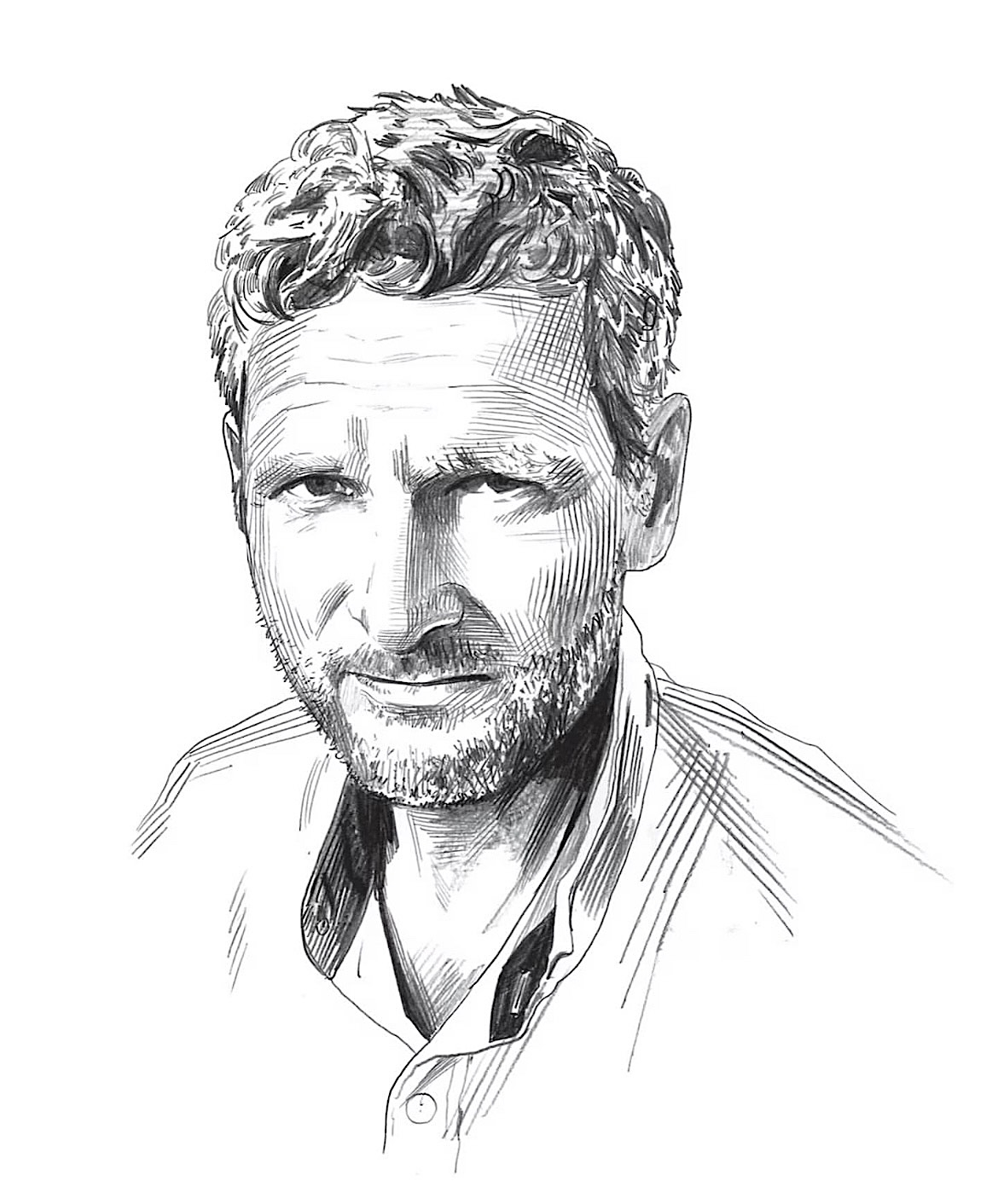
Dr. Ali al Ghabban, the vice-president of the Saudi Commission for Tourism and Antiquities, is a leading scholar on the history of Saudi Arabia. His family comes from Al Wajh, an old hajj port north of Jeddah. I spoke to him recently about the first major geographical obstacle humans encountered as they left Africa—the Red Sea.
Q: Given the archaeological evidence available on the Red Sea coast of Saudi Arabia, how far back was Homo sapiens roaming this shoreline?
A: Since there are no human skeletal remains in Arabia from the time ranges in question, we cannot be sure about the answer to this question. However, on the basis of similarities in stone technology between finds in Arabia and Africa, it is reasonable to suppose that anatomically modern humans have been present in Arabia for at least 125,000 years, and possibly a little longer.
Of course, there were earlier hominins in the western escarpment region of Arabia, and they were present from at least 400,000 years ago, and most probably much earlier.
You should also note that the present shoreline is the shoreline that would have existed when sea level was close to the same height as today. Twenty thousand years ago sea level was over 100m lower, and in the Tihama region, where the offshore continental shelf is quite shallow, the contemporaneous shoreline would have been 50-100 kilometers farther out into the Red Sea. The sea level was high again at about 125,000 years ago and again at 200,000 years. High sea levels like today lasted about 5-10,000 years during the Ice Ages and recurred at about 100,000-year intervals over the past million years.
Q: Whenever I’ve stumbled across remnants of traditional culture on the walk, I’ve been struck by the similarity in everything from house architecture to sea songs in Saudi towns along the Red Sea. Everyone from Pharaonic Egyptians to the Romans to colonial Europeans plied these waters. So is there a “Red Sea culture”?
A: Human populations in Arabia through time have benefited and adapted to living a seaward culture, as resources from the sea have been sufficient to sustain their living needs. Through time and interaction with other cultures in the region led to the transmission of thoughts and ideas, as well as trading in various commodities in both directions, to and from other parts of globe. The building of ports, ships, and other items relevant to the daily needs of seaward cultures are clear evidence for human adaptations to living by the sea, and using its resources to cover the needs of daily life.
Q: What are some Red Sea sites that you would recommend to history-minded visitors?
A: Most of the early sites consist of little more than stone tool scatters, and these are difficult to find. Probably the most visible features in the landscape from an early period are the shell mounds of the Farasan Islands. There are many hundreds of these mounds, and the largest are up to five meters high and extend for hundreds of meters along the shoreline. They are quite recent, dating to about 5-6000 years ago, and were formed by Stone Age people with seafaring skills who lived by fishing, shell gathering, and some gazelle hunting.
Sea ports along the Red Sea make an attractive feature for those wishing to explore and appreciate the cultural history of the region. Among those sites is that of Acra Come, which was well known during the Roman Era, as an active sea port.
The Farasan Island is very rich with coral buildings built for wealthy pearl merchants and decorated with gypsum that has beautiful design motives. Jeddah city is also renowned for its historical down town, which features many buildings that exemplify a unique building architecture, with beautiful wooden window shades.
Q: There seems to be a flowering of archaeology in the Arabian Peninsula in recent years. Recent finds have pushed back the dates of modern human occupation so far that there is even an “Out of Arabia” theory of human dispersal. What more can we expect?
A: The General Commission for Tourism and Antiquities in Saudi Arabia has established a program of international collaboration with leading archaeological experts from around the world. The geographical extent of archaeological research zones in the Kingdom is so varied that it includes coastal, oasis, desert, wadi, and palaeo-lake regions. Also, archaeological research in the Kingdom covers evidence for human presence from the earliest times till the past few centuries.
The shell mounds in the Farasan Islands represent one of the largest groups of sites of this kind anywhere in the world. This is thanks to the fact that they have been well protected from modern development or other destructive activities, and they are also associated with a very productive and fertile marine environment. The earlier Stone Age sites, though not spectacular to look at, are pushing back the earliest dates for human presence in the Arabian Peninsula to dates that are comparable with those in northeast Africa and the Middle East.
Another group of spectacular sites occur in central Saudi Arabia at the Jubbah palaeo-lake in the Hail region, where there is excellent evidence for Middle Palaeolithic sites along lakeshores. These sites are of global importance, and we believe they are the signatures of modern humans moving out of Africa. Other field expeditions are looking into world-rated rock art sites in Jubbah, Shuwaimes, and Nejran, which tell the story of ancient Arabian populations in the peninsula.
Ali al Ghabban.
Saudi Commission for Tourism and Antiquities
Dr. Ali al Ghabban, the vice-president of the Saudi Commission for Tourism and Antiquities, is a leading scholar on the history of Saudi Arabia. His family comes from Al Wajh, an old hajj port north of Jeddah. I spoke to him recently about the first major geographical obstacle humans encountered as they left Africa—the Red Sea.
Q: Given the archaeological evidence available on the Red Sea coast of Saudi Arabia, how far back was Homo sapiens roaming this shoreline?
A: Since there are no human skeletal remains in Arabia from the time ranges in question, we cannot be sure about the answer to this question. However, on the basis of similarities in stone technology between finds in Arabia and Africa, it is reasonable to suppose that anatomically modern humans have been present in Arabia for at least 125,000 years, and possibly a little longer.
Of course, there were earlier hominins in the western escarpment region of Arabia, and they were present from at least 400,000 years ago, and most probably much earlier.
You should also note that the present shoreline is the shoreline that would have existed when sea level was close to the same height as today. Twenty thousand years ago sea level was over 100m lower, and in the Tihama region, where the offshore continental shelf is quite shallow, the contemporaneous shoreline would have been 50-100 kilometers farther out into the Red Sea. The sea level was high again at about 125,000 years ago and again at 200,000 years. High sea levels like today lasted about 5-10,000 years during the Ice Ages and recurred at about 100,000-year intervals over the past million years.
Q: Whenever I’ve stumbled across remnants of traditional culture on the walk, I’ve been struck by the similarity in everything from house architecture to sea songs in Saudi towns along the Red Sea. Everyone from Pharaonic Egyptians to the Romans to colonial Europeans plied these waters. So is there a “Red Sea culture”?
A: Human populations in Arabia through time have benefited and adapted to living a seaward culture, as resources from the sea have been sufficient to sustain their living needs. Through time and interaction with other cultures in the region led to the transmission of thoughts and ideas, as well as trading in various commodities in both directions, to and from other parts of globe. The building of ports, ships, and other items relevant to the daily needs of seaward cultures are clear evidence for human adaptations to living by the sea, and using its resources to cover the needs of daily life.
Q: What are some Red Sea sites that you would recommend to history-minded visitors?
A: Most of the early sites consist of little more than stone tool scatters, and these are difficult to find. Probably the most visible features in the landscape from an early period are the shell mounds of the Farasan Islands. There are many hundreds of these mounds, and the largest are up to five meters high and extend for hundreds of meters along the shoreline. They are quite recent, dating to about 5-6000 years ago, and were formed by Stone Age people with seafaring skills who lived by fishing, shell gathering, and some gazelle hunting.
Sea ports along the Red Sea make an attractive feature for those wishing to explore and appreciate the cultural history of the region. Among those sites is that of Acra Come, which was well known during the Roman Era, as an active sea port.
The Farasan Island is very rich with coral buildings built for wealthy pearl merchants and decorated with gypsum that has beautiful design motives. Jeddah city is also renowned for its historical down town, which features many buildings that exemplify a unique building architecture, with beautiful wooden window shades.
Q: There seems to be a flowering of archaeology in the Arabian Peninsula in recent years. Recent finds have pushed back the dates of modern human occupation so far that there is even an “Out of Arabia” theory of human dispersal. What more can we expect?
A: The General Commission for Tourism and Antiquities in Saudi Arabia has established a program of international collaboration with leading archaeological experts from around the world. The geographical extent of archaeological research zones in the Kingdom is so varied that it includes coastal, oasis, desert, wadi, and palaeo-lake regions. Also, archaeological research in the Kingdom covers evidence for human presence from the earliest times till the past few centuries.
The shell mounds in the Farasan Islands represent one of the largest groups of sites of this kind anywhere in the world. This is thanks to the fact that they have been well protected from modern development or other destructive activities, and they are also associated with a very productive and fertile marine environment. The earlier Stone Age sites, though not spectacular to look at, are pushing back the earliest dates for human presence in the Arabian Peninsula to dates that are comparable with those in northeast Africa and the Middle East.
Another group of spectacular sites occur in central Saudi Arabia at the Jubbah palaeo-lake in the Hail region, where there is excellent evidence for Middle Palaeolithic sites along lakeshores. These sites are of global importance, and we believe they are the signatures of modern humans moving out of Africa. Other field expeditions are looking into world-rated rock art sites in Jubbah, Shuwaimes, and Nejran, which tell the story of ancient Arabian populations in the peninsula.