“The Haj government established here in late years a station of horse troopers and Ageyl riders, which should keep the pilgrim highway, and tame the insolence of the Beduw.” — Travels in Arabia Deserta, by Charles Montagu Doughty (1888)
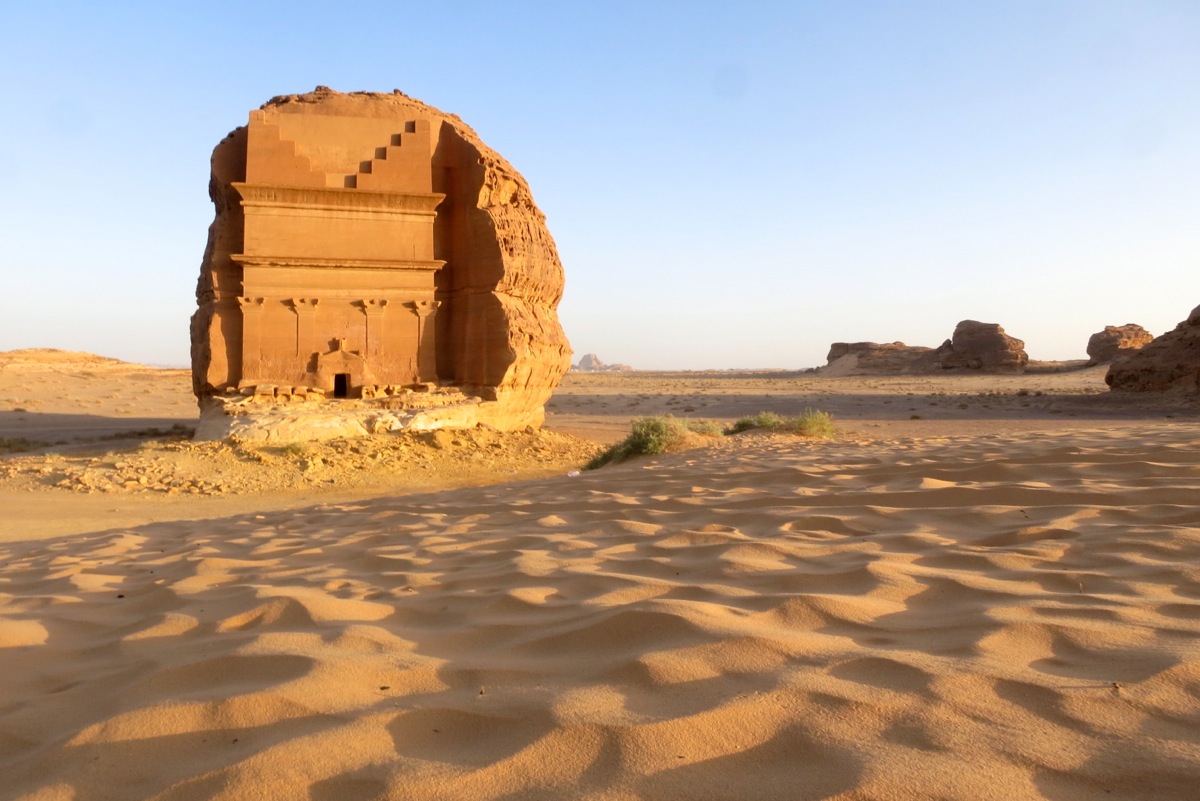
The trail grooved its way up a high, wrinkled scarp the color of chalk, the color of rust. Up from the Hīsma. Up from the brilliant, white, waterless flats that Nabatean kings had tried to tame more than 2,000 years ago—building forts, founding oasis towns, erecting watchtowers. All to guard the fabulous incense roads from Yemen. Centuries later other empires would attempt to control the same trade routes. Frankincense was Arabia’s most coveted export—the petroleum of classical times.
We trudged in silence past the rubble of Hawarah, driving our two cargo mules.
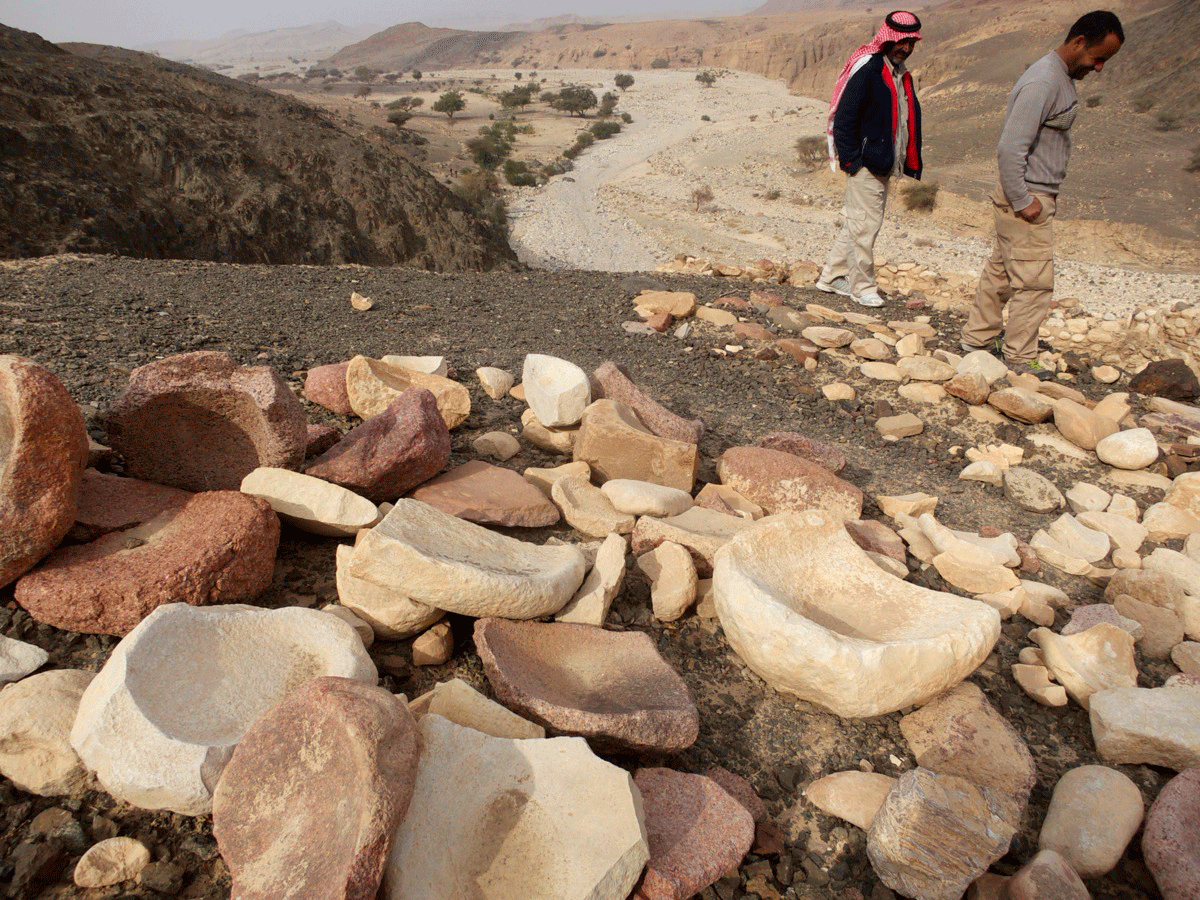
Legionnaires once risked their wages on tossed dice in Hawarah, a desert city perched on the edge of the Roman Empire. The soldiers of Emperor Trajan had lounged in public gardens, taken nomad wives. There had been lemon orchards—and grain fields and olive groves. Columned temples dedicated to Greco-Roman gods later became Byzantine churches and then mosques, and the Abbasid palaces of the 8th century featured mosaics and furniture of carved ivory. Red clay roofing tiles of Mediterranean civilization once shined here: a beacon of urban power meant to cow and settle the wandering Bedouin. All of this was gone. But an old water canal still ribboned 15 miles down from the barren mountains. The joints between its stones didn’t admit a sheet of my notebook paper.
“They knew how to build things,” my guide and muleteer Hamoudi Alweijah al Bedul said, waving his hand at the ruins. “Pah! Not like today. Five years—the house falls down!”
We walked north. We climbed the great rift that Muslim geographers call the Brow of Syria. We were leaving Arabia behind. I looked back a last time.
The Bedouin were still there. A family’s black tent rippled and belled in a cold desert breeze atop the ruin of Hawarah. The sharp little hooves of nomad sheep were grinding the pottery shards of four civilizations to dust.