The tribal judge sits in the shade of a shop verandah. The shop is closed. It is a Saturday—a weekend. The judge plays a table game in black and white: Mahbusa the Arabs call it.
“I resolve problems between families,” Fuad Zaghayer explains, sliding a checker forward. “Murders are the worst.”
He is a welcoming man, Zaghayer. Sober, thickset, stately in his gestures. A man used to the theatrics of power. He goes on:
“When someone is murdered, I first go to the victim’s family. I ask them for a three-and-a-half day truce. This is to allow them a period to mourn. It is traditional. After that, I go to them with 150 local men, maybe 200 neighbors. We begin to negotiate. I am the negotiator.”
For clemency.
“30,000 to 40,000 Jordanian dinars ($45,000 to $60,000)—that is a typical down payment, an advance. It varies with the sharia codes, of course. Has the victim been killed by a car? Has he been stabbed? The final amount varies with the nature of the crime. After a year, the two families must agree on the ultimate cost. 140,000 Jordanian dinars, total, is a normal amount. The killer’s family will try to get that number down, of course.”
And if the blood money is rejected?
“There are families who don’t accept it. They want revenge. It is rare. But it happens.” The judge holds up both palms in helplessness. “They will kill someone from the other side. We try to prevent this. We always ask for mercy. But if one side says no, that is their right.”
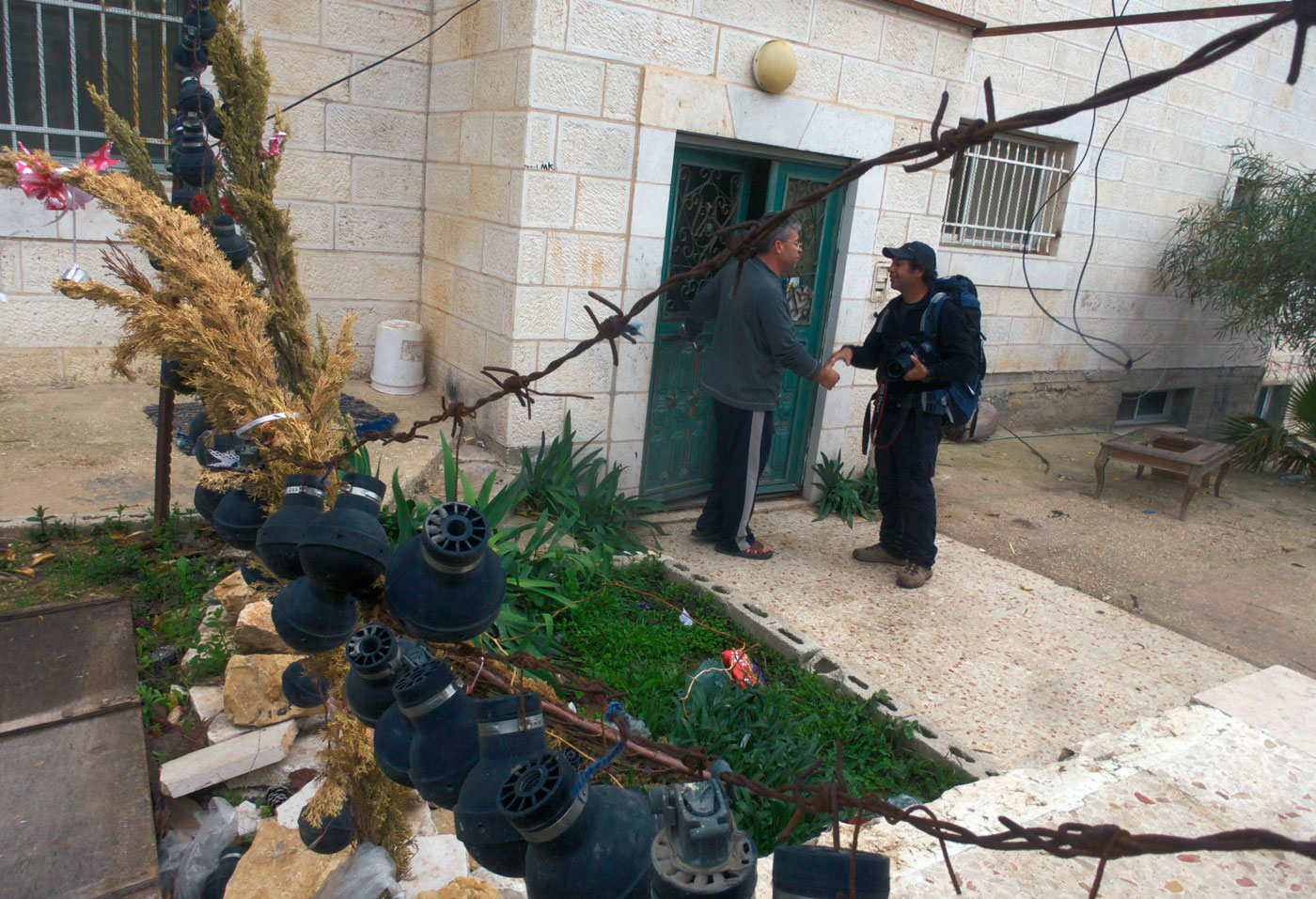
The judge stands. He half bows. He shakes our hands.
My Palestinian guide, Bassam Almohor, and I walk on in the hot sun. We are reunited once again, walking together out of Jerusalem, back into the West Bank. We set our course for due north: on foot, across a hundred miles or more of rumpled hills and valleys, of which every square inch is contested, to the Israeli town of Nazareth.
Mahbusa, the board game, means “prisoner” in Arabic.
Beit Hanina, the judge’s ancient neighborhood, which dates back thousands of years to the time of the Canaanites, means “house” (beit in Arabic) of “he who deserves pity” (han-nina in Assyrian).