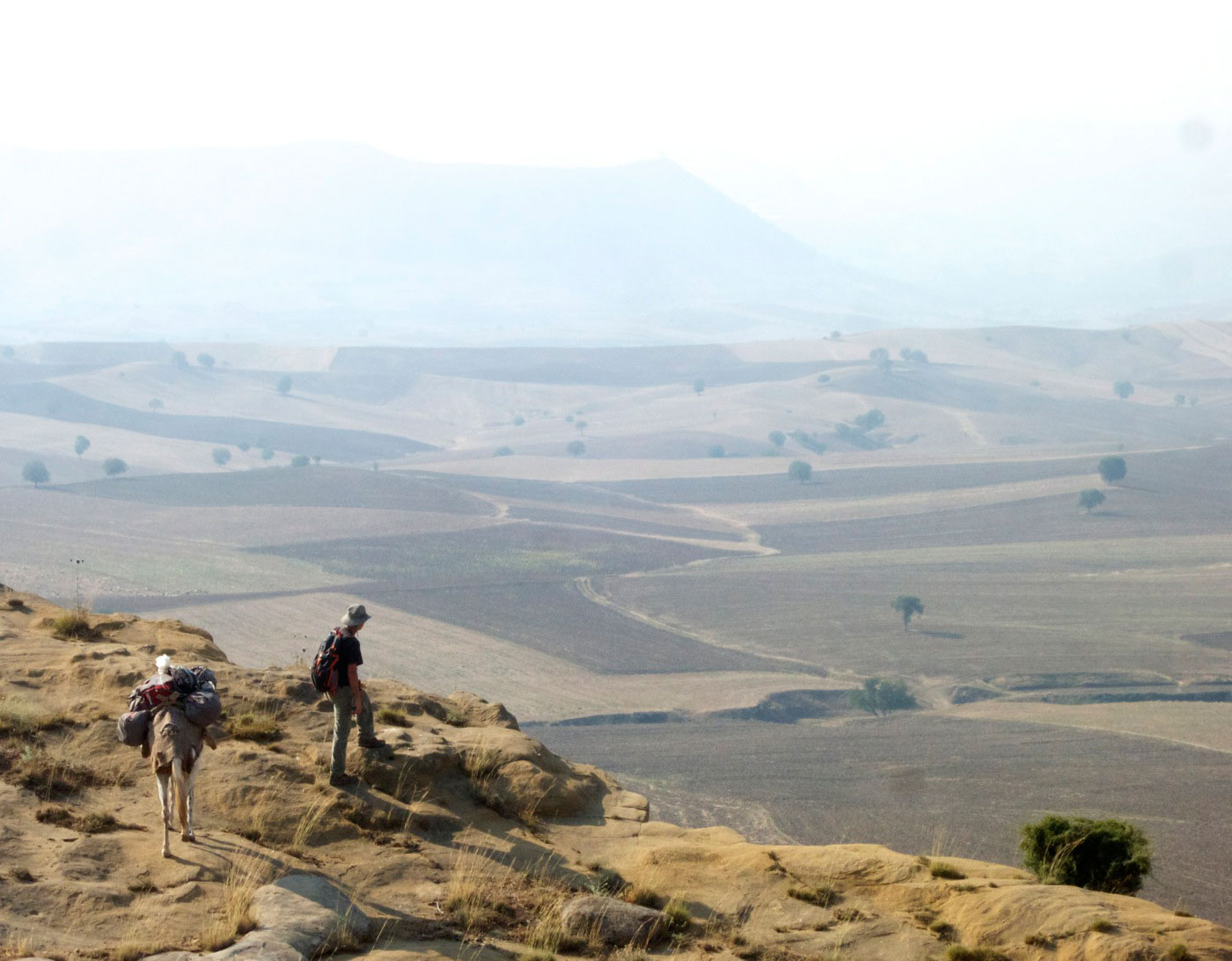
We had come up over the forested ridge through the old fire burns of Mt. Carmel, over charcoal-peppered soils, thorugh the young new pines. Then down, down, down—ricocheting down ravines that guttered past Druze villages, down through a derelict army firing range, across the rumpled hinterlands where the prophet Elijah had been fed in exile by wild ravens sent by God—or by friendly Arab herders. Biblical scholars disagree.
The journey through Palestine, the Land of Israel, the Cisjordan, Jund Filastin—through Canaan—was coming to an end.
My Israeli walking partner sang.
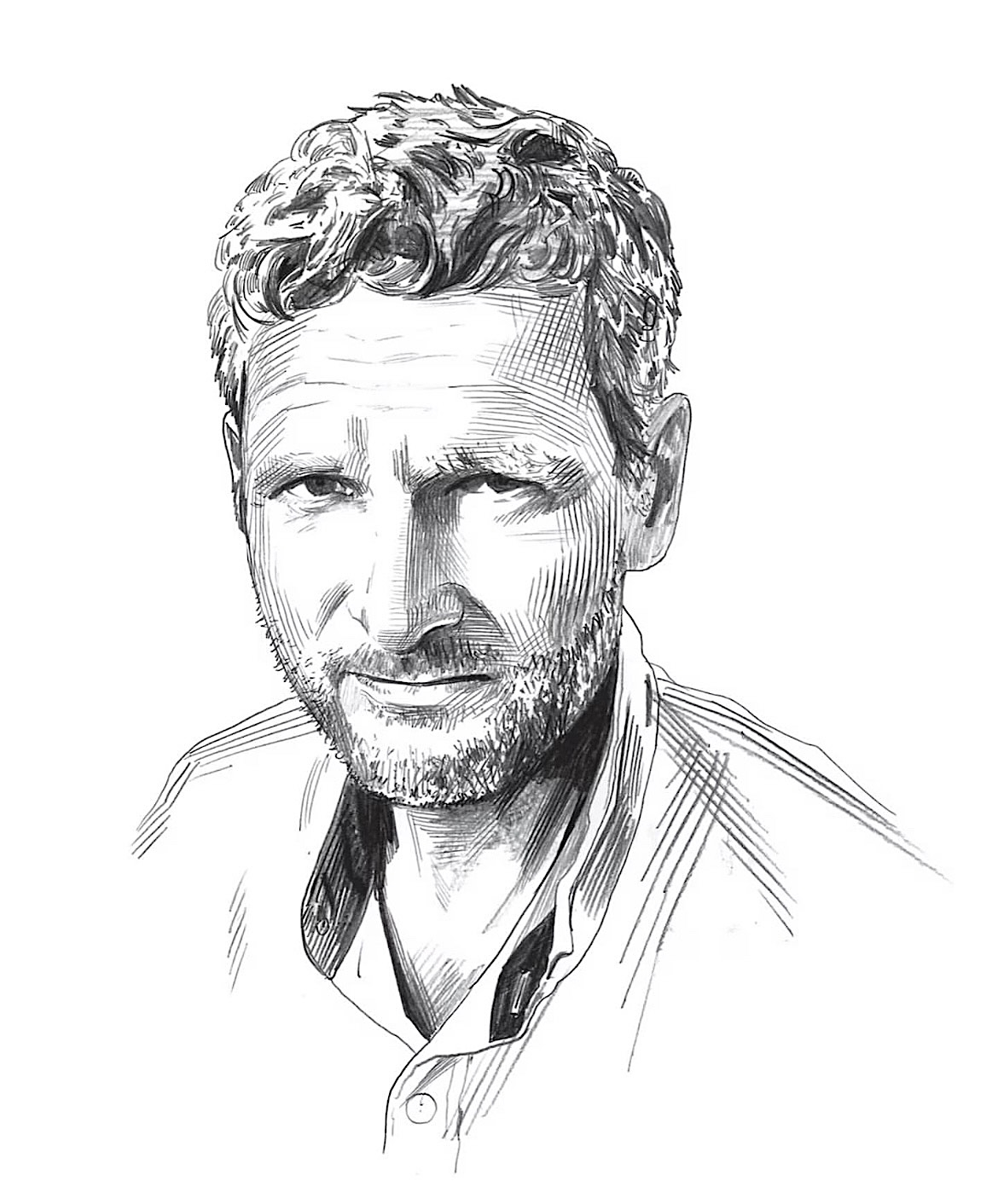
Yuval Ben-Ami is a public intellectual, a street performer, a writer, a radio personality. He is a tireless walker. My cell phone would ring: “Let’s go walking somewhere,” Ben-Ami’s sonorous voice would say. “How about Nazareth? I know a good hummus shop there!” And so he led me through Galilee grasslands that had shimmered like polished bronze under the sun. We had trekked together through East and West Jerusalem, corkscrewing into the stone heart of that wounded old city. He sang often. His repertoire was inexhaustible, spontaneous, polyglot. In the northern mountains had he crooned melancholy ballads to the lost landscapes of memory.

Yuval Ben-Ami sings a rambling song. Mt. Carmel, Israel.
Paul Salopek
We were making for caves worn from the bedrock of time. To rock shelters where the first archaic humans had built hearths, stalked fallow deer, looked upon a nameless blue sea that someday would become known as the Mediterranean. From this spot, rich in springs and wild foods, they had slogged on, inching, on average, ten miles in a generation, to conquer the Earth. Or they had retreated to Africa. Nobody can say. The fossil record shows that these pioneering Homo sapiens simply vanished in today’s Holy Lands. They might have met Neanderthals hunting in the yellow Levantine hills. Perhaps the two hominid species comingled, interbred peacefully, became something new. Or they might have slaughtered each other. Both lie buried in the same time horizons within the dust of the Mt. Carmel caves. (This layer is 80,000 to 100,000 years old.) But then the humans vanished for tens of thousands of years. They disappeared. It was a forgotten precedent. A sign. An augury of trouble at humankind’s oldest crossroads.
Once, I asked Ofer Bar-Yosef, a preeminent expert on ancient human migrations, what he thought happened between Neanderthals and humans so long ago in Mt. Carmel. The scientist looked at me as if I were a fool.
“Look at what happening here today!” he said. He shook his head in pity at such a question. “What do you think?” That we held their hands? That we killed them with love?”
Ben-Ami and I finally reached the cave site in a storm.
It was dusk. The government had placed mannequins depicting early humans inside the caves. Men and women in skins, children with wild hair. They stared back with plaster eyes, mute. They shared no secrets. In the strobe of lightning, in the thrown shadows, they appeared to move, to dance. At the starting line of my walk in Ethiopia, real people had danced: the Afar nomads, chanting and pounding the savanna with their sandals, singing their goodbye. To the superficial eye they might have looked rustic, antique. But they were fantastically modern. They were super beings. If I were a Neanderthal, my hair would have stood up. I would have listened to such vocalizations, and I would have heard my doom.

Cyprus-bound.
Paul Salopek
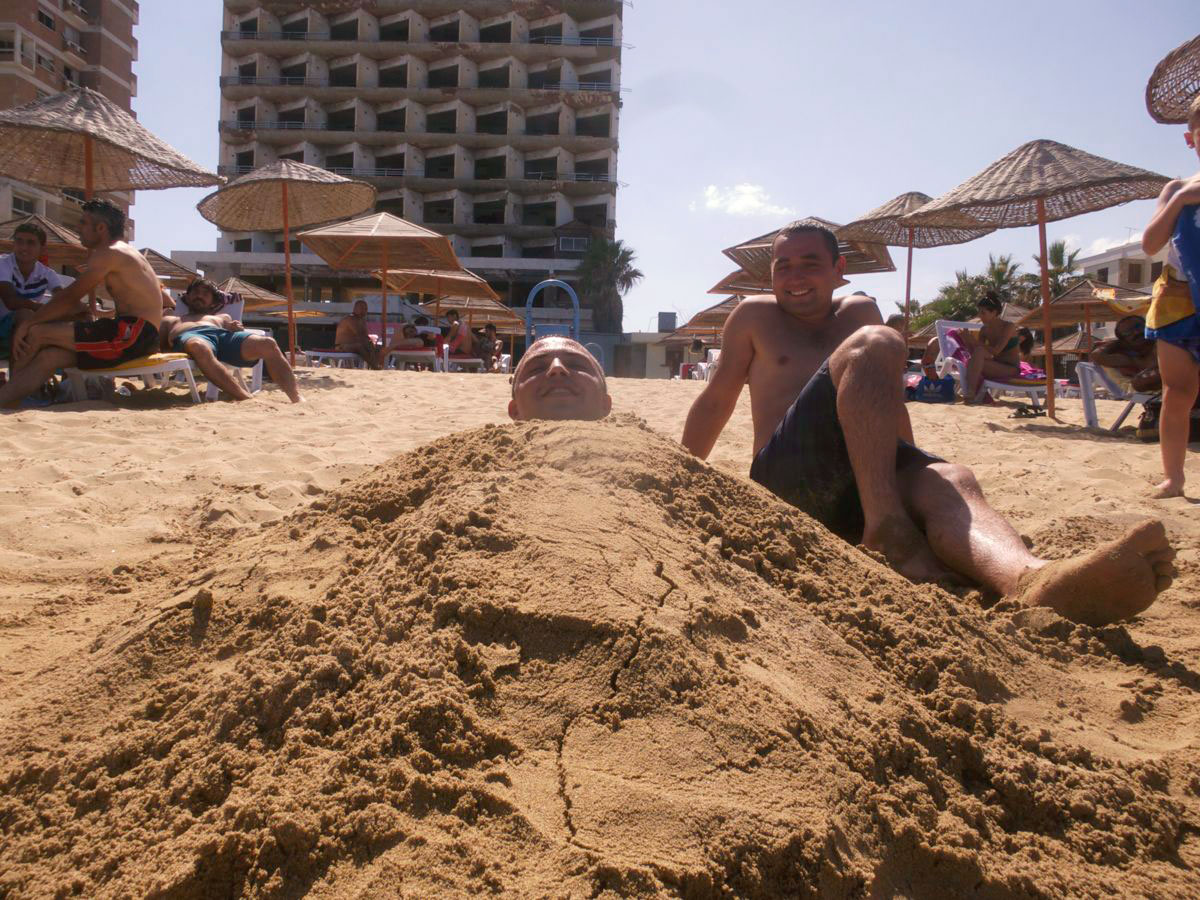
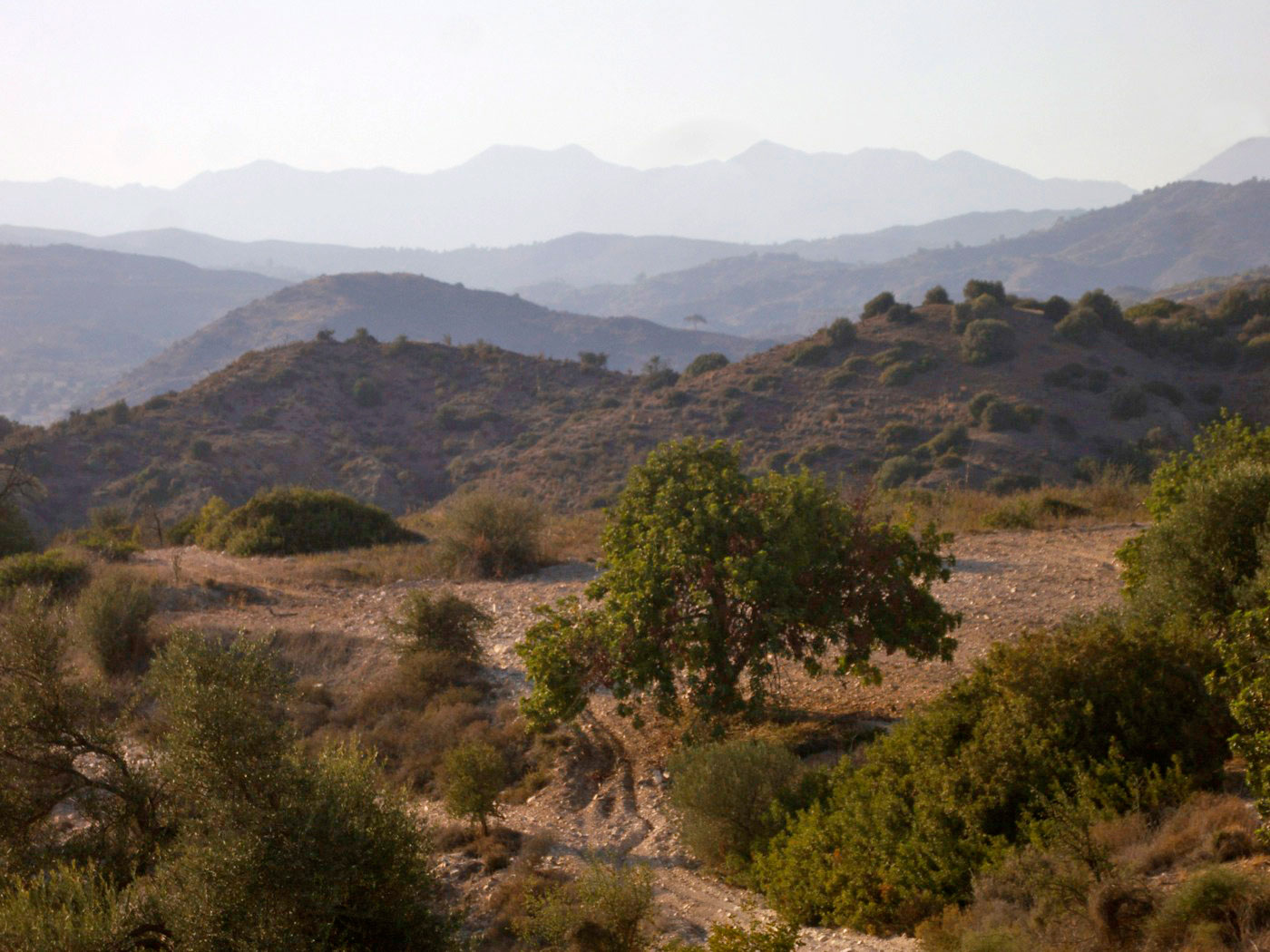
I remember all this in the sweltering cabin of the MV Alios, a cargo steamer bound for Limassol, Cyprus.
I have abandoned the Levant. I am moving on. I am making for a new subcontinent, for Asia Minor. From there, I will walk east for two years, at least. I am detouring around the civil war in Syria, the war in Iraq, by ship. In the night, the humming vessel leaves behind it a chalked wake—a pale line pointing back to the time bomb that always ticks in the Middle East. Soon enough, within weeks, Gaza will explode. (The death toll to date: more than 1,600 Palestinians and more than 60 Israelis.) It is pitch black outside the cabin porthole. It is sweltering in the tiny cabin. I strip. I sit. I drip sweat. I cannot sleep.