“Be careful out there,” Nodar said. “There’s a lion on the streets.”
This is not a warning one hears often while stepping out the door of a cafe equipped with a wine cooler and an espresso machine.
The last time I worried about large carnivores was more than two years ago in the desolate Rift Valley of Ethiopia. I have walked out of Africa. I plan to ramble on foot to the tip of South America over the course of seven years. I did not expect to ponder being eaten again until Siberia. And yet Nodar, the owner of my thoroughly urban watering hole in Tbilisi, was dead serious, even if the predator was wrong: It was an enormous white Bengal tiger, not a lion, that mauled a man to death in the city yesterday. The cat escaped from the zoo during a terrible flood. Unbeknownst to Nodar and me, a police SWAT team had just shot it.
Since a wall of rainwater and mud frothed down its concrete-lined riverbeds last weekend, Tbilisi has become a fleeting star in the limitless constellation of global disaster news: a 21st-century capital apparently overrun by wild animals—hippos, lions, tigers, and wolves—freed from their smashed-up zoo cages by a record storm.

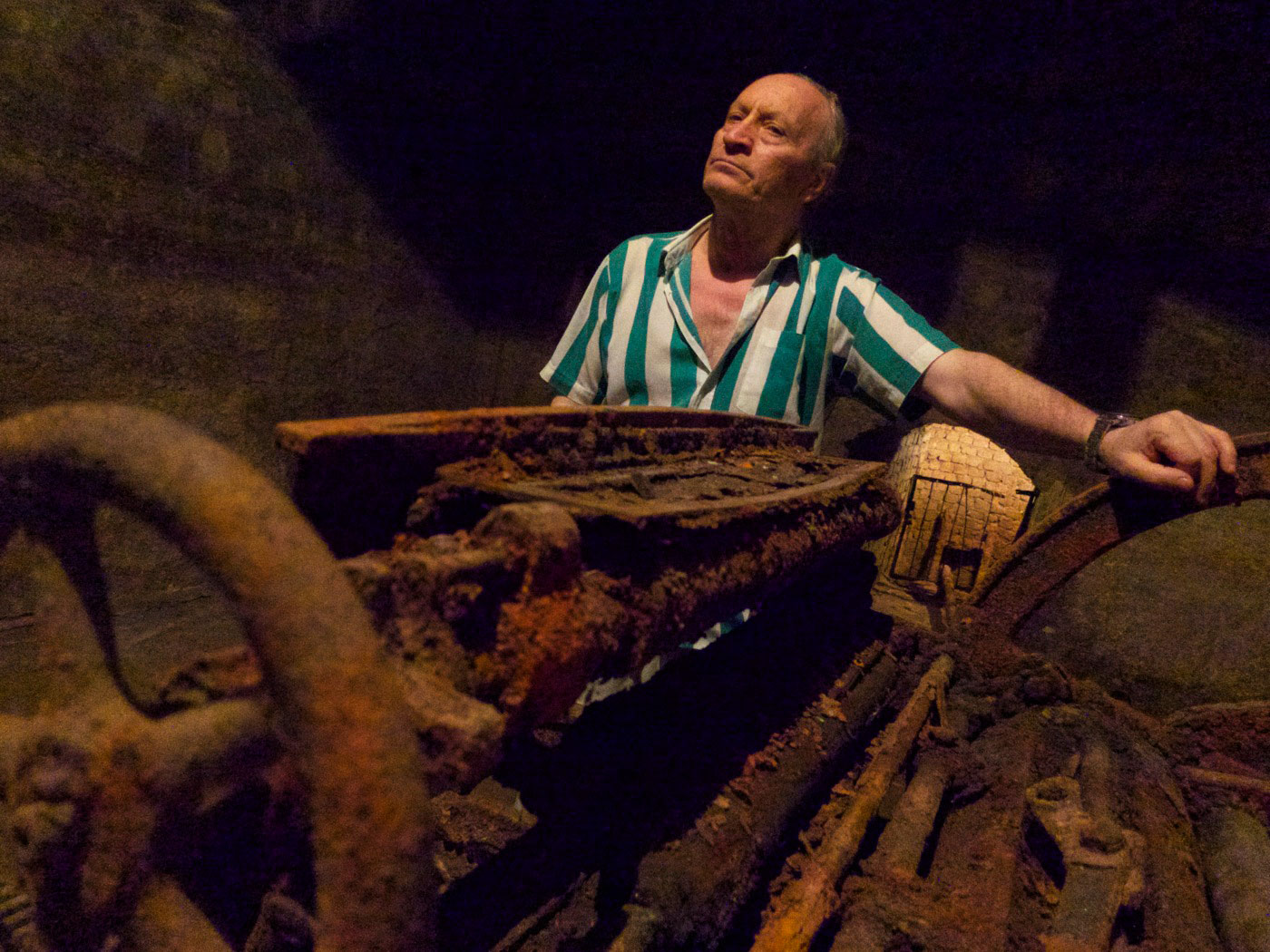
Vito Uplisashvili fords a river of ruin after the devastating flood.
Paul Salopek
Photos of confused wildlife roaming drenched sidewalks and sodden traffic circles have exploded across social media, though many of these images are fakes. The fulsome coverage of this tragedy as a circus deftly braids together two conflicting but irresistible strands of human longing: a thirst for Coliseum spectacles and the fulfillment of gauzy Rousseau fantasies. (The latest twist in Tbilisi: TV video of an “African volunteer” allegedly offering to charm the cornered “killer tiger” out of its warehouse lair. Our species wandered out of Africa at least 60,000 years ago; Africa remains always with us.) The human death toll, meanwhile, has been downplayed. Or ignored.
The zoo was at the bottom of a ravine. Nearby homes too sank under mudslides. Nineteen Georgians have perished, most drowned, according to the latest tally. Three were zookeepers. Hundreds of volunteers are helping dig out the city. The government estimates the damage to the economy at $45 million. But as the mud dries, as funerals are held, and dump trucks cart away flattened homes and snapped-off trees, the fact remains: The icon of this disaster will be a hippopotamus splashing by a Swatch shop.

Zebras in their flooded zoo enclosure. Almost 20 people died too, though in anonymity.
Paul Salopek
The plight of blameless animals caught up in our calamities is an old and powerful trope.
Think of Native American animal fables—or any primordial cosmology. Think of the Ark. We are all in this together. We too are animals. Even as accomplished a cynic as Christopher Hitchens allowed that mocking animal lovers as stunted human beings is absurd because “it will be found that people who ‘care’—about rain forests or animals, miscarriages of justice or dictatorships—are, though frequently irritating, very often the same people.”
One of the young lions killed in the flood—or possibly shot by security forces—was Shumba, a local favorite who lived with a poodle. This lion has been eulogized. The international press has yet to name the human, a cleanup worker, mauled by the tiger. My thoughts go out to his family.