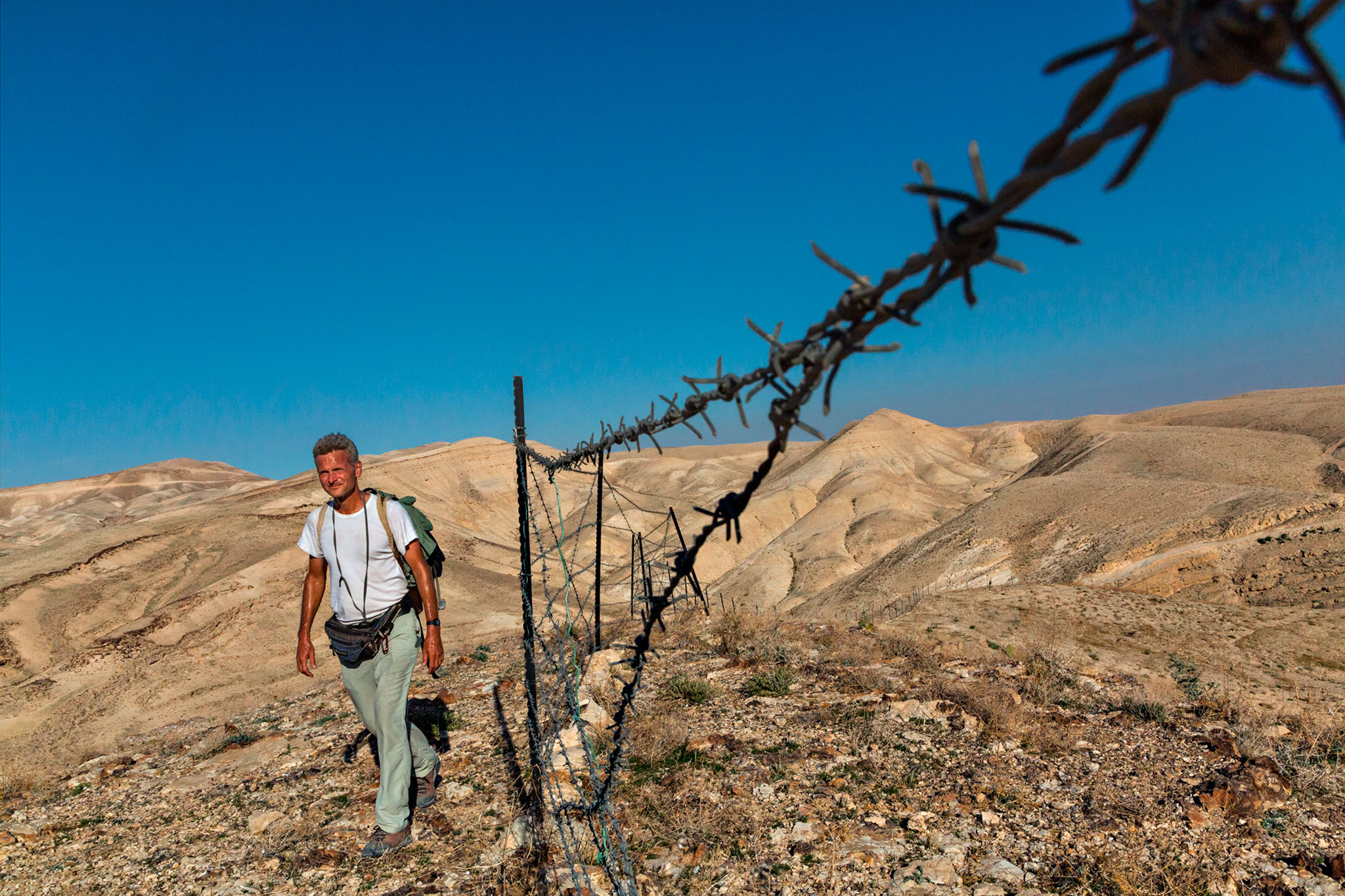
Paul Salopek is walking the global trail of the first humans who migrated out of Africa in the Stone Age. His continuous 21,000-mile foot journey, called the “Out of Eden Walk,” is recorded in dispatches.
Cupped in an amphitheater of rumpled hills on the windy Caspian Sea coast, Baku has attracted human wanderers since the Stone Age. First it offered fish and shelter, then it flourished as a strategic medieval walled port made powerful through trade along the old Silk Road, and finally, in the mid-19th century, the city exploded as the world’s first petroleum capital.
By 1900 dynastic European fortunes were being made in Baku oil. (The Rothchilds and the Nobels, to name just two.) The nouveau riche, the local and the foreign-born, threw up gaudy opera houses and mansions in an eclectic mishmash of styles. (One instant Bakuvian oil millionaire modeled his estate on Venetian palaces.) The old caravanserai town morphed into the smudged fuel station of the industrial age. As one 1911 visitor famously reported: “Oil is in the air one breathes, in one’s nostrils, in one’s eyes, in the water of the morning bath (though not in the drinking water, for that is brought in bottles from distant mineral springs), in one’s starched linen—everywhere.”
Once the seat of local Muslim Shirvanshah rulers, Baku has changed hands many times among vying empires: Imperial Russia, Persia, Ottoman Turkey, and, briefly, Great Britain. “Baku is a blend of east and west, north and south,” says Fuad Akhundov, the unofficial historian of Azerbaijan’s seaside capital, one of the world’s most culturally tangled cities. “Baku accepts every idea that arrives here, then, somehow, it shapes it into something of its own.”
Today that influence game continues, if less violently, with Russia, the West, Iran, and Turkey—and multinational oil corporations—jockeying for access to Azerbaijan’s still rich oil and gas fields. When energy prices rocketed in the 2000s, Azerbaijan shrewdly juggled those interests. But with the oil market collapse, the country faces a reckoning: Its oil-dependent economy is stalled, and many investors are fleeing. To walk into Baku today—home to both the world’s largest Kentucky Fried Chicken and 500-year-old steam baths—was to walk into a shining city on edge.