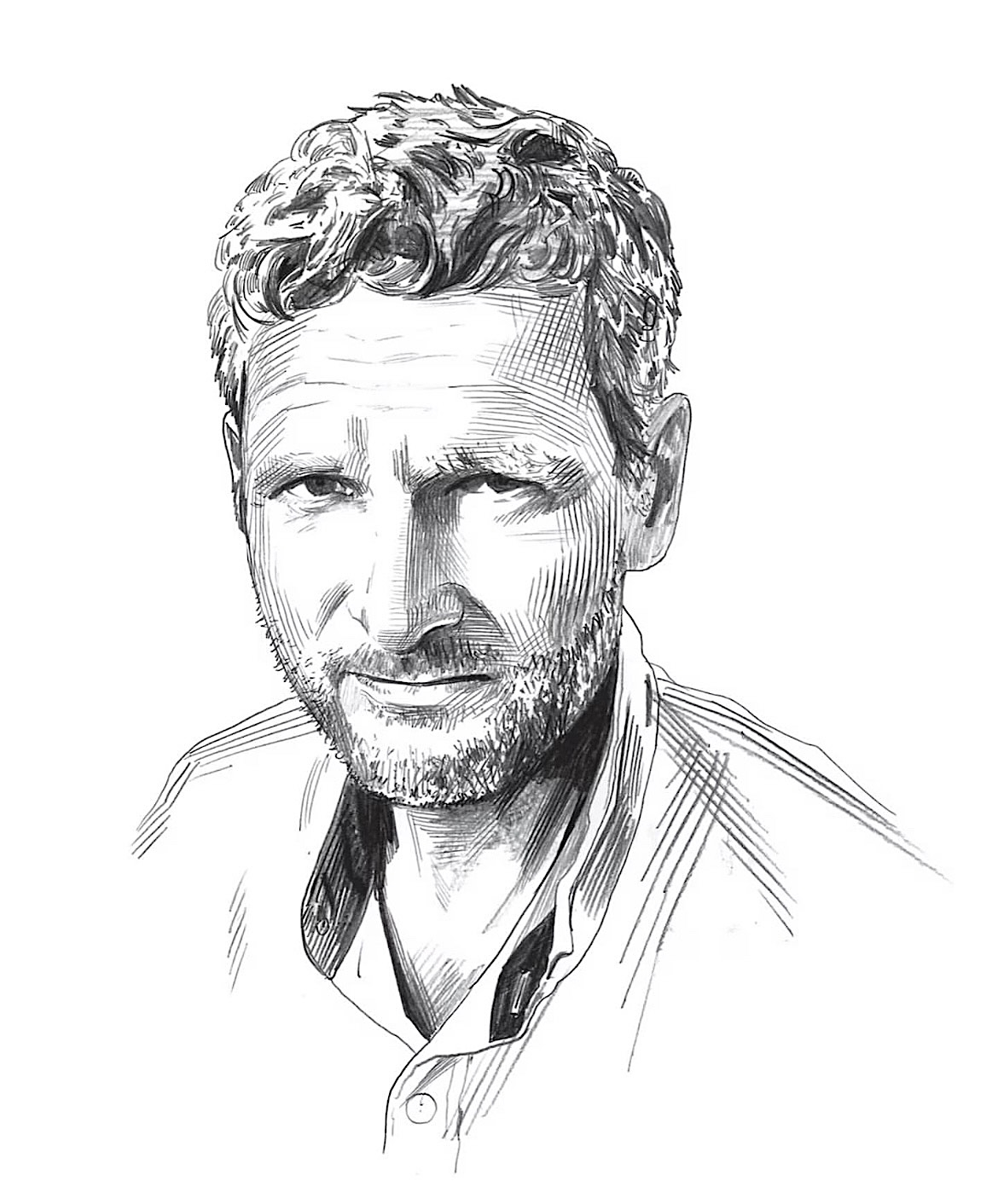
Paul Salopek is walking the global trail of the first humans who migrated out of Africa in the Stone Age. His continuous 21,000-mile foot journey, called the “Out of Eden Walk,” is recorded in dispatches.
The ferry from Baku, Azerbaijan, kissed the chalky shore of Kazakhstan.
Twenty-eight Turks and Kazakhstanis ricocheted down the rusty gangway to the dock. They were hard men with soft truckers’ guts—traders on the modern Silk Road. Their camels were old Renaults and Volvos and Mercedes that hauled tons of frozen chickens, toilet porcelain, oil field equipment and green tomatoes. There had been a bacchanal in the ship’s mess room the night before. The drivers were red-eyed. Clutching their papers, they shuffled meekly past a big Kazakhstani border guard. She knew how to handle them. She stared them down.
The first people to greet me in Central Asia were:
A friendly plainclothes policeman who insisted he wasn’t a policeman.
A young software engineer who provided me a local SIM card with lucky numbers.
And a local restaurant manager—a friend of a friend of a friend—who presented me with a cake that had written on it, in bright red icing script, “Merry Christmas.” She gave me a careworn smile. Petroleum—the major source of Kazakhstan’s wealth—was below $40 a barrel. The new Holiday Inn in town had a giant “For Rent” sign hanging on it. As in North Dakota and Saudi Arabia, business is off.

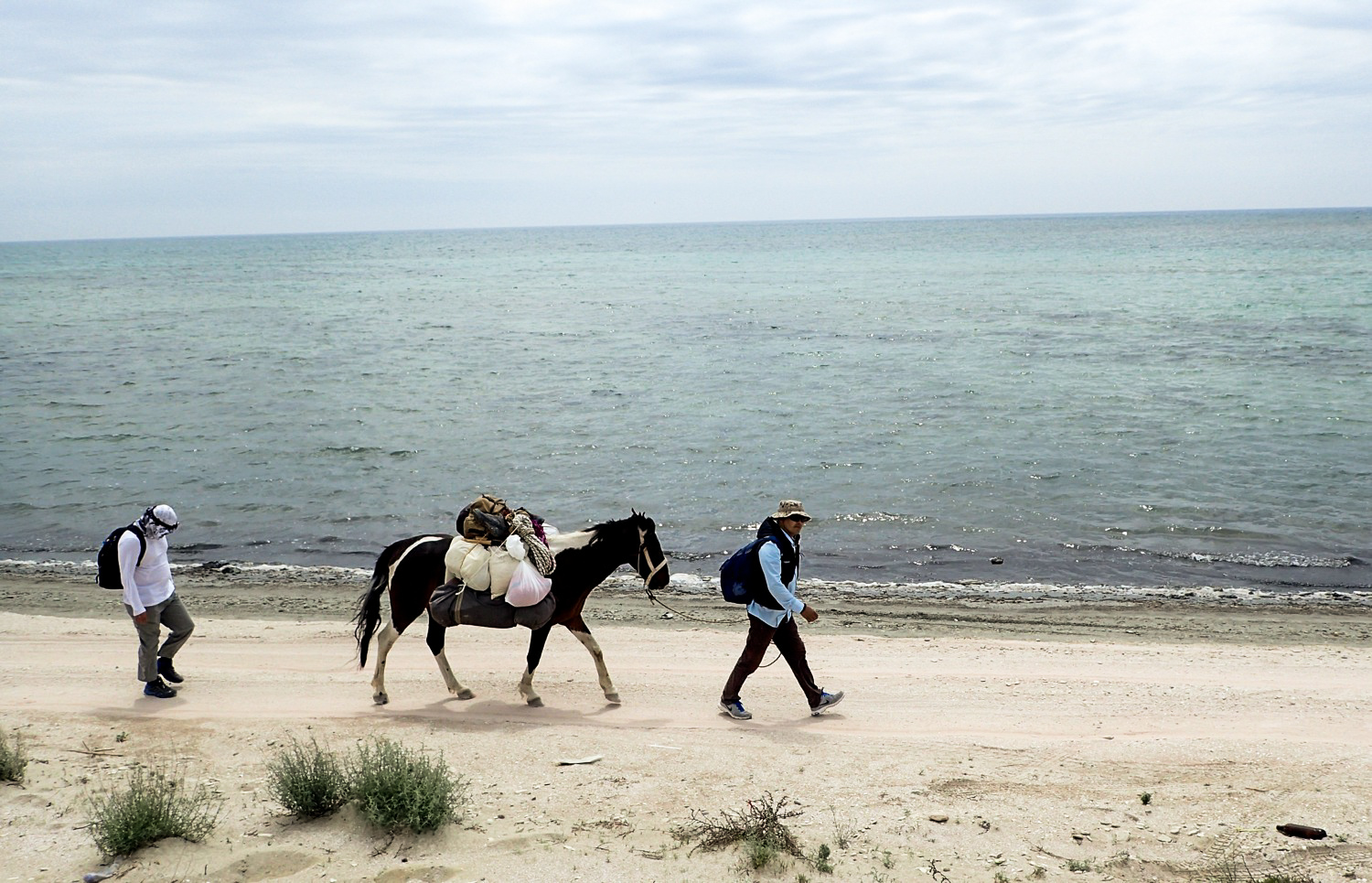
The Caspian laps the shores of Central Asia, a new boundary in the world walk.
Paul Salopek
Once you disembark in the port of Aktau, Kazakhstan, from the rugged Caucasus the world suddenly changes.
The land is ironed flat. It is furred by an oceanic expanse of wind-bent grass. (I will walk east across this pane of dusty chlorophyll for 1,700 miles to the Tien Shan Mountains of Kyrgyzstan.) Most of the human beings have beautiful epicanthic folds over their eyes. The belly of Asia is itself lidded by a hard white-blue sky, a color like glazed Chinese porcelain.
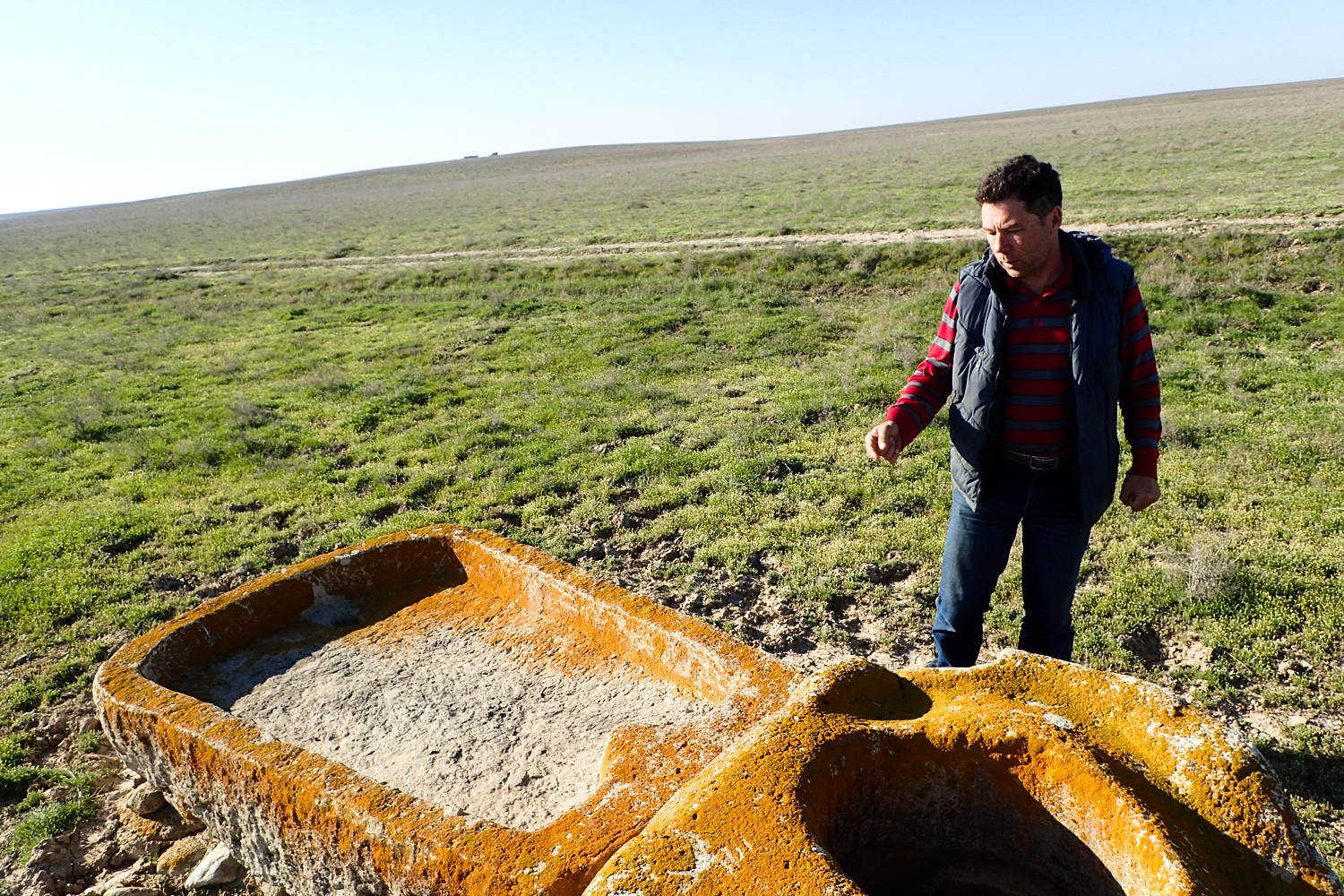
Aktau didn’t exist until 1958. Under the Soviet Union, engineers built the port from scratch as a strategic “closed city” for uranium mining: Guryev-20. This secretive birth is still echoed in its street names. There are none. All the neighborhoods, streets, buildings and flats in Aktau are bland ciphers. (My temporary address: 7-26-63.) Today, the remote Caspian seaport is the capital of Kazakhstan’s sprawling Mangystau region. This is Kazakhstan’s Alaska, if Alaska had underground mosques built by medieval Sufi mystics, hundreds of necropolises (“cities of dead”) that date back to the Iron Age, 14th-century caravanserais, Bactrian camels born yesterday, and 1,000-foot-high scarps of white chalk laid down beneath primordial seas—the edge of the fabled Ustyurt Plateau.

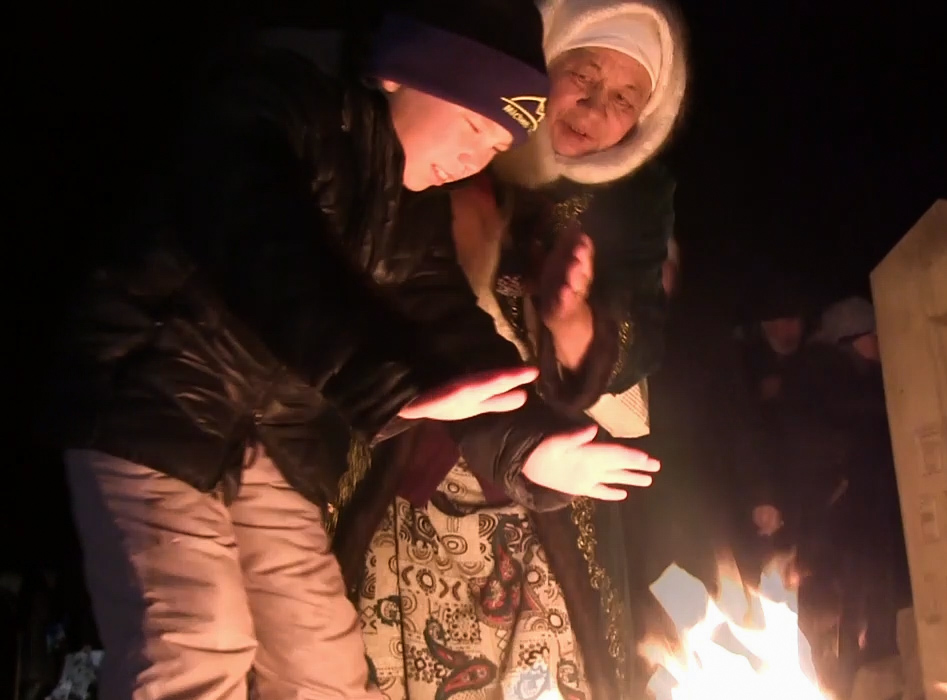
Mariam-apa, the keeper of an underground mosque in remote Mangystau.
Paul Salopek
Out on the ringing plains are the rock carvings of timeless migrations—proto-Scythians, Turkmens, Adai nomads, imperial Russian colonists. The oldest of the scratchings depict food: mountain sheep, gazelles. Meanwhile, one block from my flat in unimaginably secluded Aktau—just past the Armenian store and the apartment blocks inhabited by ethnic Kazakhstanis, Russians, Chechens, Azeris and British oil workers—a hamburger kiosk called “Pit-Burger” plays an endless video loop on a screen: broad-waisted American good ol’ boys barbecuing tonnages of meat. The kiosk owner is a Ukrainian migrant. He demonstrates acrobatic bartending tricks. I am going to like this place.