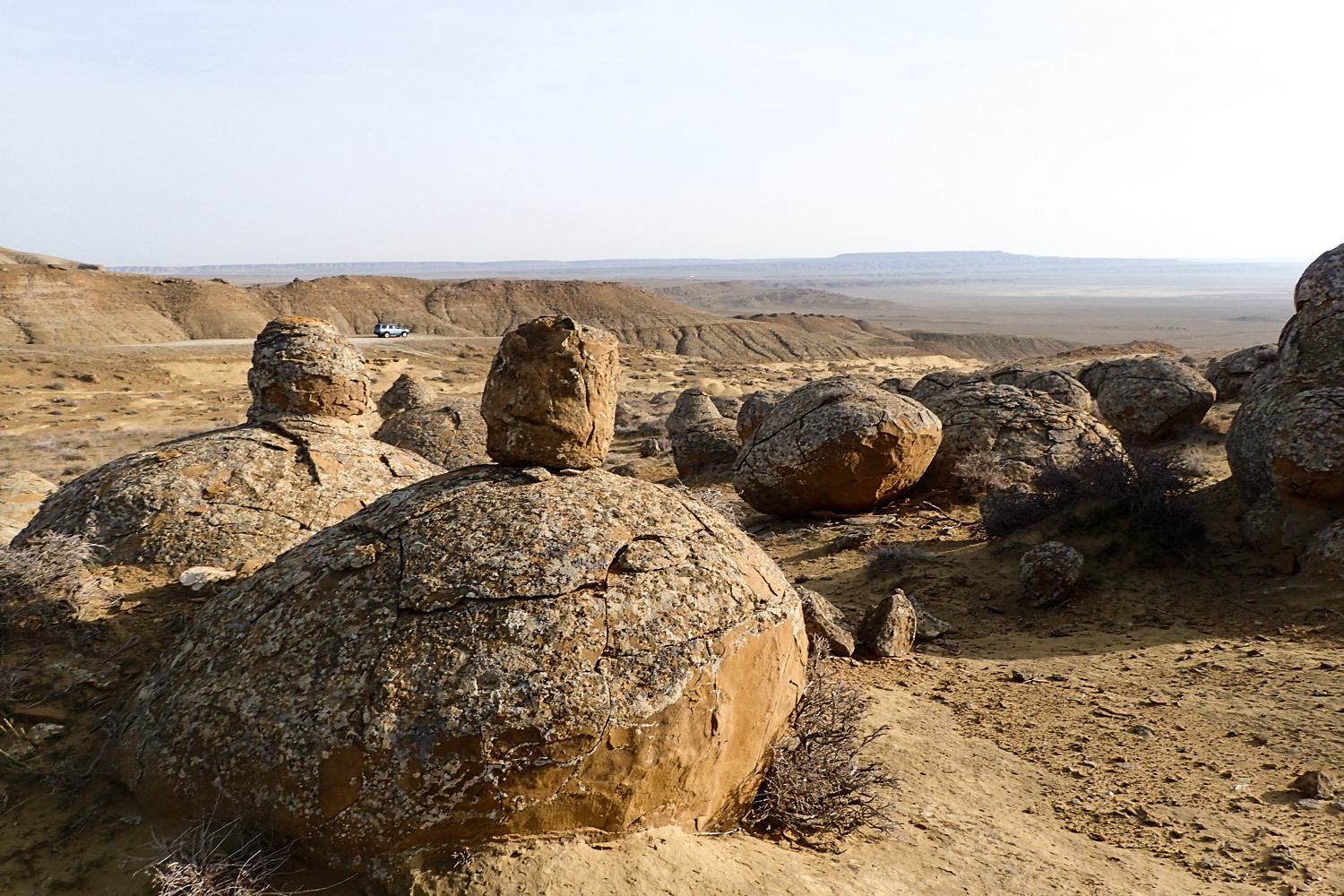
For nearly ten years, drought has strangled the immense steppes of Mangystau, a semiarid region the size of Wisconsin in western Kazakhstan. The cycle of winter snows and spring rains that sustain a local pastoral economy of sheep, horse, and camel herders shriveled away. In some places more than half their stock died off. The already lonesome plains became even emptier: The land is pocked with abandoned shepherds’ huts.
But during the past two years, the fickle skies over this remote corner of Central Asia reopened. This spring, the rains cascaded down in torrents unseen in a generation, the raindrops falling hard as ball bearings—washing out roads, flooding some towns, turning the steppes into glue, and filling the salt basins where the djins—genies—live with brackish water. Most blame such dramatic swings in precipitation on a new era of global climate change. But one result is very old: the rebirth of a rich prairie as it once must have been seen, and fought over by nomad tribes, in the times of the Silk Roads.
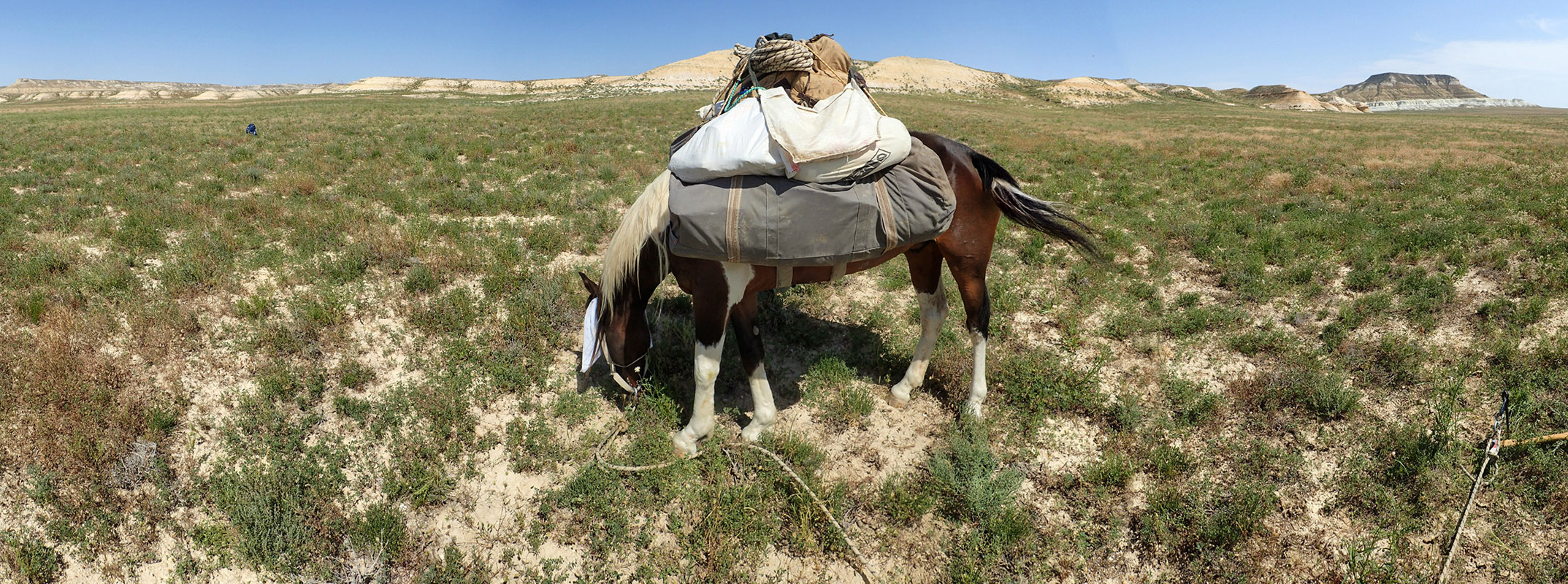
The grasses are diverse. Their Kazakh names are jusan, jabaya, mortik, kuosik, mundalak, and many others. They are gray-green. Emerald. Lemon-colored. Chartreuse. Often they are speckled with flowers.
We walk across the steppe, my Kazakh guides Daulet Begendikov, Talgat Omarov, and I, for 350 miles toward Uzbekistan. The young grass stretches in vast green panes beneath laminar panes of wind, beneath panes of ageless light. From dawn to dusk, we walk through birdsong. We stake the cargo horse within a circle of grass. We pin ourselves this way to the prairie reborn.
Grass Camp
Out of Eden Walk