style="color: #cccccc; text-decoration: none;">Walking the Wild Rim of War | Chapter 4: Silk Road
The bridge over the lime green Panj River at Ishkashem, Afghanistan, is one of our young century’s great invisible hinges.
It is a simple bridge. Made of crudely poured concrete. Dusty. Little used. (Indeed, a rusty gate locks access to all traffic from 4 p.m. to late morning.) Yet history—worlds—collide here.
On one side of the span: Tajikistan. The Russian language. Battered old Lada cars. Lethal vodka sold in plastic bottles. Cratered pavement. Girls wearing trousers. Lines of yellow poplar trees. And phone and electric power service—all the fading legacy of 70 years of colonization by the Soviet Union.
On the other side: Afghanistan. Dari, a dialect of Persian, is the official regional language. Dented old Toyota Hilux pickups. Alcohol is banned. Faint dirt ruts pass for roads. In the streets of the border town, women trip in burqas. Fewer trees. (Though new plantations now dot the rocky soil.) And many, many more donkeys.

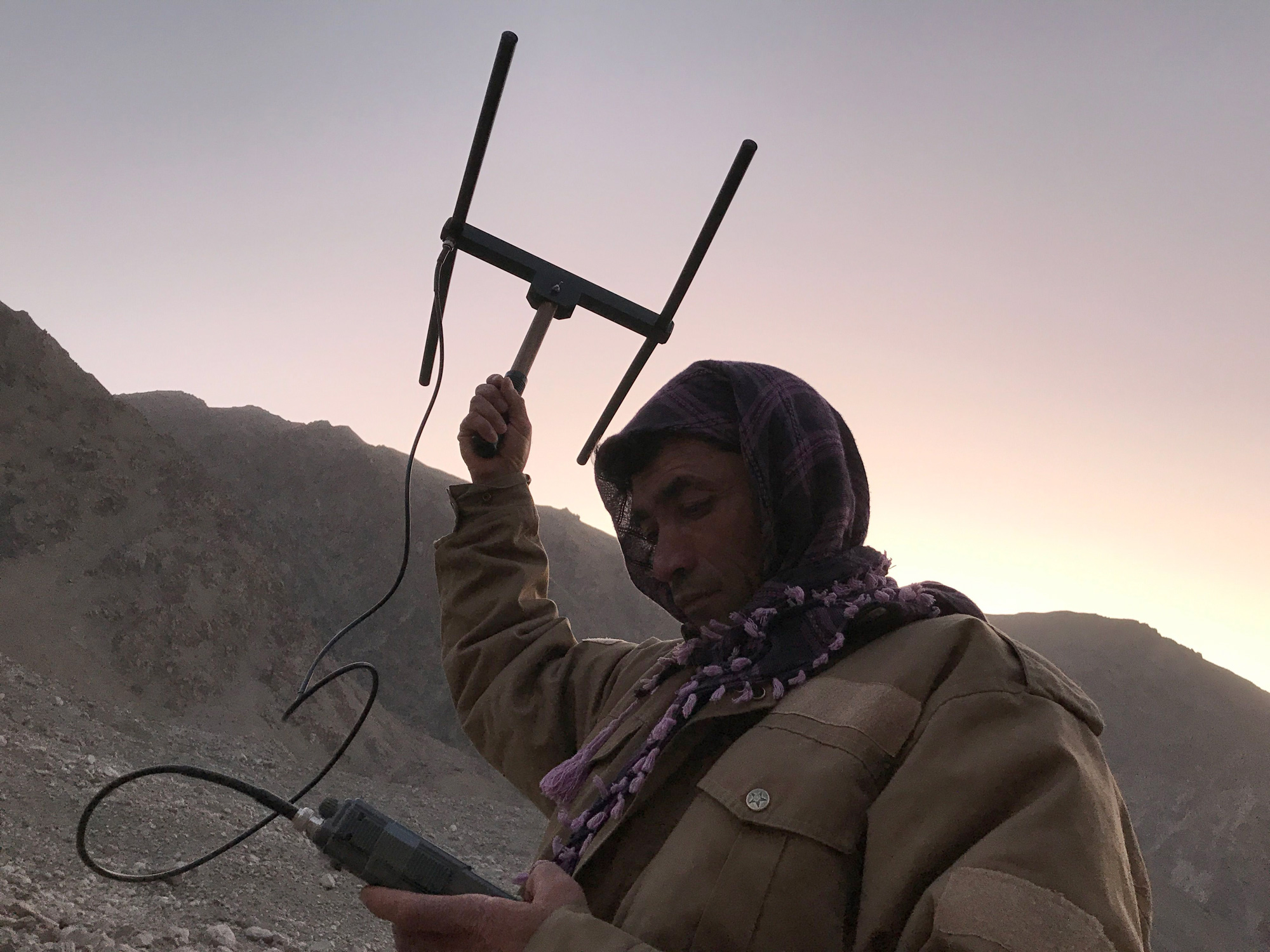
Young Afghan border guards at a U.S.-funded military base in the Wakhan Corridor.
Paul Salopek
Tajik soldiers in Russian camouflage, absorbed in a trance of boredom, stamp my exit visa. The Afghan troops, dressed like American special forces, shake my hand when I answer “Ethiopia” to their question of where I have walked from. They take selfies with their phones. They welcome me with happy grins to the Wakhan Corridor.
The Wakhan Corridor:
A crooked finger of land—a bizarre appendage, a geographical afterthought—in some places only 10 miles wide, poking more than 200 miles from Afghanistan into a vast, high and jagged mountain wilderness that touches the distant frontier of China.
An artificial “neutral zone,” a figment of antique politics, a lunatic boundary drawn by diplomats in the capitals of St. Petersburg, Russia, and London, Britain, in 1895 to keep their Central Asian empires and garrisons apart.
A light-drenched world of glaciers. A largely roadless, walked landscape of shining alpine meadows. Of towering halls of 20,000-foot peaks. A biological ark teeming with Marco Polo sheep, with ibex, with snow leopards.
And finally, a forgotten corner of the globe so unimaginably isolated it has long fed legends of lost or cut-off peoples: a sparsely inhabited, hand-made tableaux of mud-brick houses, creek-powered water mills, biblically plowed fields, medieval musical instruments, and ancient shrines, called astans, adorned with sheep horns. The latest versions of this Shangri-La fantasy: press reports that the local ethnic group, Wakhi farmers who practice a moderate form of Shiite Islam called Ismailism, don’t even know there is a war going on in their country. (They know.)
Young Afghan border guards at a U.S.-funded military base in the Wakhan Corridor.
Paul Salopek
Tajik soldiers in Russian camouflage, absorbed in a trance of boredom, stamp my exit visa. The Afghan troops, dressed like American special forces, shake my hand when I answer “Ethiopia” to their question of where I have walked from. They take selfies with their phones. They welcome me with happy grins to the Wakhan Corridor.
The Wakhan Corridor:
A crooked finger of land—a bizarre appendage, a geographical afterthought—in some places only 10 miles wide, poking more than 200 miles from Afghanistan into a vast, high and jagged mountain wilderness that touches the distant frontier of China.
An artificial “neutral zone,” a figment of antique politics, a lunatic boundary drawn by diplomats in the capitals of St. Petersburg, Russia, and London, Britain, in 1895 to keep their Central Asian empires and garrisons apart.
A light-drenched world of glaciers. A largely roadless, walked landscape of shining alpine meadows. Of towering halls of 20,000-foot peaks. A biological ark teeming with Marco Polo sheep, with ibex, with snow leopards.
And finally, a forgotten corner of the globe so unimaginably isolated it has long fed legends of lost or cut-off peoples: a sparsely inhabited, hand-made tableaux of mud-brick houses, creek-powered water mills, biblically plowed fields, medieval musical instruments, and ancient shrines, called astans, adorned with sheep horns. The latest versions of this Shangri-La fantasy: press reports that the local ethnic group, Wakhi farmers who practice a moderate form of Shiite Islam called Ismailism, don’t even know there is a war going on in their country. (They know.)
On the remote Tajikistan-Afghanistan border, a wild river divides 19th-century wheat-threshing practices from Neolithic four-legged ones.
Video by Paul Salopek
I have stepped back into Afghanistan for the first time in 15 years.
The last time my boot soles touched Afghan soil as a reporter, I balanced within the tracks of rumbling tanks to avoid land mines. I crawled on my belly to avoid machine-gun fire. I stepped around the dome of utter stillness that always surrounds the newly dead.
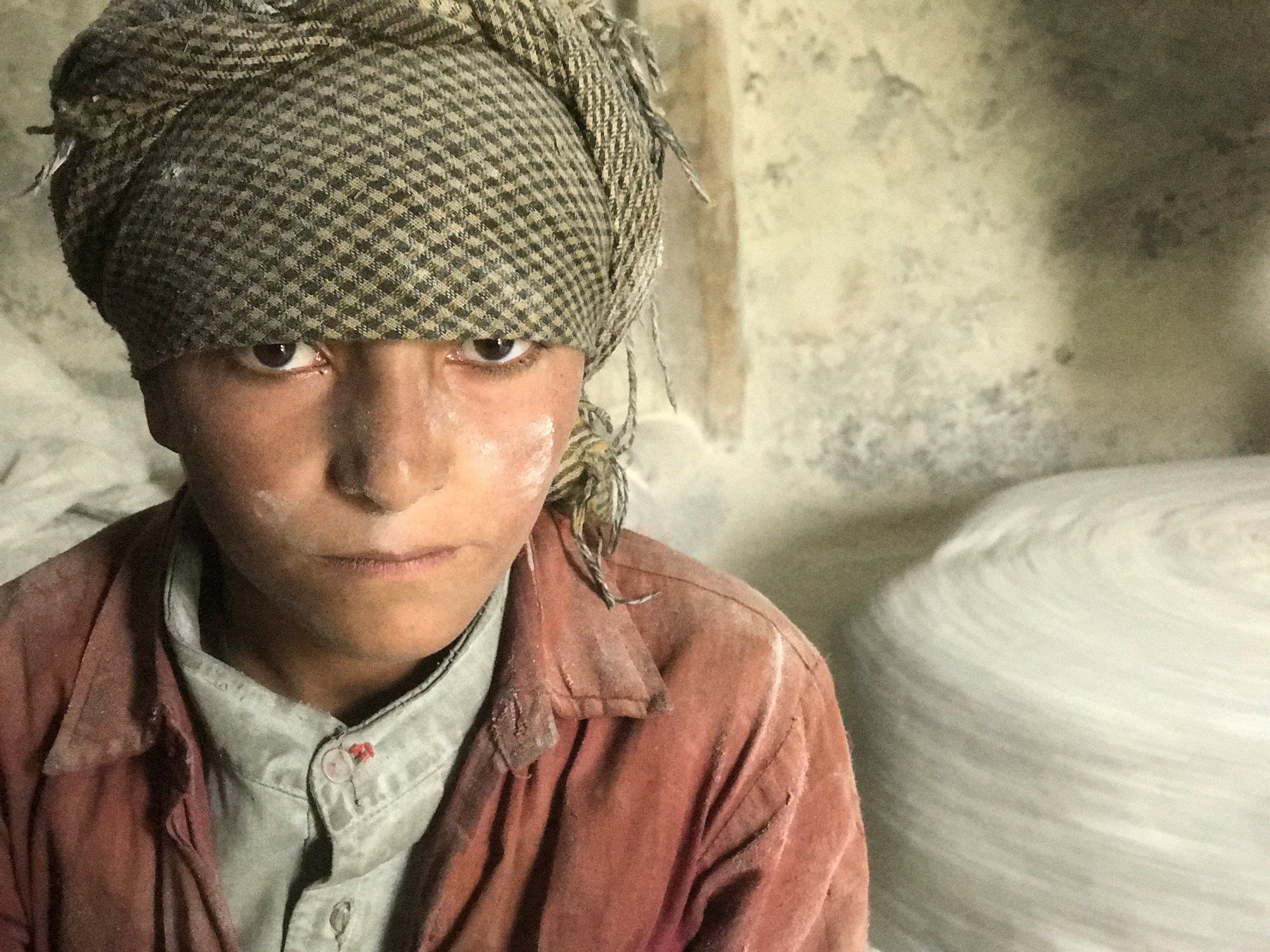
The Wakhan Corridor, with its peaceful, swaying stands of ripening wheat, with its happy, blond, grimy-faced children, with its absence of guns, is not the country of memory.
I blink, hypnotized, at its tranquillity, its intense beauty. An oasis of calm begins to form in my heart.
We set out, my new guide, Inayat Ali, and I, behind two pack donkeys for the far Karakoram passes with Pakistan. We hail daydreaming Wakhi farmers threshing their crops the Neolithic way, driving their oxen over the wheat in tight circles. Ten seconds a rotation—around and around for three days. More than 8,000 circles for each loaf of bread. They wave, but they do not stop. Even pegged to one valley by the invention of agriculture for some 12,000 years, we are walking.