As I looked about me I felt that the grass was the country, as the water is the sea . . . And there was so much motion in it; the whole country seemed, somehow, to be running.― Willa Cather, My Antonia
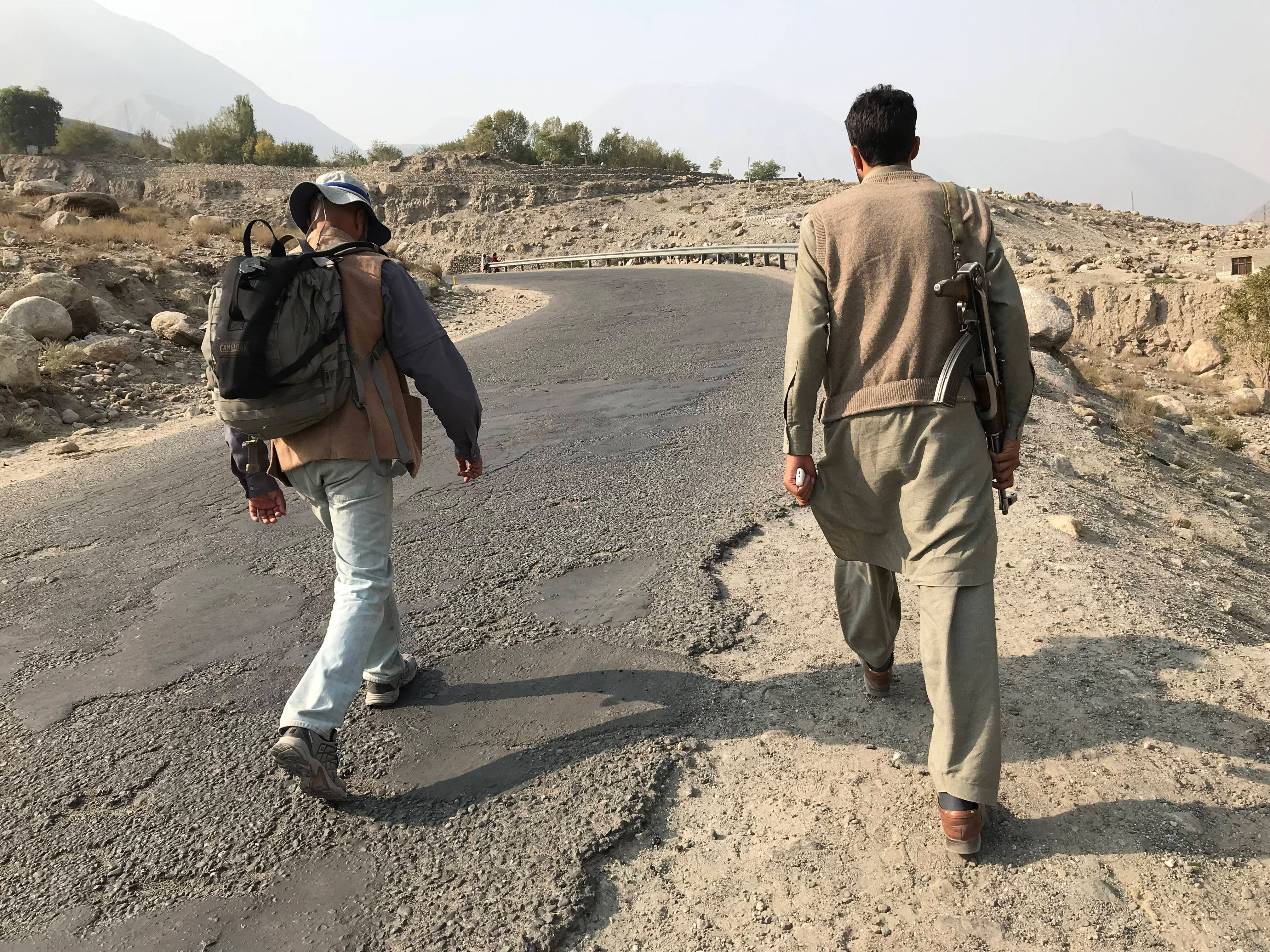
The Karakoram range that cleaves northern Afghanistan from Pakistan is a cold desert.
Precipitation rarely exceeds more than four inches a year at the habitable elevations where human beings live. For all their thick glaciers and snowpack, the towering mountains are parched. When water flows at all, it usually jets like a fire hose. In the late summers, glacial melt scours the steep ravines, clawing away villages, roads, and topsoil down to naked rock.
The inhabitants of this austere landscape, many of them ethnic Wakhi farmers, have learned to trap this explosive blessing through the filter of grass. Every autumn, as their alpine pastures—some nearly vertical—dry to the color of gold and copper, villagers harvest wild hay. You can see them walking fast to shorten their agony under loads of up to a hundred pounds: human ants toting huge bundles of sunlight and snowmelt in the distilled form of animal fodder.
Rehman Ali and Bibi Pari, residents of Passu village in Pakistan, are old.
Video by Paul Salopek
Their sons have left the mountains to study and work in the distant cities of Islamabad and Karachi. So the elderly couple still harvest their sloped and rocky fields by themselves. Pari, the wife, stood no higher than my bicep. Her name means “fairy.” Her cargo, which I could hardly budge but which she rocked swiftly to her shoulders, weighed at least 70 pounds. “Thank you, brothers,” she said to us, for the ridiculous act of watching her work.