We have walked halfway across northern India.
We plod from the sands of the Thar Desert into the stone hills of the Chambal. We eat dal and roti at grimy truck stops. We drink iron-hard water from hand pumps. We dodge honking motorbikes around Jaipur—the sprawling, pink capital city of Rajasthan.
Why is Jaipur pink?
Its maharaja, Ram Singh II, wanted to dazzle Prince Albert Edward, the son of Queen Victoria, during a royal tour in 1876. Singh ordered his capital slathered with vats, barrels, buckets, and tankers—with an ocean—of brightly colored paint. Even today, this warm, rosy coating has made Jaipur famous: a major tourist attraction. But it was the maharaja’s favorite wife who chose the color. And she convinced the ruler to pass a new law: Make the color change permanent.
Who was this visionary woman? What is her name? It is difficult to say. She does not appear in most histories of Rajasthan. She is absent from the tourist brochures of Jaipur. Singh had four wives. (Some say nine.) A century after they lived and died, these women leaders remain mostly faceless. Bit players forgotten in purdah, lost to memory. So it goes. Not just in India, but across the globe.
What is the most common injustice encountered on a walk across the world?
It is not the suppression of minority cultures. Nor is it the endless variety of intolerance rooted in religion or race. No. It is the much subtler exclusion of women from humanity’s ledger book of rewards and opportunities. No country is immune from this prejudice. Visiting in a spaceship, the inhabitants of Jupiter would puzzle over a strange fact: Half of the seven billion members of Homo sapiens on our planet are often denied access to political power, made to work harder, and compensated less—based on the possession of two X chromosomes.
“Don’t get me started,” says Priyanka Borpujari, a freelance reporter and my new walking partner in India. “I’m the token ‘brown women’s issues’ writer at many conferences. Can’t I be something else? An economics writer? A political analyst? A foreign correspondent?”
Today, we must be agricultural writers.

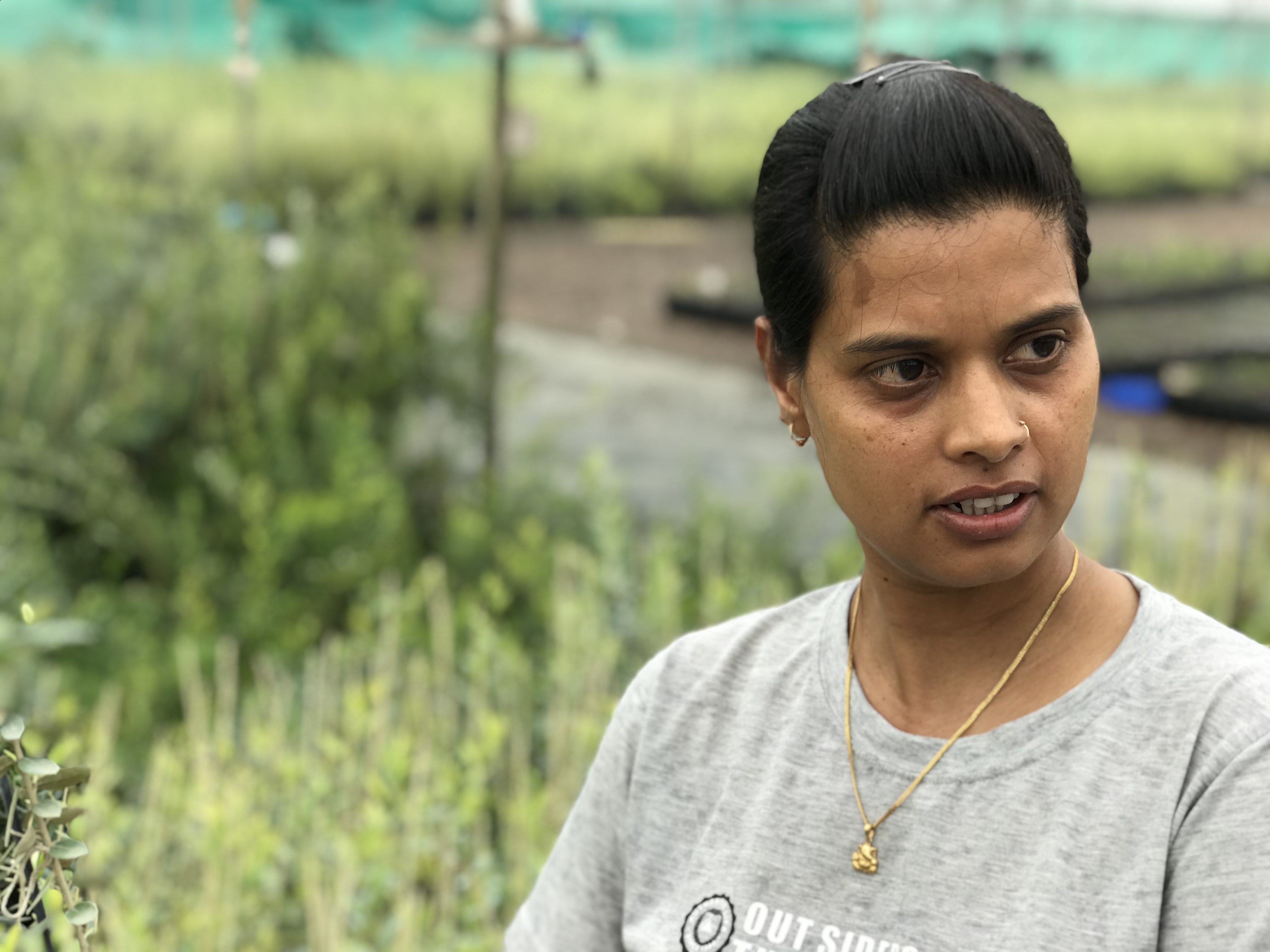
Walking partner Priyanka Borpujari, left, with farmer Saroj Devi Yadav and her family.
Paul Salopek
We walk past fields of wheat and millet that shine in the sun like a green mist. Past rice paddies. Past canals and muddy ponds where water buffalo loll. (The prehistoric-looking beasts, their wet hides black as tar, squint nearsightedly at us as we inch by.) We ask people about harvests. (Not so good.) About changing weather. (The monsoons once again have ended too early.) Then, 10 miles east of Jaipur, we pause to rest at a farm. It is managed exclusively by women. In testosterone-steeped India, this is interesting.
“We run things here. It is a necessity,” says Saroj Devi Yadav, 62, the wizened matriarch of the family. “All the men are away working in the city.”
Yadav’s husband delivers food for Uber in Jaipur. Yadav and her two teenage granddaughters stay home to make sure the fields are watered. They cut fodder. They herd their cows and buffalo. They organize shipments of milk to Jaipur in tin cans slung across motorbikes. As the suns drops over the women’s tiny green domain, Yadav shares her tea and curry.
“I got married at 13,” she says. “Things were different then. Nobody asked us girls. Today, the girls get many more choices. They marry later.”
Her 19-year-old granddaughter, Jyoti, has been studying to become a police constable. “I don’t like it in the village,” she says. “The teachers here are stupid, and you can’t go out alone because of the boys.” To escape farm life, she plans to marry a Jaipur boy by year’s end. The younger granddaughter, Chetna, 14, wants to become a doctor.
It is an old story.
The rapid urbanization of the world—the mixing of diverse peoples inside booming megacities—is breaking down age-old gender barriers. Yet India won’t soon evolve into South Bougainville, a Pacific island famous for being home to one of the few true matriarchies in the world. (Women of the island’s Nagovisi ethnic group control all the farming wealth: Men toil in the women’s gardens.) In parts of India, up to two-thirds of the agricultural worker force are women. But nationally, barely 13 percent of Indian women actually own land. India’s soil is still cupped firmly in the hands of men.
We walk east, Borpujari and I. We sweat along narrow roads of burning asphalt.
In Central Asia, my walking route passed near Bronze Age kurgans, or burial mounds, that held the bones of women scarred with battle injuries. They were buried with weapons of war: female Scythian warriors—the original Amazons.
“Hey!” Borpujari shouts.
It is a heavyset man behind the wheel of an expensive SUV. He has braked his car in front of us. He blocks our path. He films us out his window with a phone. Borpujari raises a hand.
“Did you ask our permission?” she demands.
“I didn’t know”—the man huffs—“that I needed permission.”
Borpujari plants herself at his window—a combative act that she hates, she will confess later—and tells him levelly, “You need permission.”