See the farmer’s hands. Thick with callus. Speckled by sun.
Watch them till the soil. How often have they done this chore? A thousand times? Ten thousand? More? Yet they are incapable of consistency. Over the course of their working life, they will never swing a hoe the same way twice. Or study the fingers of the rattan weaver: His baskets are saved from idiot sameness by tiny, beautiful human errors. Or the big, meaty hands of the stone-setters—the village masons—building simple houses that are actually habitable sculptures: each wall and corner unique, and never quite plumb. Such confident hands. Clever hands. Wise hands, even. Hands that perform everyday tasks with a certain authority, a kind of ineffable power.
I am walking across Yunnan besotted by a strange, lopsided, handcrafted world.
Yang Zhi Xiao, a former horse caravan wrangler, displays an animal's old neck bell. The horse and mule caravans in western Yunnan have faded with the construction of new roads.
Paul Salopek
Why strange?
Because this is 21st century China: a clichéd panorama of hyperactive megacities, punctual bullet trains, over-lit malls, and hi-tech ports—the famed “factory of the world.” An economy whose tireless conveyor belts satisfy humanity’s vast demand for cell phones, plastic toys, solar panels, clothing, and countless other articles of industrial mass production. (Need a laptop? China exports 47 million computers a month.)
Yet in the scarps and valleys of western Yunnan Province, bordering Myanmar and Tibet, a startlingly different Middle Kingdom abides: a stronghold of manual, artisanal trades. A cosmos of makeshift villages and crooked roads.

Farmer Shen Jisheng serves dinner to walking partner Zhang Hongyi.
Paul Salopek
“It’s too steep here for industrial farming,” says Shen Jisheng, who hand-plants corn and potatoes atop a piney ridgetop hamlet called Songpo. “So everything we do is organic.”
Shen isn’t exaggerating. His fertilizer is a homemade concoction of pine needles and pig waste. A hand-carved wooden stick functions as a corn de-grainer. Hand-woven shoulder baskets hold his harvests. Even Shen’s small fields defy the rigid geometries imposed by the mechanical world: They’re irregular, amoeboid, lobed.
“We buy our baijiu from the town,” allows Shen’s wife, Wang Liusui, referring to an often mass-produced booze in China that numbs the lips on contact.
Cooking on a wood-fired stove, Wang’s meals include wild forest products such as fried ferns.
A shield of mountain walls only partly explains why western Yunnan has largely escaped the tsunami of industrialization enveloping much of the rest of China. The region’s old lifeways also are likely preserved by its complex mosaic of ethnic minorities. Historically less well off than the dominant Han majority, groups like the Lisu, Mosuo, Naxi, and Yi often cling to antique rural pursuits. (Shen and Wang are ethnic Bai.)
Farmer Shen Jisheng serves dinner to walking partner Zhang Hongyi.
Paul Salopek
“It’s too steep here for industrial farming,” says Shen Jisheng, who hand-plants corn and potatoes atop a piney ridgetop hamlet called Songpo. “So everything we do is organic.”
Shen isn’t exaggerating. His fertilizer is a homemade concoction of pine needles and pig waste. A hand-carved wooden stick functions as a corn de-grainer. Hand-woven shoulder baskets hold his harvests. Even Shen’s small fields defy the rigid geometries imposed by the mechanical world: They’re irregular, amoeboid, lobed.
“We buy our baijiu from the town,” allows Shen’s wife, Wang Liusui, referring to an often mass-produced booze in China that numbs the lips on contact.
Cooking on a wood-fired stove, Wang’s meals include wild forest products such as fried ferns.
A shield of mountain walls only partly explains why western Yunnan has largely escaped the tsunami of industrialization enveloping much of the rest of China. The region’s old lifeways also are likely preserved by its complex mosaic of ethnic minorities. Historically less well off than the dominant Han majority, groups like the Lisu, Mosuo, Naxi, and Yi often cling to antique rural pursuits. (Shen and Wang are ethnic Bai.)

A high-speed rail line over the Mekong River is part of the new infrastructure transforming Yunnan.
Paul Salopek
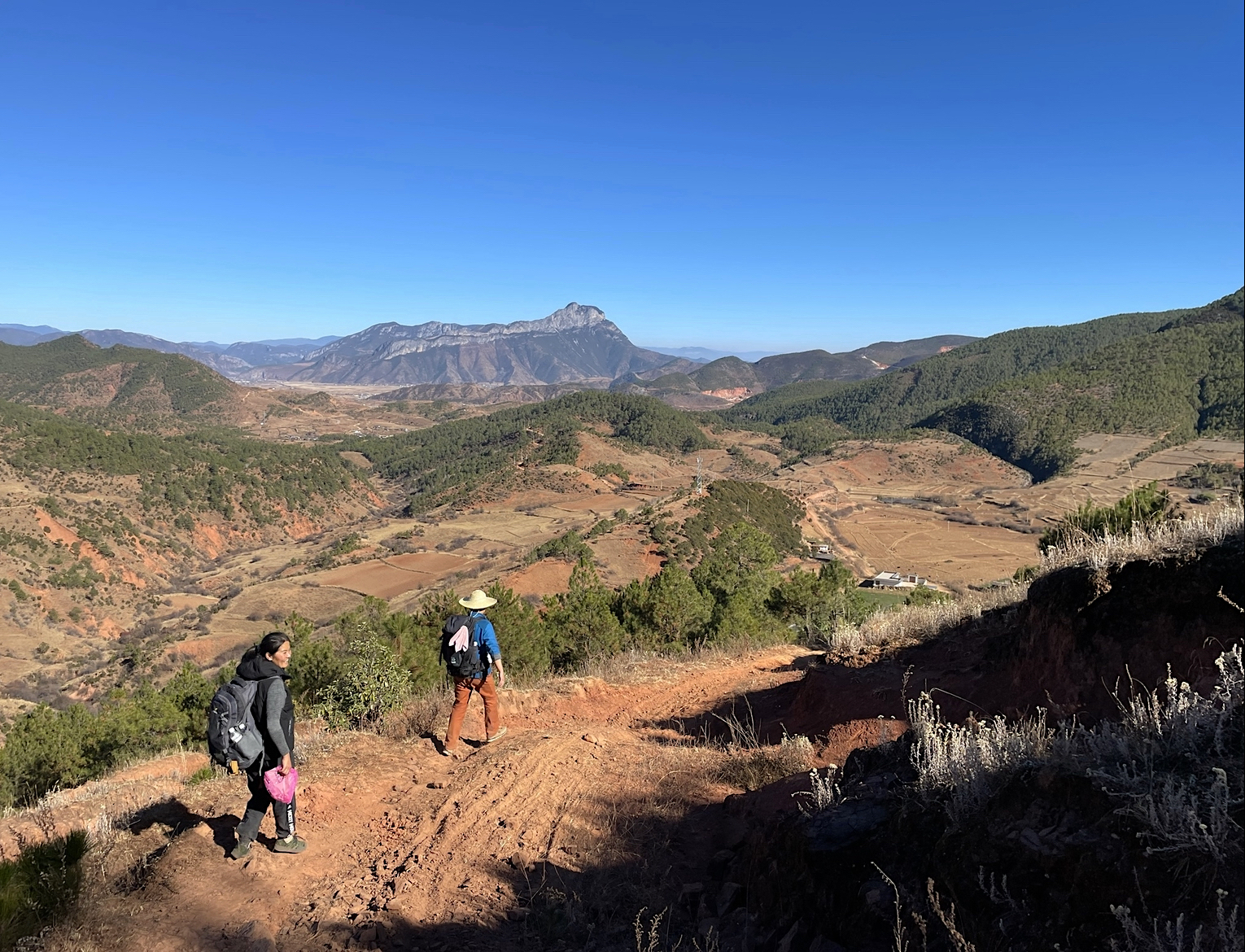
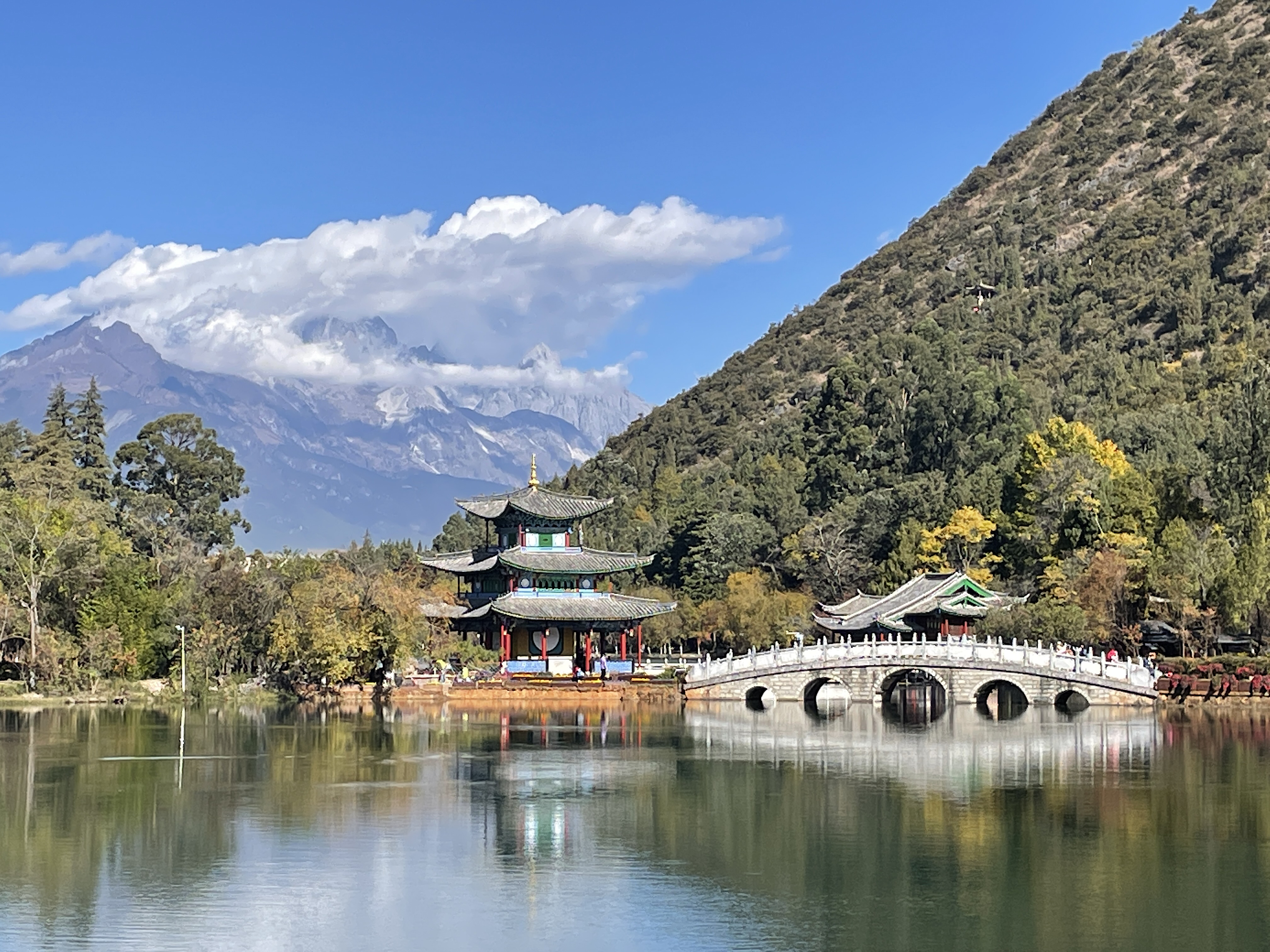
On a three-month foot ramble through Yunnan’s lumpy backcountry, starting near Tengchong, hard by the Myanmar border, and hiking more than 500 miles to a popular tourist city called Lijiang in the north, I have encountered such a boggling array of medieval occupations that I’ve begun keeping a list.
Subsistence farmers abound in this rumpled corner of China.
But there are also roving aluminum pot menders in the Gaoligong Mountains, walnut oil pressers in Lujiang, eucalyptus oil distillers along the Nu River, and chili grinders pounding out their red wares around Dali. I met basket makers, mule packers, wild mushroom pickers, backyard textile weavers, and axmen who specialize in hewing beehives from hollowed-out trees. It’s been a pleasure—somehow comforting—to traverse the slower, more human-scaled world they've built.
A medley of antique manual trades are still practiced in the mountains of southwestern China.
Out of Eden Walk
I know.
Do not romanticize poverty. Do not exoticize underdevelopment. Do not indulge in naïve fantasies about the hardships of preindustrial life. Yet surely the bigger fantasy is believing that humankind’s mass-produced economy, as configured today, is anywhere near sustainable.
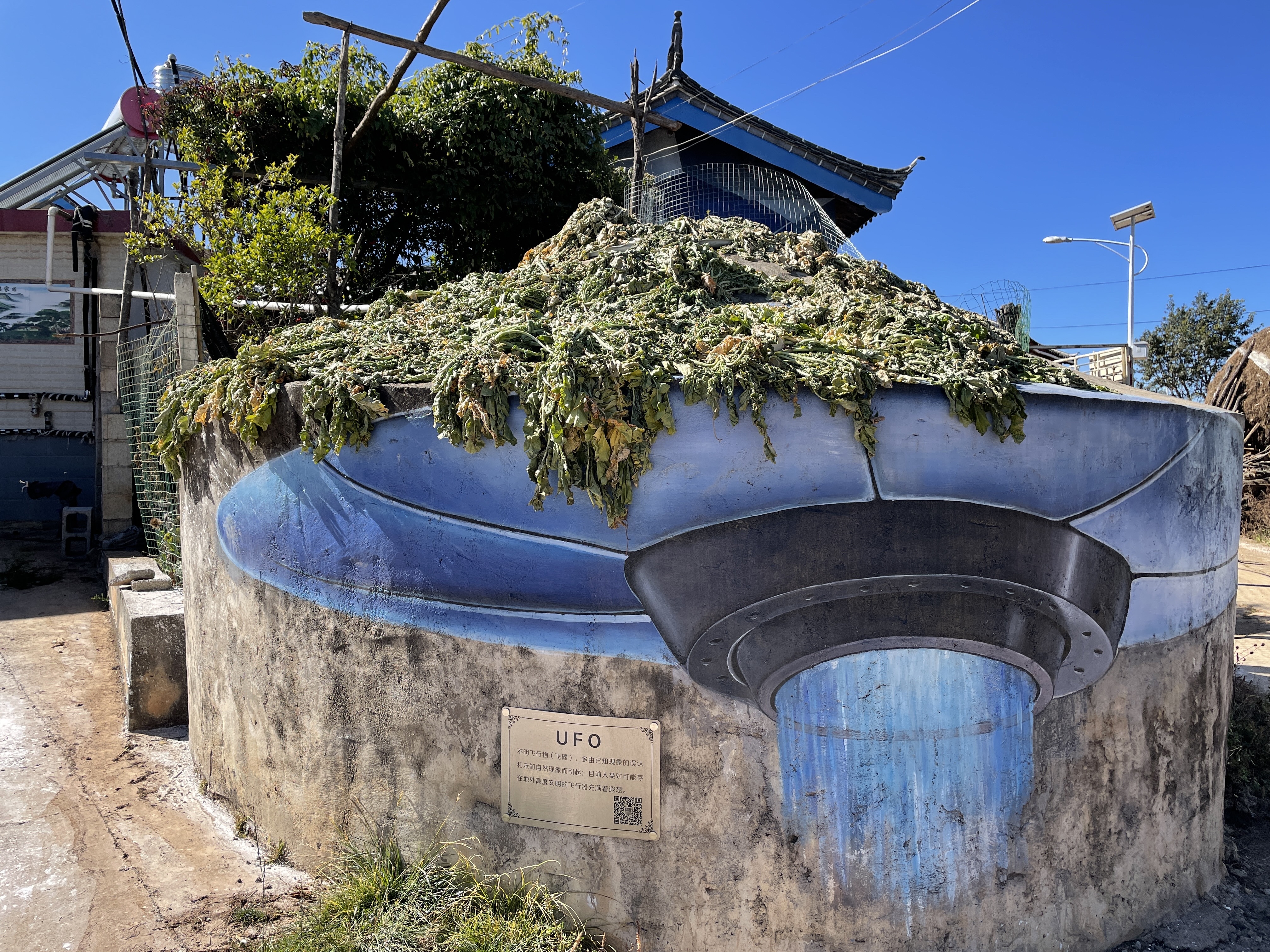
Meanwhile, the monotonous surfaces of our machine-built world—concrete superhighways, cellophane packaging—advance steadily into rugged western Yunnan.
“Ten years ago I had 10 mules,” says Luo Shi Ming, an aging mule driver who helped lug my gear over the curled, hand-built trails of the Yongling Mountains. “Now I have only two.”
Study Luo’s hands: scarred by old buffalo-hide ropes. Human maps themselves. Worn charts of Silk Roads walked for centuries in Yunnan.
There was good money recently, says Luo, hauling construction equipment and cement into the mountains. Each mule load helped put his caravan trade out of business. The cement is paving new roads.