Many people have heard how health quarantines shut down big cities in China during the recent COVID-19 pandemic. Less well known is that these restrictions on movement also applied to the Chinese countryside. Large sections of rural landscape were declared off-limits whenever positive cases of the disease popped up in smaller towns or villages.
Unfortunately, these rural lockdowns also affected the Out of Eden Walk’s long foot journey through the country. Paul Salopek told us that local quarantines once forced him to abandon his trail, and he was unable to cross the Micang Mountains on the border between Sichuan and Shanxi. To bypass the lockdowns, Paul had to stop, get into a car, and continue the journey by another route. This left an 87-kilometer gap in his 38,000-kilometer global walk.
We had come to know Paul through our work on a long-term conceptual art endeavor called the Water System Project—he had learned about it and contacted us to know more. Our work involves many media, from video to drawings to performance, and often brings together diverse peoples to discuss the issues our art touches upon: human-nature interactions, sustainability, and Indigenous systems of knowledge. He invited us to help close the gap: It would be the first time in 11 years of walking that fellow creatives had actively “stitched together” a discontinuity this way in his continent-spanning journey. We enthusiastically agreed.
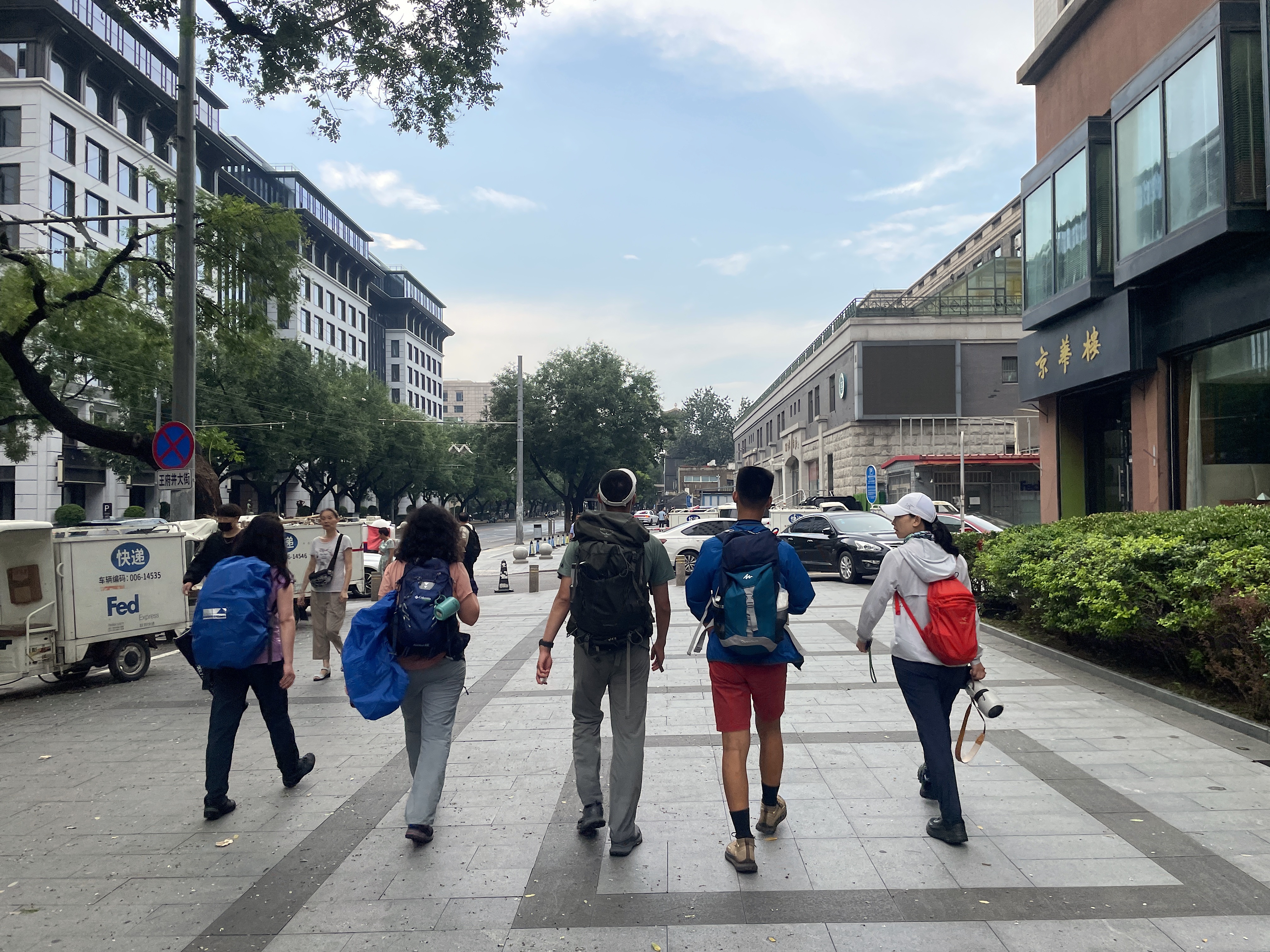
On the afternoon of March 28, 2023, four of us—two artists, Minghao and Jianjun, the ecologist Zhu Dan, and Zhu’s childhood friend Deng Pu—began walking from Zengjia, in Guangyuan prefecture, to Liping, in Hanzhong prefecture. We would communicate often with Paul about what we saw, using our own insights and methodologies to add meaning to our experience.

At Fangjiaba, a derelict hydropower station is emblematic of the region's recent rural exodus. "If peace and prosperity outside the mountains endure long enough, we wondered whether those who once left the countryside in waves will ever return to their roots?"
Chen Jianjun
Here in southwestern China, karst—hilly limestone terrain with caves and underground rivers—dominated our route, during which the elevation dropped about a thousand meters. We saw ancient beehives scattered in the countryside and spoke to local people who recounted how unmarked headstones have always been used for burials, with graves usually placed in front of houses or in a corner somewhere around the village or in the forest. By closely observing the natural and human features—geology, soil, topography, climate, as well as farming patterns—we came to understand the complex ways limestone features influence human activity. Walking and talking with local people was our way of interrogating the geography. It helped us comprehend the intersection of the terrain with traditional knowledge—and how ancient landscapes are affected by forces such as climate change.
Our quartet embarked from Zengjia Town, in a mountain resort area, opting for rural paths little used by vehicles. The journey to Liping, in the wild foothills of Liping National Forest Park, took three full days and two half-days.
On the third day, setting off at 9 a.m., we ventured into the mountains. In the afternoon, guided by a village official, we took a secluded path (dubbed a shortcut but in reality a longer way to go). We wended through the mountains, navigating peaks and valleys between elevations of 750 meters and 1,400 meters.
Our legs and feet were crying out, but fortunately, our cheerful banter and the ever-changing mountain scenery were welcome distractions. Late in the afternoon, we finally surmounted the last obstacle, and gazing from the hillside at the settlements below, we mustered the strength to cover the remaining miles.
This experience prompted us to contemplate the significance of our journey.
Contemplation at three miles an hour
More than a decade ago, Paul launched the Out of Eden Walk, with the aim of traversing the globe from the Great Rift Valley, in East Africa, to Tierra del Fuego, at the tip of South America. His mission: to retrace the steps of our ancestors and rediscover the essence of humanity. Our small piece of that immense journey, close to the Micang Mountains, revealed another facet of our home country—and a deeper appreciation for the countryside.

Unmarked tombstones near Guangyuan, in Sichuan Province.
Chen Jianjun
Throughout our trek, for example, the past often drifted to mind. We speculated that former inhabitants of this area must have sought refuge from famine, fact later corroborated by our research. Few would willingly choose to live in such secluded and relatively inhospitable uplands. Yet it is difficult to equate these mountains with destitution, for the natural beauty alone—canyons, rivers, caves, and layered peaks—was a sight to behold. Moreover, the people here, especially in Shanxi, exhibited a simplicity, warmth, and generosity of spirit that challenges the social adage that "the economic base determines the superstructure." The words of Zhuang Xueben, one of China’s first ethnographic photographers, resonated: "They are but our distant kin, not uncultured people." A century ago, this statement applied to the Tibetan minority Golog region; today, it offered a new perspective on a Han territory previously unfamiliar to us.

Sculpture by water: karst landscape in Shanxi Province.
Chen Jianjun
As we walked along, we were at a loss to find a single narrative that could do justice to our densely layered experiences. This must be a recurring problem for Paul’s Out of Eden Walk storytelling. It was certainly a challenge for us.
Consider our own Water System Project. The two artists in our hiking group, Cao Minghao and Chen Jianjun, initiated this idea in 2015, and it has been evolving since. Like the Out of Eden Walk, the fieldwork involves research, interviews, and collaborations with local people. The outcomes are both artistic and practical. And yes, the project involves an awful lot of walking.
Beginning with on-site investigations, we reflect on the historical changes and contemporary realities of an ancient engineering project in Sichuan Province, the Dujiangyan Irrigation System. This feat, which dates back more than 2,000 years, was conceived as a dam-less hydraulic project—the original builders were masters at using river and local topography to their advantage.
We could see this clearly from Dujiangyan Erlang Temple, a Taoist shrine atop a nearby hill. Looking down over the river, which still irrigates 1.6 million acres of farmland, we noted how those early engineers used natural slopes and curves in the land to regulate water flows. They understood collaboration with nature. Dujiangyan represents a remarkable and intimate partnership with a river—techniques of water management far different from our modern technologies, which often resort to brute force. An inscription at the beautiful temple says it well: “Supremacy does not reside in high places; change does not violate nature.”

An exhibition in 2022 of the partners' Water System Project features media from video to drawings and explores human-nature interactions, sustainability, and Indigenous systems of knowledge.
Courtesy of the artists
Our own efforts—exploring a range of social and environmental issues arising from the interaction between humans and nature—draw inspiration from this historic water conservancy project in southwestern China.
For example, we have worked with a nearby ethnic minority group, the Qiang, in Wenchuan County, the epicenter of a terrible earthquake in 2008. Collaborating with residents and geologists, we have developed innovative, small-scale practices that address issues of landscape, urbanization, climate change, and alternative futures. We have worked with a Qiang village to establish a small folklore museum to preserve their knowledge and traditions. To help strengthen new buildings, we used a technique—One University One Village—developed by the School of Architecture at the Chinese University of Hong Kong to adjust the proportions of grain sizes in raw earth to meet the earthquake-resistant standard. We have also focused on the impact of governmental policy and post-earthquake reconstruction on this area and how local wisdom informs the daily lives of people here.
And so we learn. And we walk.

Left to right: Cao Minghao, Chen Jianjun, Deng Pu, and Zhu Dan in Zengjia Town, Sichuan. “I see this ‘gap closure’ hike as an act of healing,” Salopek says. “Now the walk’s trail is made whole again.”
Photograph courtesy Chen Jianjun
We have hiked along the length of the Min River that feeds the Dujiangyan irrigation project—a distance of nearly 750 kilometers from its source to the lower reaches. Near the headwaters, we worked alongside Tibetan grassland pastoralists, making art with them that explores various effects of geology and global climate change.
The complexity of human-nature relationships maybe helped prepare us to “sew up” Paul’s trail gap. By spending years patiently collaborating with local ethnic groups in China—people who know the land intimately, and who helped us create our own body of landscape-based art—we could appreciate, as Paul does, the subtle details that presented themselves along our rural trail.
We saw, for example, that people in the area, drawing on the practices of their ancestors, have built arable terraces on the mountainsides to grow food crops. Meanwhile, remnant earthen and wooden dwellings show their wisdom in using local materials and techniques to solve the problem of housing.
This region was new to us. Even on foot, time can seem short, and we sometimes struggled to comprehend the landscape sliding by at just three miles an hour. Was it that China's long history was too too compressed to grasp even at that speed? Or was the tapestry of all human existence and migration simply too intricate to hold in one pass?
There were moments of clarity amid the forest's embrace, as when we beheld villages nestled in breathtaking highland scenes reminiscent of the mythical Shangri-La. Yet they often had few people, and we felt a pang of sorrow, fearing for the imminent disappearance of these habitations. If peace and prosperity outside the mountains endure long enough, we wondered whether those who once left the countryside in waves will ever return to their roots?
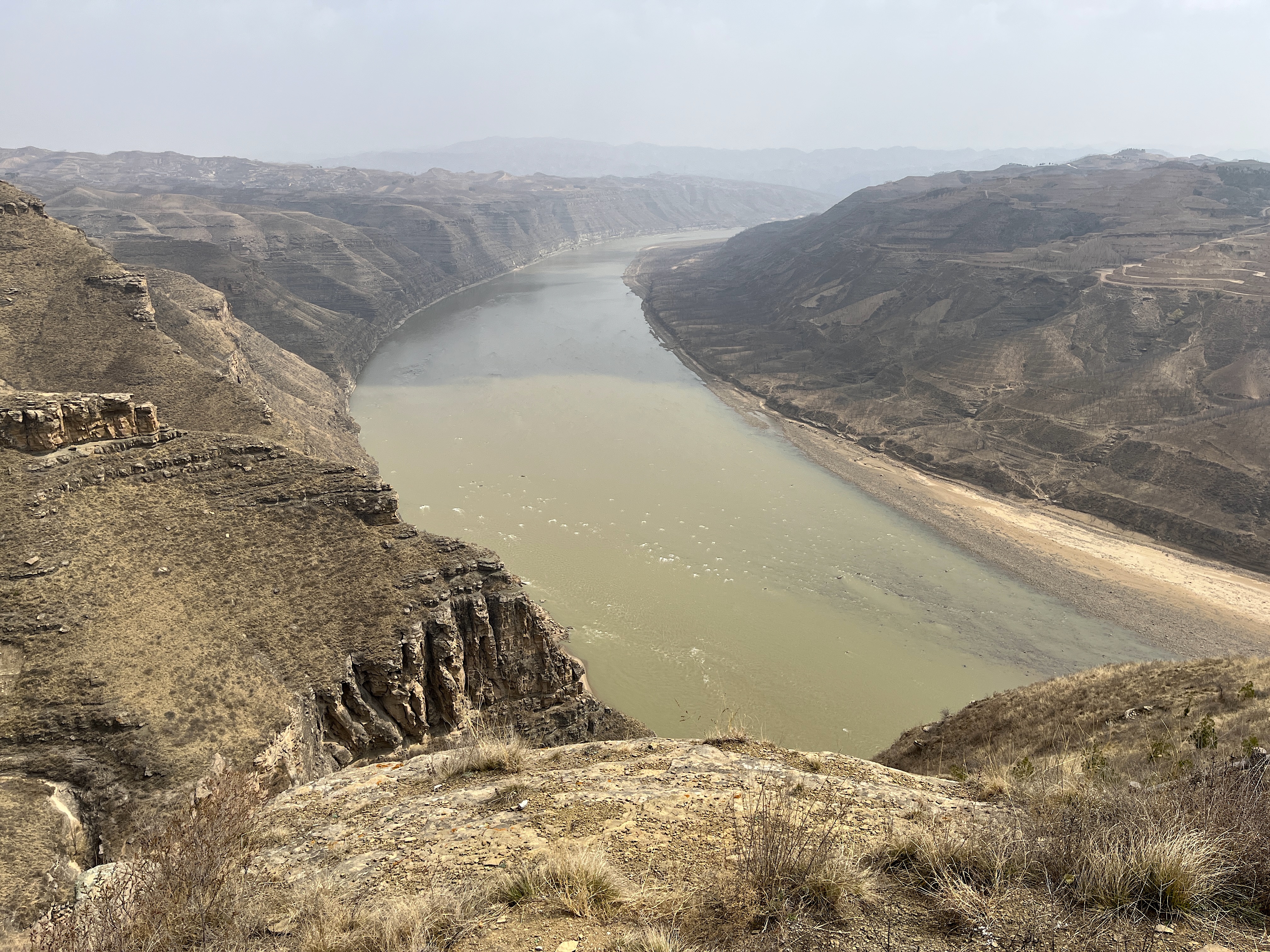
We wanted to tell Paul what we learned, about changing ways that surely are echoed in other parts of the world, differing only in scale and scope. Sharing these thoughts with him via WeChat, we learned that he was somewhere far to the north, camping along the banks of the Yellow River in Shaanxi Province, trying to mend his wind-torn tent in the dark.
“I see this ‘gap closure’ hike as an act of healing,” Paul told us. “It was a rupture in the journey caused by a global pandemic. Now the walk’s trail is made whole again.”
Our hike continues to provide us with space for imagination, without boundaries—a welcome challenge. This is art’s mysterious gift.
Artists and transdisciplinary researchers Cao Minghao and Chen Jianjun live and work in Chengdu. Zhu Dan is an ecologist at the Chengdu Institute of Biology, Chinese Academy of Sciences. Using contemporary photography, he is investigating the travels a hundred years ago of the American explorer Joseph F. Rock.