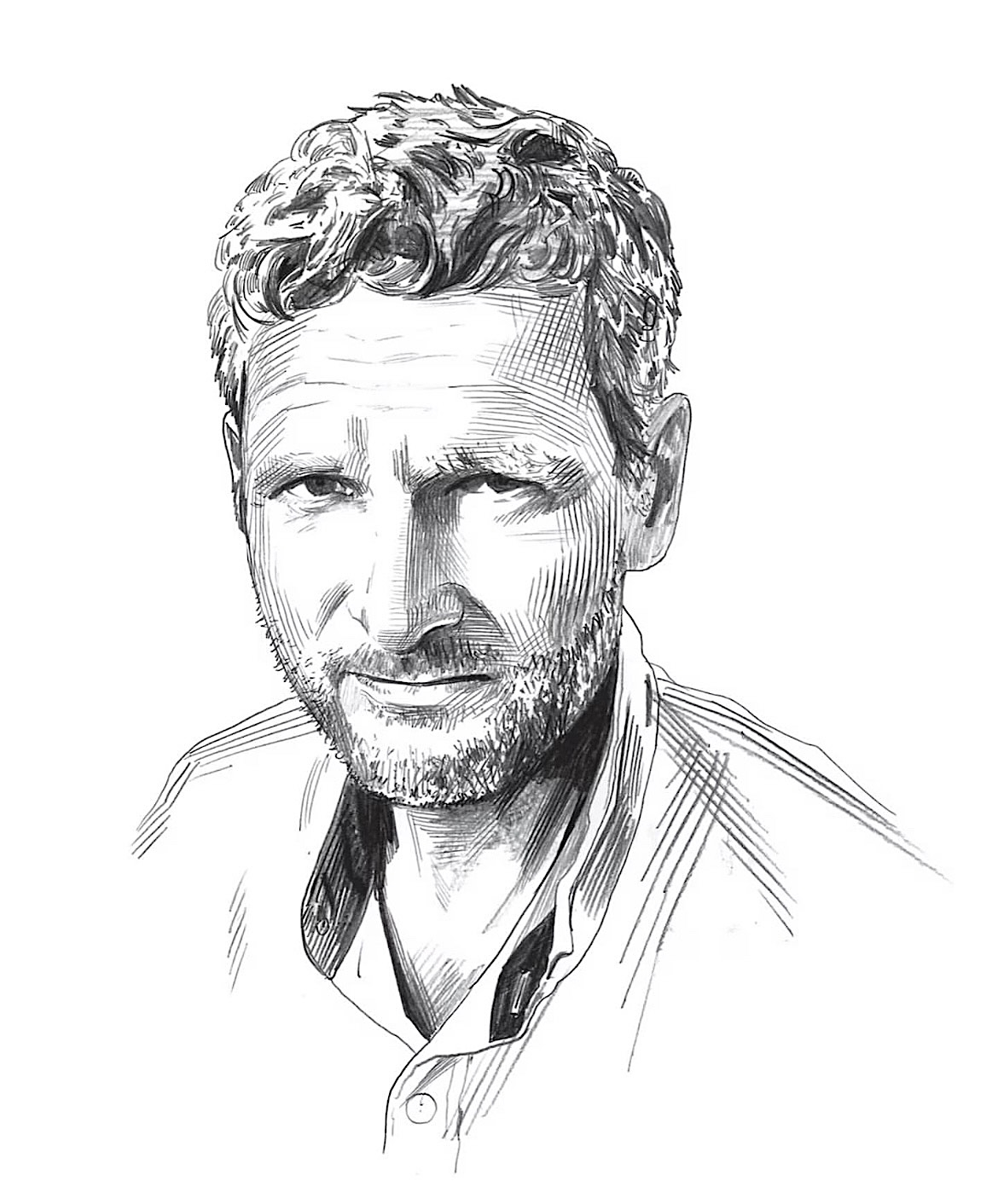
A decade ago, I crossed the Lesser Caucasus in the company of Matthieu Chazal.
I’d never met Matthieu before. The Frenchman was no alpinist. He was a photographer. He showed up one day at the lobby of my cheap hotel in the Turkish city of Kars, a bearded chain-smoker, rakishly handsome, his urbane smile utterly overthrown by fiery black eyes that belonged to an exiled revolutionary. Matthieu was absurdly underdressed. He wore a kaffiyeh scarf and leather street shoes. It was late November. The mountain temperatures never stirred above freezing. Miserably, we tried dodging blizzards on foot. Matthieu yanked shopping bags over his thin socks to keep his feet dry in snowdrifts. At one point, he armored himself against razored winds with plastic sheeting foraged from a garbage dump. “Don’t worry,” whispered my colleague, the Kurdish photographer Murat Yazar, who’d invited this heedless caveman to our trail. “He will be gone in two or three days.”
Matthieu, it turned out, was an inspired walker.

Schoolgirl. Boğazköy, Turkey.
Matthieu Chazal
He trekked with us for a month. Across 350 kilometers, he traversed the frozen steppes of Turkey to the white peaks of neighboring Georgia. Along the way, he beguiled every random human being we encountered: farmers numbed in winter hibernation, bored shopkeepers, even more bored prostitutes, skeptical border guards, alcoholic monks. Matthieu’s effortless power of connection—charm doesn’t begin to convey the man’s gift—was, I would learn, both his life’s compass and way of making art. Complete strangers fell in love with him. And when they weren’t looking, he sometimes captured their likeness.
Matthieu’s work defies easy classification. This is a testament to the freshness of his eye.
His black-and-white images can carry the punch of documentary photography. Yet they are lit too, with an ineffable and timeless light. This friction between the ancient and new vibrates even in the workaday subjects that caught his attention: side roads, tea breaks, dead dogs, the silent passersby. He was a patient hunter. He chose his arrows carefully because he had to. Shooting 35mm film with a Leica M6 or Canon AE-1, he was obliged to ration his frames. Sometimes, he told me, his instincts remained hidden for months, until they emerged from his darkroom in France.
This quality of waiting—the scarcest of human commodities in these dizzy days—steeps his portraiture.
Schoolgirl. Boğazköy, Turkey.
Matthieu Chazal
He trekked with us for a month. Across 350 kilometers, he traversed the frozen steppes of Turkey to the white peaks of neighboring Georgia. Along the way, he beguiled every random human being we encountered: farmers numbed in winter hibernation, bored shopkeepers, even more bored prostitutes, skeptical border guards, alcoholic monks. Matthieu’s effortless power of connection—charm doesn’t begin to convey the man’s gift—was, I would learn, both his life’s compass and way of making art. Complete strangers fell in love with him. And when they weren’t looking, he sometimes captured their likeness.
Matthieu’s work defies easy classification. This is a testament to the freshness of his eye.
His black-and-white images can carry the punch of documentary photography. Yet they are lit too, with an ineffable and timeless light. This friction between the ancient and new vibrates even in the workaday subjects that caught his attention: side roads, tea breaks, dead dogs, the silent passersby. He was a patient hunter. He chose his arrows carefully because he had to. Shooting 35mm film with a Leica M6 or Canon AE-1, he was obliged to ration his frames. Sometimes, he told me, his instincts remained hidden for months, until they emerged from his darkroom in France.
This quality of waiting—the scarcest of human commodities in these dizzy days—steeps his portraiture.
Echmiadzine, Armenia.
Matthieu Chazal
Study his people. The luminous bride in Lac Salé stares off, smoking fiercely, into space. So do the Georgian boys, dreamily, in Around Batumi. With the Armenian soldiers and mysterious seated woman in Echmiadzine, it is much the same. In Matthieu’s universe—whether geolocated in a Turkish shepherd’s camp, or at the front lines of the Battle of Mosul—life seems paused always at the brink of reverie.
For 17 years, between jobs as a waiter or a truck driver (“I am a very good waiter!”), Matthieu roamed the tense contact zone between Asia and Europe: Places, he wrote, where “violence and truce, adventure, wandering, waiting, the fragile balance between order and disorder, between life and death, play out.” Turkey. The Balkans. The Caucasus. Eastern Europe. The Middle East. More recently, he had started covering wars in Ukraine and Iraq. But like one of his heroes, the American documentarian W. Eugene Smith, Matthieu seemed drawn mostly to the everyday gestures of people in extremis. Stripped of otherness, his faces seem impossibly familiar. They linger inside our eyes—intimate as dear ones in a family album. Even captured in laughter they seem a bit lonely. They are memorialized in a forgiving moment.
“He loved people,” said walking partner Murat, who journeyed into the margin lands often with Matthieu on foot, on buses, on trains. “Everything went into the photos.”

Matthieu Chazal, wrapped in plastic against the cold of the Caucasus mountains, leads a cargo mule named Kirkatir through the snow.
Paul Salopek
Matthieu was a big soul. A life force. He joked of Balzac’s coffee habits and told raucous stories of his travels with the Anatolian Roma. He lived like a poet and died young like a warrior—just as his superb legacy becomes known. His first and only photo book, titled Levant, was published in September. Galleries in Paris have begun representing his work. The name Chazal, no doubt, will be famous in photography.
On those bitter days afoot in the Caucasus, Murat and I would sometimes send Matthieu ahead to search for shelter in the snowy wastes. He was very good at it. Often, we found him at a tumbledown farmhouse or roadside inn, regaling a crowd with outlandish stories, and sipping from a jar of homemade Georgian wine. Last month our nomad friend left us, at 49, a casualty of aggressive cancer. Once more he scouts the road ahead.
Editor’s note: The many friends of Matthieu Chazal will be organizing a retrospective of his work in Turkey next September. Details will be posted on this site when available.