“Stupa? Ten somoni.”
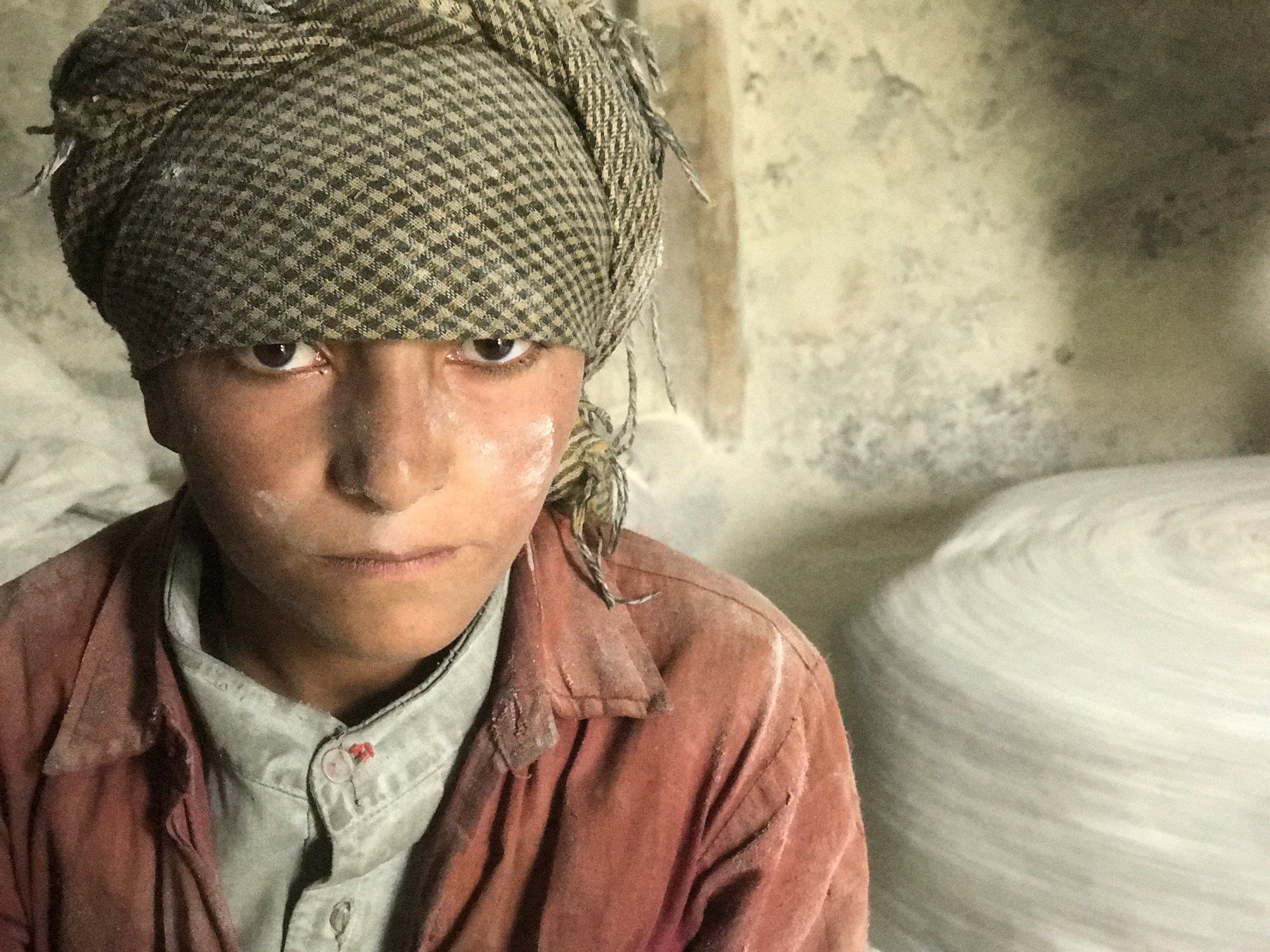
Rauf Mubashirov wears the granite face of an experienced haggler. His confidence is unshakable, supreme, even haughty. He knows he owns the goods. He knows people come to Vrang only to buy.
This is no surprise.
Mubashirov, an eight-year-old schoolboy, lives along a 2,000-year-old trunk of the fabled Silk Road in the beautiful and remote Wakhan Valley of Tajikistan. Famed medieval travelers such as Marco Polo and the Arab wanderer Ibn Battuta passed by his village. Before them, in the sixth and seventh centuries, came Buddhist monks from China. These older visitors left behind a strange relic in Mubashirov’s backyard: a small, rock-stepped pyramid that looks like a Buddhist shrine, or stupa, in what is today Muslim Central Asia. Mubashirov charges strangers a bit more than a dollar to see it, though it is a public monument, freely accessible from the road. He also sells rubies.

Showing the cherry-red goods.
Paul Salopek
“Ruby, ruby, ruby!” he says, displaying the raw, shining stones in his small palm.
Younger ruby sellers ply their trade next to Vrang’s stupa. One, Mir Rayoz, seven, wears a polyester business suit. He carries his jewels in a plastic toothpick dispenser.
But just as the Vrang stupa may not, in fact, be a stupa (some archaeologists think it is a Zoroastrian fire temple), the “rubies” of the Wakhan Valley are not always rubies. Many are a softer, semi-precious stone called a spinel.
Only experienced geologists can tell the two red gems apart. Misidentified as rubies, the less-prized spinels have infiltrated royal treasuries, from the crown of Catherine the Great in Russia to the Imperial State Crown of the United Kingdom locked in the Tower of London.
Mubashirov scoffs. A ruby is a ruby. A stupa is a stupa. Such has been the pitch on the Silk Road for many centuries.
“Yesterday I sold a ruby to a tourist for 500 somonis,” Mubashirov whispers confidentially.
And how old is the stupa?
“I don’t know,” Mubashirov says, bored with this man who buys nothing. “I was little when they build it.”
Showing the cherry-red goods.
Paul Salopek
“Ruby, ruby, ruby!” he says, displaying the raw, shining stones in his small palm.
Younger ruby sellers ply their trade next to Vrang’s stupa. One, Mir Rayoz, seven, wears a polyester business suit. He carries his jewels in a plastic toothpick dispenser.
But just as the Vrang stupa may not, in fact, be a stupa (some archaeologists think it is a Zoroastrian fire temple), the “rubies” of the Wakhan Valley are not always rubies. Many are a softer, semi-precious stone called a spinel.
Only experienced geologists can tell the two red gems apart. Misidentified as rubies, the less-prized spinels have infiltrated royal treasuries, from the crown of Catherine the Great in Russia to the Imperial State Crown of the United Kingdom locked in the Tower of London.
Mubashirov scoffs. A ruby is a ruby. A stupa is a stupa. Such has been the pitch on the Silk Road for many centuries.
“Yesterday I sold a ruby to a tourist for 500 somonis,” Mubashirov whispers confidentially.
And how old is the stupa?
“I don’t know,” Mubashirov says, bored with this man who buys nothing. “I was little when they build it.”