Meet “King” Li Gen Fan.
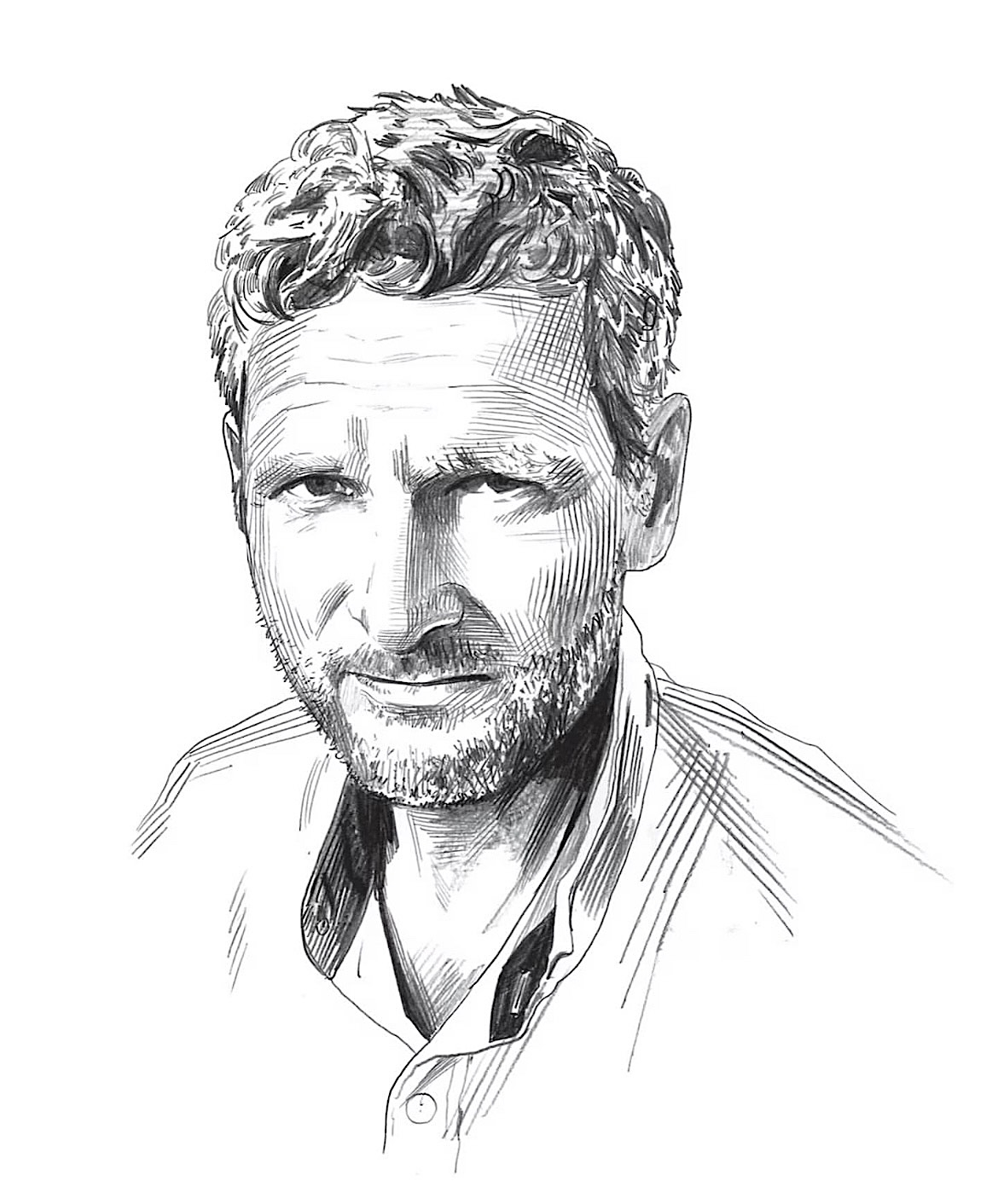
Fiftyish. Squarely built. Face reddened by the subtropical sun. King Li is a community leader among the Bai ethnic minority in the rumpled, green mountains of Yunnan Province. A friendly man. But reserved. Soft-spoken. Shy even. Until he starts singing.
A “king of song” in southwestern China offers a musical tour of his village—and culture.
Out of Eden Walk
“This one is called ‘You Are My Heart, You Are My Liver,’” says Li, a traditional “king of song” in the village of Shilong. Li explains that the liver, being a vital organ like the heart, is deemed by the Bai an abode of love.
Li plants his feet a yard apart. He cocks his hands by his sides like a gunslinger. He stares blankly in concentration. He inhales a gigantic breath. And from his mouth booms a melody of masculine yearning so loud and fierce that even among the uncomprehending—he sings in the Bai language—it can rattle the heart (and liver). Then, for demonstration purposes, Li suddenly switches singing roles. Starting softly, his voice swells into a high, trembling, coy feminine rejection: “No thanks. I don’t like you, but I’ll sing to you anyway.”

Li Gen Fan, a Bai community leader from Shilong village, wants to save his minority ethnic group's vast, expressive, but vanishing song repertoires.
Paul Salopek
The Bai communicate their every emotion with improvised music, Li says.
“When we’re too embarrassed to say something in normal life, we sing it to each other,” he explains. “We’re a culture of introverts. We can only say what’s on our mind when we’re singing.”
Thus, the Bai’s repertoire is vast, complex, encyclopedic. Their folk music spans every conceivable form of human activity.
At a Buddhist temple perched in the forested hills near the village, an annual singing festival called Shibaoshan Gehui, held every July after the rice harvest, features saucy competitions of antiphonal singing between men and women: playful call-and-response duets that can veer from innuendo to X-rated. (In the past, the festival provided Bai lovers an opportunity to hook up.)
Li Gen Fan, a Bai community leader from Shilong village, wants to save his minority ethnic group's vast, expressive, but vanishing song repertoires.
Paul Salopek
The Bai communicate their every emotion with improvised music, Li says.
“When we’re too embarrassed to say something in normal life, we sing it to each other,” he explains. “We’re a culture of introverts. We can only say what’s on our mind when we’re singing.”
Thus, the Bai’s repertoire is vast, complex, encyclopedic. Their folk music spans every conceivable form of human activity.
At a Buddhist temple perched in the forested hills near the village, an annual singing festival called Shibaoshan Gehui, held every July after the rice harvest, features saucy competitions of antiphonal singing between men and women: playful call-and-response duets that can veer from innuendo to X-rated. (In the past, the festival provided Bai lovers an opportunity to hook up.)

Baoxiang Temple, in Yunnan Province, is the site of an annual song festival that strives to preserve the Bai ethnic group's complex and threatened singing culture.
Paul Salopek
Beyond flirtation, Bai songs also venerate the gods of the group’s polytheistic religion, called Benzhuism. (Each village has its own ancestor deities, which can incorporate elements of Buddhism, Daoism, Confucianism, and animism.) There are songs to commemorate long-ago historical events. There are funeral dirges. And songs that lighten the toils of rural life.
“We sing while doing many different types of jobs,” Li says.
He proceeds to belt out a dazzling medley of work lyrics: a hoeing song for farming, a song for carrying cakes of dried tea—“You sing it low, because of the exertion”—and a fishing tune that rolls of the tongue with the cadence of rowing a boat.
There is even a song demanding silence.
“It’s our 'angry song,'” Li says. He bellows it. It ends with a snap:
“You do not listen to my words!”
“I don’t want to speak to you anymore!”
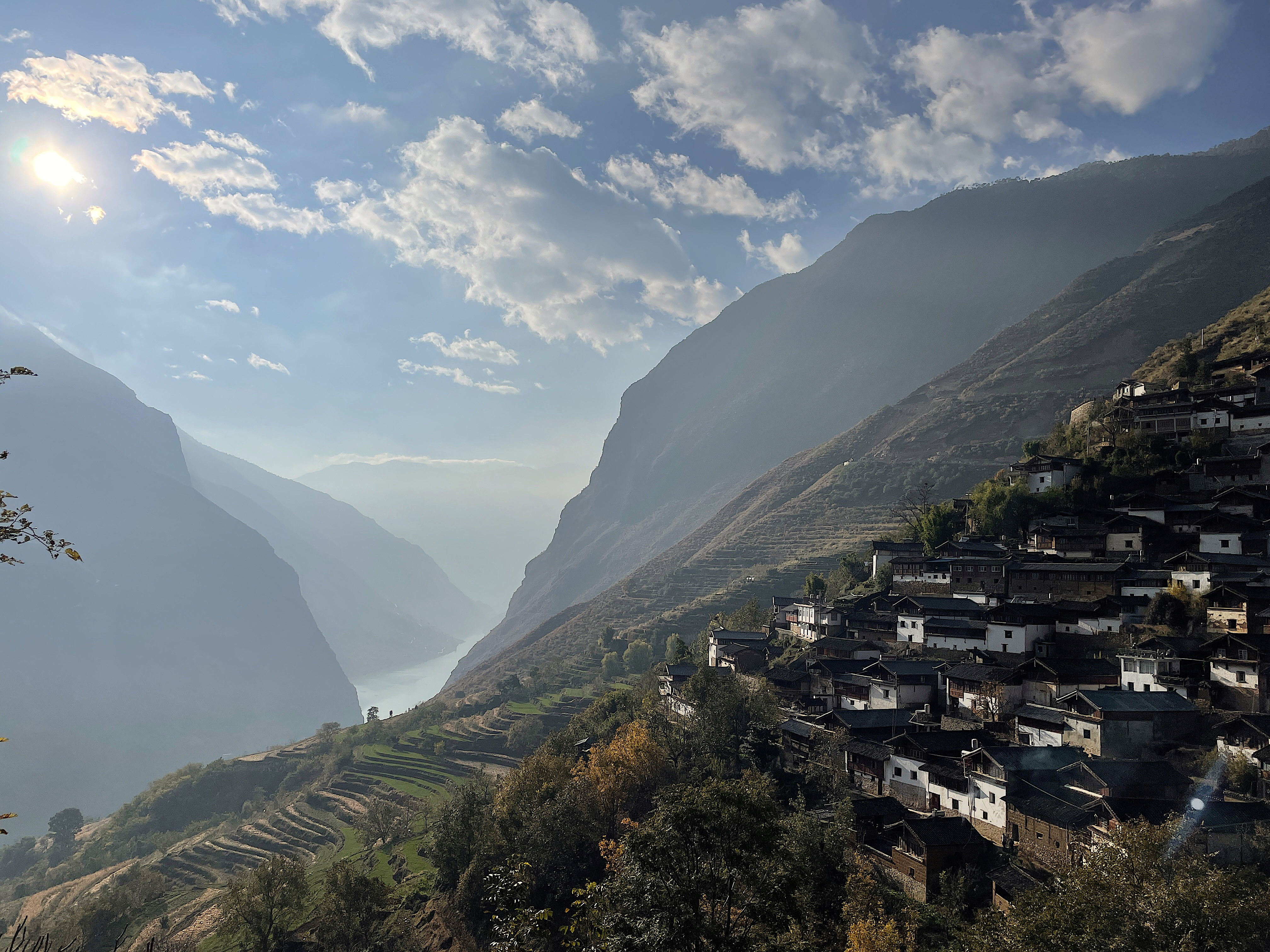
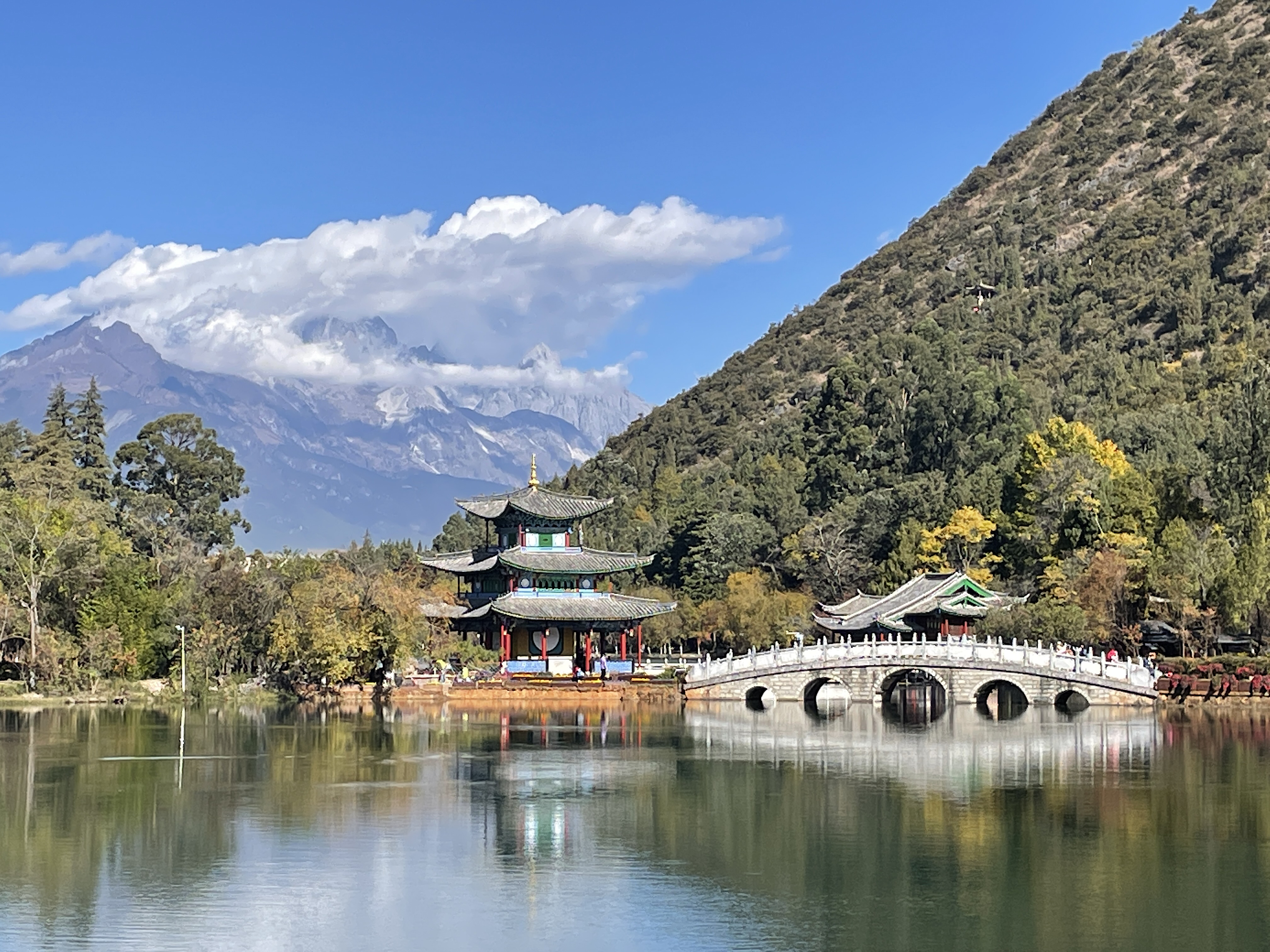
Bai singing traditions were made famous across China by a classic film called Five Golden Flowers. A 1959 musical extolling the virtues of true love and socialist construction, it features an idealized Bai world of colorful indigenous costumes, singing and dancing. The movie has helped turn the heartland of roughly two million Bais—a scenic swath of Yunnan that includes a big lake, sky-scraping mountains, and villages with cobbled lanes—into one of the country’s biggest tourist magnets. Until COVID-19 dented the travel industry, millions of domestic and international visitors vacationed in the region, often taking in packaged Bai musical performances. Indeed, the Shibaoshan Gehui festival now features a sound stage, amplifiers, mainstream pop singers, and cash singing prizes.
“It’s changed, become more commercial,” King Li concedes. He and his wife, a “singing queen” of his village, serve as ambassadors of Bai culture. “But we still try to preserve our singing. It’s not easy today because our young people are moving to cities. They are distracted by popular music and video games.”

Yang Shao Xian, a Bai farmer, wears traditional dress to practice a boggling diversity of songs.
Paul Salopek
In a nearby Bai village called Qing'Anli, a middle-aged farmer named Yang Shao Xian tries to do her part in remembering.
When outsiders appear at a neighbor’s farmhouse, Yang quickly dons a bright Bai costume, with its white hat symbolizing clouds, grabs her three-stringed lute called a sanxian, and offers to sing a spontaneous solo. She stumbles over the lyrics. She restarts. Over and over.
“Let me try it again,” Yang huffs, squinting down at her finger placement on the strings, dismissing all praise. “It’s important.”
Yang Shao Xian, a Bai farmer, wears traditional dress to practice a boggling diversity of songs.
Paul Salopek
In a nearby Bai village called Qing'Anli, a middle-aged farmer named Yang Shao Xian tries to do her part in remembering.
When outsiders appear at a neighbor’s farmhouse, Yang quickly dons a bright Bai costume, with its white hat symbolizing clouds, grabs her three-stringed lute called a sanxian, and offers to sing a spontaneous solo. She stumbles over the lyrics. She restarts. Over and over.
“Let me try it again,” Yang huffs, squinting down at her finger placement on the strings, dismissing all praise. “It’s important.”