木漏れ日
—Komorebi, from the Japanese, meaning “sunlight leaking through tree leaves,” an action that produces patterns of shadow and light that occur once, never to be repeated again.
The Copper River winks open its silty eyes in the glaciers of the Wrangell Mountains. After cartwheeling down the massifs of south central Alaska, it pours 19 cubic kilometers of collected rain and snowmelt each year into the Pacific: enough fresh water to flood the country of Lebanon head-high. Two million salmon, primarily sockeye, king, and coho, muscle their way upriver in the brief summertimes. We slide above the migrant fish on an orange inflatable raft. There are three of us.
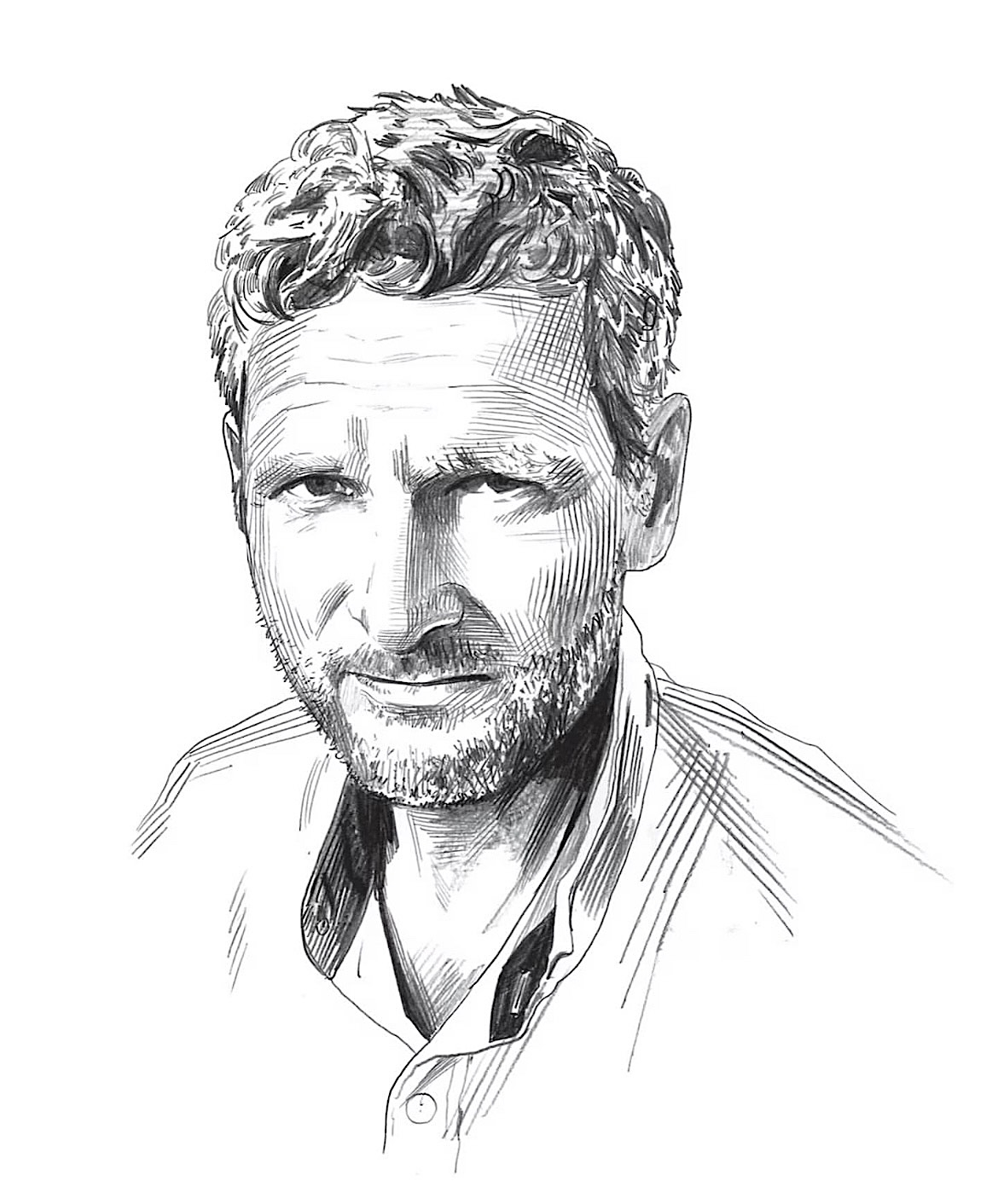
Bill Romberg is the river guide. Walking partner Phil Norris, who homesteads in a bus parked north of Anchorage, joins for the ride. We take turns at the oars. I’m mostly luggage. The Alaskan wilderness glides past like a long sigh.
“Five or six miles per hour,” Romberg says. “Not bad.”
Romberg, 56, wears greying stubble and an ancient hat of indeterminate color. This primordial hat appears to have mutated its own DNA. Glanced at sideways, you could swear it sometimes stirs, like a dozing cat, atop Romberg’s head.
One of seven siblings raised on a lean family farm in Michigan, Romberg, though ruggedly built, is a steady, understated, watchful presence, the way people who work outdoors often are. As a boy he picked strawberries for a quarter a quart. He cleared stones from neighbors’ fields for a dollar a backbreaking hour. Alaska was his liberation from the tyranny of corn. In the dead of winter in ’93, he loaded a tent and his environmental science degree into a battered pickup truck and escaped north. He was 23. With his newlywed wife he cleaned bathrooms at campgrounds. Fast forward through years of worthy jobs with nonprofits and the state fishery agency. Through the birth of two boys, now grown. Through a 30-year mortgage on a house in Anchorage.
“It’s a very tribalized place,” Romberg says, puzzling over his adoptive city as if for the first time. He peers over the raft’s side, at the bone dust of mountains being carried away to the sea. He’s taking stock. Rivers can do this. “I mean, I can’t say that I know the place even after 20 years. I met some people there like me. People who had some money, enough to be comfortable, and who spent all their time out in nature. But I didn’t mingle with a majority of people who spend all their lives in houses. And with the poor. It’s very divided along class lines. Lots of homeless.”

River guide Bill Romberg, who spent years volunteering with mountain rescue teams, attends to wilderness chores like a monk going about his devotions. The Copper River is his temple of memory.
Photograph by Paul Salopek
We put in at a clearwater creek. We piss optimistically around the camp’s perimeter to ward off bears. I watch Romberg smooth the marsh grass and cobbles to build his tent. He rigs a plastic lean-to, propped with an oar, under which we cook in a glass-bead rain. He checks the mooring lines of the raft. He polices up trash. There is not a wasted movement in this work. He attends to wilderness chores like a monk going about his iterative devotions. With the same care and ritual. The Copper River is his temple of memory.
To name something is to separate yourself from its true essence. So say the Daoists. The Copper River is named for a $200-million motherlode of reddish metal gouged from its upper reaches. Beginning in 1905, miners dynamited 70 miles of tunnels into the surrounding mountains. At its peak, king copper supported about 300 people in the remote mill town of Kennecott, with hundreds more toiling underground. The town had a hospital, store, dairy, skating rink, and tennis court. Today, icy winds blow through buildings’ gaping black windows.
We drift past the old railroad bed. Immigrant Irishmen and Swedes laid the tracks, by hand, among the riverbank spruce. The towering wooden trestles are rotted away. Only the steel rails, miraculously bolted together, still hang in bowed suspension above deep ravines. Trainloads of Alaskan copper got melted into the wires that electrified America. In this way, the Copper River’s cold song—its watery roars and sighs—hum faintly within its thin metal tributaries now spun across a continent.
We float on.
Romberg scans the water: a moving conveyor fractured into a billion shards like an unpieced mirror. A kilometer or more wide. Glittering under a pale Arctic sun.
He is hunting for telltale V patterns that roil the current’s surface. These rippled lines mark safe passages between obstacles that could ground us: submerged bogs of sand or gravel bars. The inner curves of river bends flow lighter colored and perilously shallow. The outer curves are darker and better. Working with the physics of water, Romberg vectors us around natural wing dams and reefs of sediment called crowned roads. He sidesteps hydraulic jumps that spike atop huge underwater boulders. Three-cornered clapotis waves ricochet off vertical rock shores. “Best avoid,” Romberg says drily.
Alaska's Copper River pours 19 cubic kilometers of glacial melt and rainwater into the Pacific each year: enough fresh water to flood the country of Lebanon head-high.
Out of Eden Walk
Romberg is intimate with risk.
For many years he volunteered with mountain rescue teams. His emergency go-bag always waited in the closet. These particular Bill Romberg stories don’t surface easily. But like the colossal vistas heaving into view around each river bend, they’re worth the wait.
Romberg once rescued some tourists rafting on holiday. The family became trapped inside a river logjam. It proved a liquid minefield. Powerful currents sucked everything under the piled thicket of branches and tree trunks. Over an exhausting day, Romberg swam the people out. Sighing, he recalls another man he saved twice—first after he nearly froze to death on a mountainside, and years later when he plunged into a crevasse. There were citizens beyond rescue too. Like the passengers of a bush plane that clipped a foggy cliffside in the wilderness. There were no survivors. Romberg dropped by helicopter to the crash site. His job was chasing away hungry bears from the wreckage. He did this by swinging an ice ax.
“I’ve been a fairly linear, rigid, control type of guy,” Romberg says. “But all that’s changed. I have a new perspective now. Being overwhelmed does that. I see how fleeting all that control can be.”
He is talking about the death of his wife, Wendy, in 2019.
Romberg was moose hunting when the phone call came. Back at his home, his wife of 33 years had succumbed to sudden heart attack. Romberg quit his mountain rescue work. He resigned from his longtime fisheries job, and sold the Anchorage house. “Until then, I didn’t even know I needed to grow,” he says, with a kind of wonder. He shakes his head at his former self. “There’s this idea. We’re all flawed, but we can be better human beings if our lives are looser. You gotta bend through rapids to reach calmer waters on the other side.”

Driftwood warmth for river guide Bill Romberg (left) and walking partner Phil Norris.
Photograph by Paul Salopek
Romberg has remarried happily. And our journey is his first return to the Copper River in many years. Occasionally, while steering downstream, he smiles and points out old family adventure haunts. At one beach the mosquitoes were apocalyptic. They buttoned up his young boys inside their tents. The adiabatic winds at a glacier’s moraine had raked up grit like an Arabian sandstorm. All rivers are like this. They take away. And they give back. They erode and rebuild at the same time.
Copper River is not its real name.
Nor is Reka Mednovskaya, the Russian moniker inked onto 18th-century maps by Alaska’s early European intruders.
The river’s oldest christeners, the Native Alaskan people, called the Ahtna, know the 470-kilometer waterway as Atna, or the Beyond River, meaning beyond the mountains. Its glacial currents pumped through their lives for at least a millennium and perhaps as long as 5,000 years. The Ahtna don’t use the four cardinal directions for orientation. They don’t think north and south, left or right. Their spatial cosmos radiates from the centrality of the river’s course. While hunting and foraging in the Atna’s 69,000-square-kilometer watershed, the seminomadic group bartered precious copper implements and animal furs with their Athabaskan neighbors. They were middlemen, great entrepreneurs. Today, the community engages in pipeline maintenance, forestry management, and subsistence fishing through a tribal corporation.
An Ahtna creation story goes like this:
In the beginning time, when the world was smothered by floods, the raven Saghani ggay fell in love with a beautiful passing swan. Then the swan flew south in the cold season. And Saghani ggay, heartsick and non-migratory, pecked a hole in the sky hoping to chase her. As described by the elders Elizabeth and Mentasta Pete to anthropologist Frederica de Laguna in 1960: “He can’t make it. Many, many hundred, thousand miles that swan fly. Saghani he tired and he go down. He see ocean down there. He tired, he gonna drop down into the ocean.” Ravens cannot swim. But luckily Saghani ggay alights atop a stick. Slowly, slowly, over many days, he works hard to gather twigs, grass, and mud. Then Pete’s narrative concludes: “He walk on top. That’s the way he make this ground, they say.”
And so the world is born of longing.
We row past floating “bergy bits” of ice the size of cars. The size of bowling balls. The size of two-story houses.
This drifting Stone Age ice, squeezed of air, is compressed to the eternal blue of pure thought. On the far shore of the Copper River, slabs of the Childs Glacier topple into brown river currents. White explosions of river water erupt. The sound is like distant artillery or thunder. In a human- warmed world, the glacier is destroying itself.
We camp on the opposite bank. We sip coffee heated on a driftwood fire. Tomorrow we reach the sea. Romberg startles us by suddenly tossing his beloved, antediluvian hat into the seesawing flames. An offering. A gift. We watch it burn. For these few days together on the river, the river is ours. But only in the sense that time or the wind is ours. We can name these passing waters whatever we wish. To me, it will always be Bill’s River.

All rivers are like the Copper River. They take away. And they give back. They erode and rebuild at the same time.
Photograph by Paul Salopek