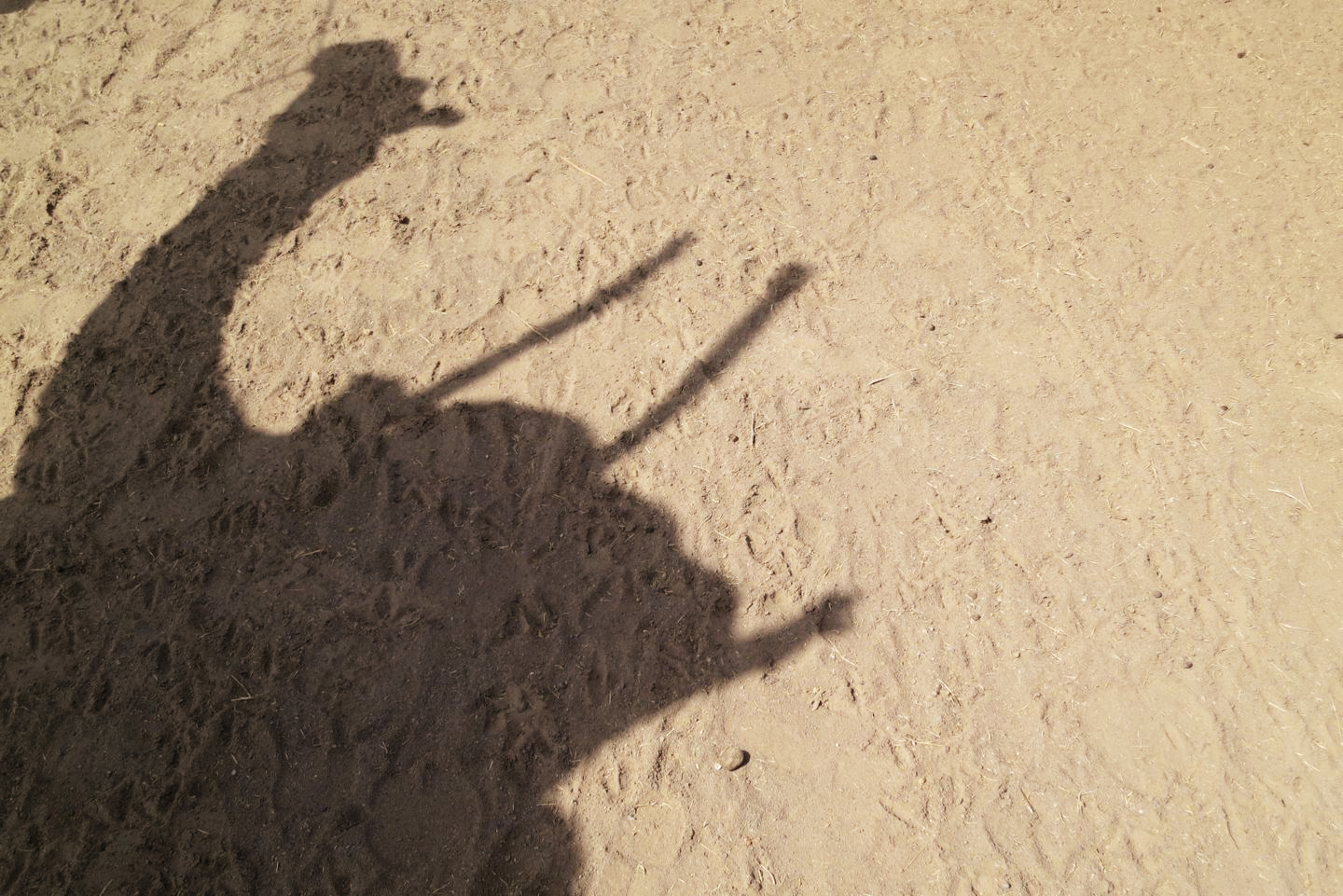
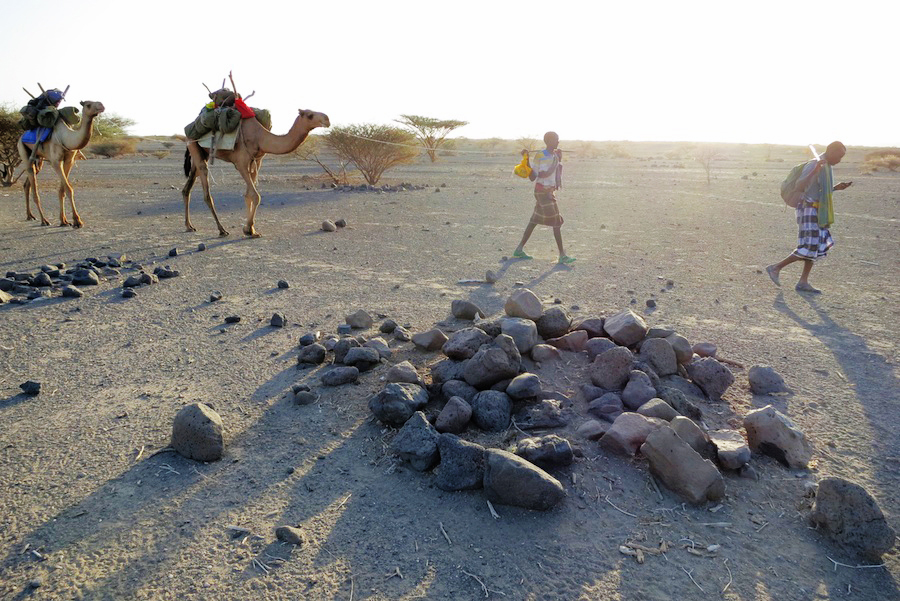
Ahmed Alema Hessan, the 60-year-old balabat, or leader, of the Bouri Modaito clan of the Afar in Ethiopia, hasn’t driven camels for more than 30 years. The start of this walk is a journey of rediscovery for both of us. He tries to recall the complicated harness roping of his youth. And I struggle to apply, once more, the skills of mule packing learned in childhood Mexico. As often happens in this part of the world, people materialize out of the desert void to help us. They mock our clumsy handiwork and rebalance our loads. Most walk along for awhile, exchanging news at a murmur before padding away, so quietly that by the time I’m aware of their absence, they’re often mere squiggles on the horizon. Such random encounters are a pleasure of foot travel in the Great Rift Valley—an inhabited wilderness. Listening to a camel train pass, inching across the land at two or three miles an hour, is like eavesdropping on a public conversation. It has its own syntax. Alema chats at its head. I walk at the rear. The camels’ soft feet whisper through the dust in the middle. A tea kettle keeps the beat. And a relay of stray curs zigzags behind like wary punctuation. It is a sentence that renews itself.
OUT OF EDEN WALK
Explore More from Out of Eden Walk
Back to top