Humans leave echoing imprints across the surface of the Earth. We feel compelled to reshape our environment in systematic ways. Familiar shapes have begun to appear and reappear on the long walk. The most striking is the mound.
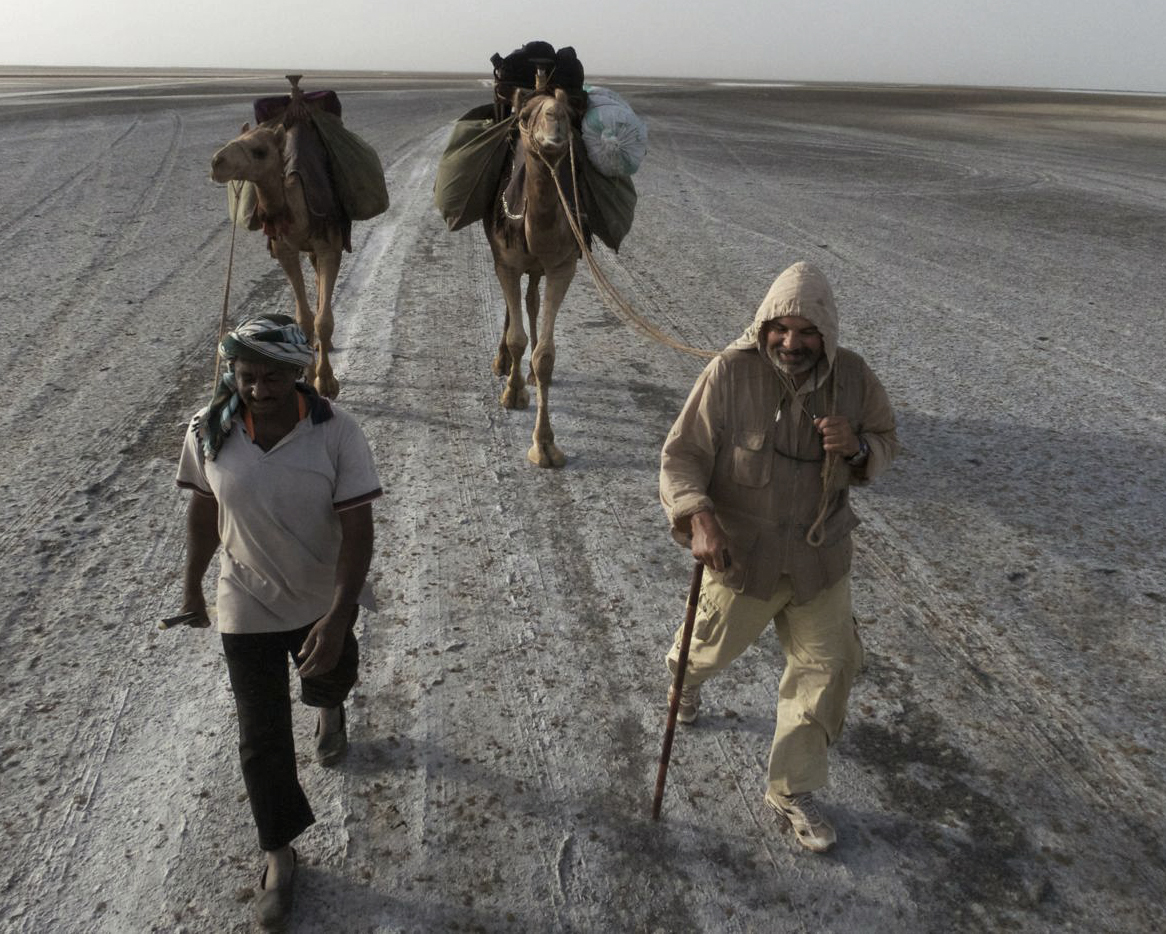
In the remote Afar Triangle of Ethiopia, the African desert was stippled with thousands of stone monuments—graves or plinths raised to the antique dead. Walking among these artifacts, built by the local Afar nomads, was like trekking through an immense graveyard. They were beacons of memory.

Ahmed Alema Hessan on the move amid Ethiopia’s mound culture: stone monuments to the dead.
Paul Salopek
In Saudi Arabia the impulse is modern. For mile after mile, we thread our way among thousands—no, hundreds of thousands—of piles of construction spoil. Truckloads of dirt are the dominant land feature across much of the desert north of Jeddah. Saudi Arabia is bursting with construction sites—a building bonanza sparked by a surging young population (the Kingdom’s median age is 26) and loosened public spending since the Arab Spring. These are mounds of the future. It is only appropriate, then, that our chief cameleer, Awad Omran, should wear a blue plastic construction helmet, found discarded beside the road, to navigate them on our camel, Seema.

Mohamad Banounah (walking) and Awad Omran traverse Saudi Arabia’s mound culture: piles of construction spoil.
Paul Salopek