So few miles. So many frontiers.
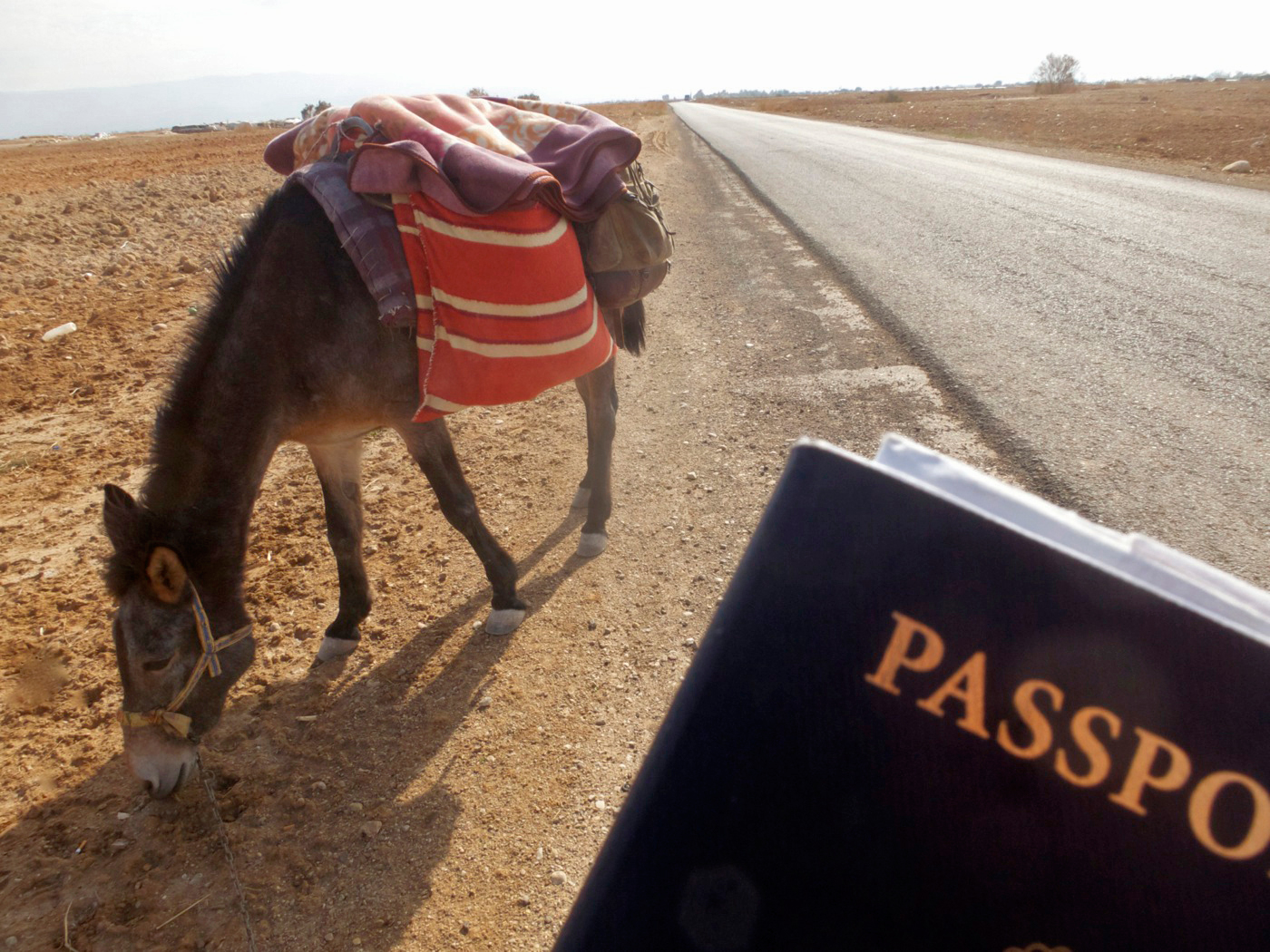
From the endless, ringing space of the Rift Valley of Africa—from the vast, unparsed horizons of the Arabian Peninsula—I step westward, across the Jordan River Valley into a strange and fractured new world: an abrupt thicket—a maze—of lines, boundaries, borders. A crosshatch of fences and gates. Of checkpoints. Of no-go zones. I stumble into a postage stamp scalpeled, painfully, into countless atomized territories; into enclaves of political control, into uniforms and flags, into settlements built by Israelis, into Palestinian villages enraged by such settlements, into a patchwork of turf that appears to be mutual prisons, ringed by warning signs, razor wire. I have walked into the West Bank. I have wandered into the buzzing core of the modern Middle East.

Into a Mediterranean climate—and a beautiful, ancient crossroads of pathogens.
Paul Salopek
I cross a biological periphery, too.
The rolling landscape is now more populated and urban, greener and wetter. And within hours of the first rainfall over the Judean hills, I am coughing. After a year spent walking through aseptic deserts—“Because they are clean,” T.E. Lawrence allegedly said, explaining his love of barrens—my resistance to common human pathogens is low. Two days later, I am staggered by an artifact of civilization: pneumonia. I spit out my lungs.
The symptoms appear by coincidence in a place where infectious diseases—nature’s hitchhikers on our long journey from nomadism to villages and cities, the great incubators of germs—likely joined our species’ trail.
It is a valley called Wadi Natuf. The first human beings to ever stop walking took up residence in a cave here: the Natufians. They were hunter-gathers, a mysterious people who lived some 10,000 to 13,000 years ago. They reaped the abundant wild grasses that grew under the oaks and pistachios. They tamed the dog. They roasted gazelles. And, standing on this exact same spot—today, an unremarkable vista of gnarled olive trees, rocky hills, short-cropped pastures—they concocted a world-changing idea: home. No longer was human identity to be footloose, portable. No longer was all movement worship. Meaning—not to mention God—began to assume a fixed address. Within not too many generations, the pivotal innovation of farming took root. Land became owned.
“If those first farmers could have foreseen the consequences of adopting food production,” Jared Diamond writes in Guns, Germs and Steel, “they might not have opted to do so.”
Diamond alludes to the downsides of human settlement: a loss of free time, the rise of oppressive hierarchies, institutional warfare, overpopulation—but, mostly, the brutal costs of mass infectious disease. The bones of ancient farmers are stunted by illness and poor nutrition when compared to the older, rambling Stone Age hunters. Yet I’m not convinced about nomad golden ages. The Natufians were hunters, too. But was it not they—after all—who began drawing our first borders, the proto-margins that now and forever will cleave yours from mine?
Shuqba Cave smells of wet ash.
The stench makes me dizzy, nauseous. I am feverish. A man in a red jacket waves his arm in the distance. He is my Palestinian walking partner, Bassam Almohor. He walks into an overcast day. I shrug on my pack. I set off, coughing, to catch up.

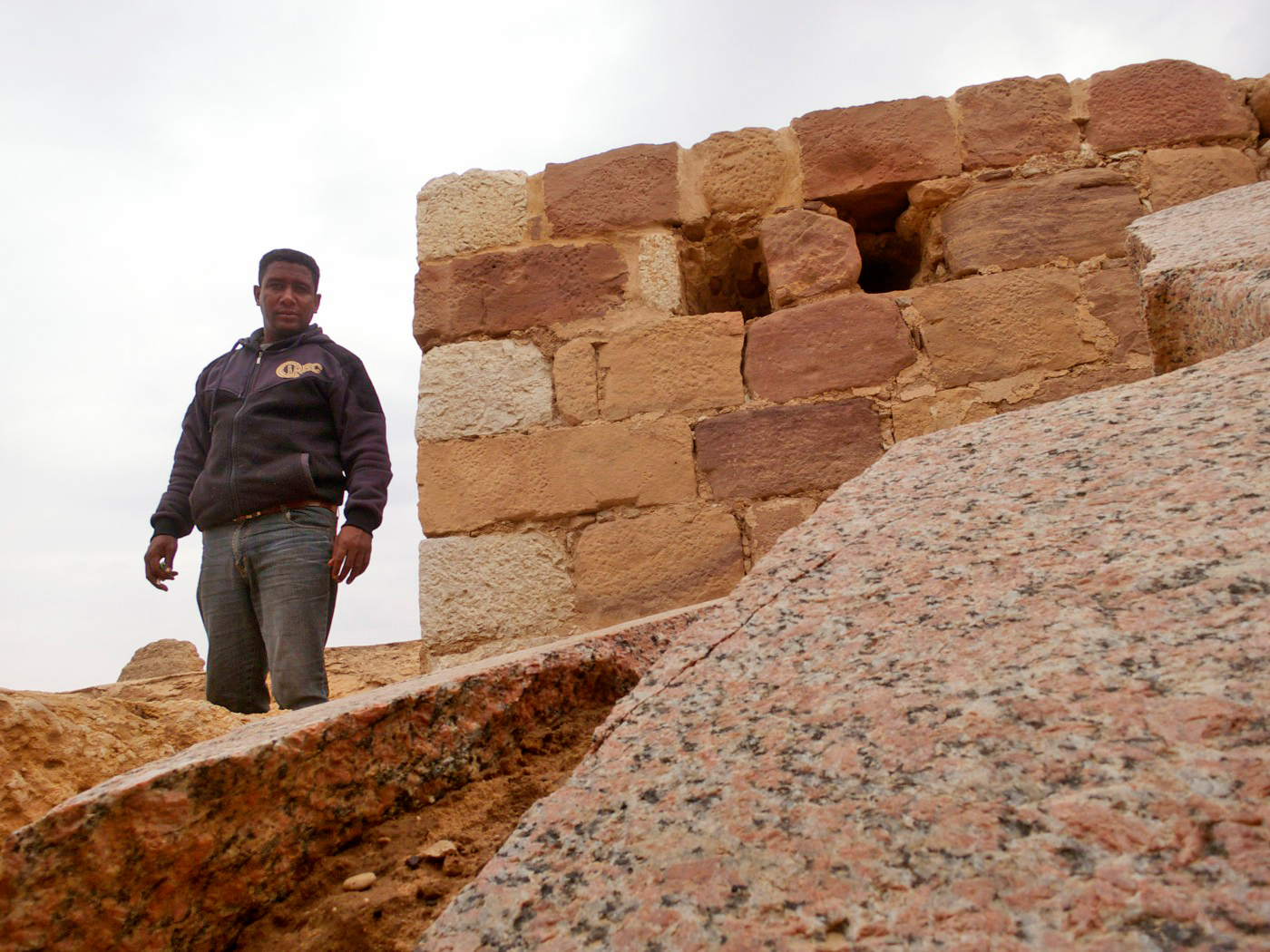
Bassam Almohor pauses outside a Natufian cave in the West Bank.
Paul Salopek
There are more stories to tell. Older stories. They have been piling up at trailside for days. The final trek through Jordan. The looting of the sprawling necropolises there. The goat tunnel near Jericho. The young Bat Mitzvah girls dancing in leotards to hip-hop, like some misfired hallucination, in the sun-ironed wasteland outside of Bethlehem. The Israeli soldier-settler-painter who negotiated a “studio time truce” with Palestinian neighbors. And, of course, the first sight of Jerusalem—stone walls seen from a wooded hill, on a morning pale and clean as paper, as an eggshell, some 2.7 million footsteps away from Herto Bouri, Ethiopia.
But first: I must reach a Red Crescent hostel. I must take off my shoes and shiver under a blanket. I must swallow a 1,000 mg dose of Erythromycin. The stories will wait. I wake up to them again and again, hardly believing them myself. This uncanny world. But it’s all there, in the smudged notepads.

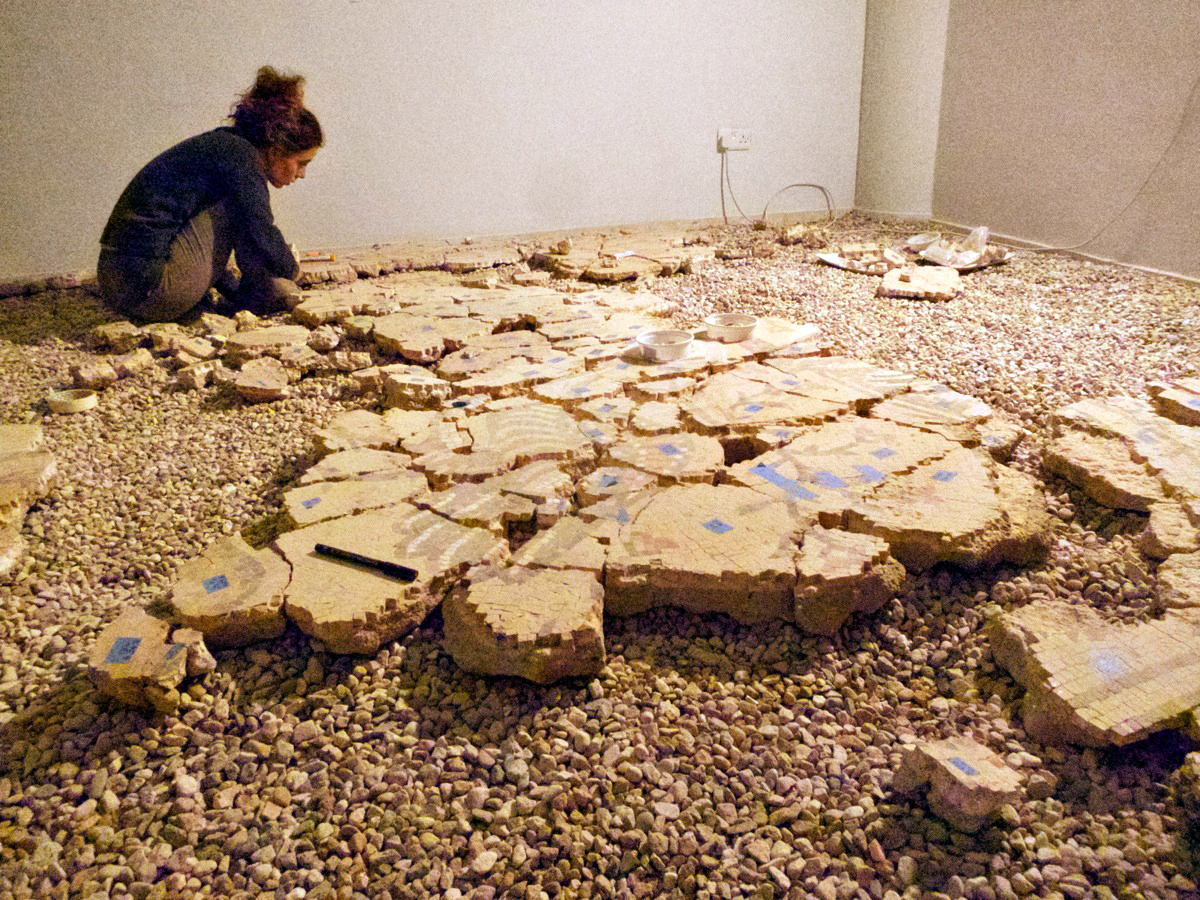
Parked: Felled by an organism that weighs 0.00000000000001 grams.
Paul Salopek
UPDATE: Dear Fellow Walkers: Your notes of encouragement are very moving—they give me great heart. I have recovered fully from my illness and am back on the trail again. I thank each and every one of you for your patience with this interruption of the journey’s dispatches. We will be posting backlogged reports from Jordan, the West Bank, and Israel in chronological order, so keep your eyes on the digital trail ahead.