The hotel in Yamurtalik caught fire.
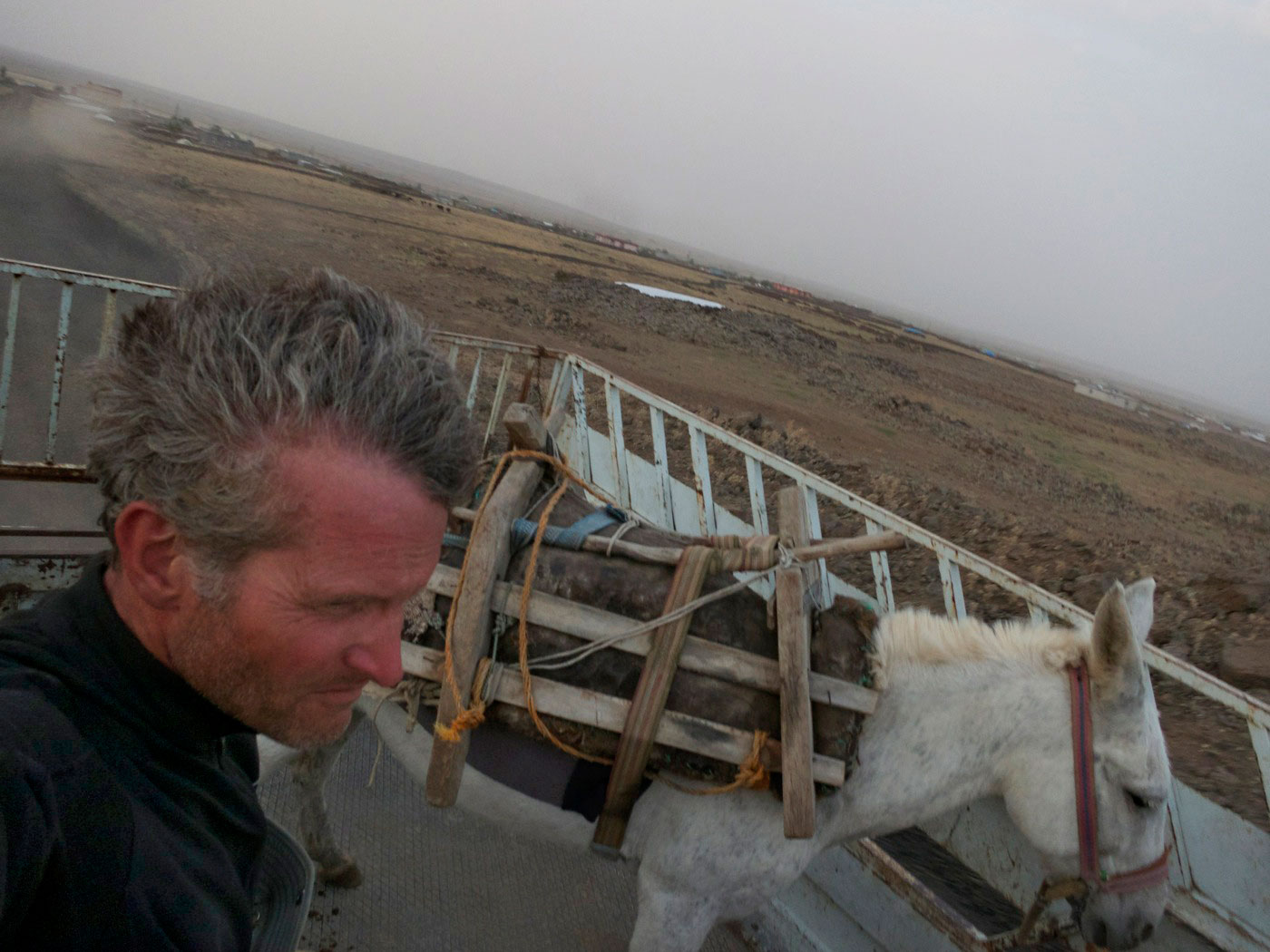
A woman’s cosmetics bag, left in the hot laundry room, spontaneously ignited. Amid clanging fire alarms, amid guests standing bleary-eyed on the lawn in their pajamas, Deniz Kilic and I load the cargo mule. We walk away from the smoking building. We head east.
The Anatolian countryside is a flag that ripples in the summer heat: dusty green olive groves, soil dark red as burgundy wine, cornflower blue lakes that stare, unblinking, at seamless sky. The planet rotates slowly beneath our feet. The burning horizons creak up to meet us. We scare grasshoppers from the brittle yellow grasses. Whirlwinds of swallows swoop to feed.
Âşık Veysel Şatıroğlu, the fabled Anatolian bard of the last century, knew this world. Blinded by smallpox at seven, he memorized the old Alevi minstrel songs by ear and sang them village-to-village. He composed his own songs. This one is about life’s journey.
I’m on a long and narrow road, I walk all day, I walk all night, I cannot tell what is my plight, I walk all day, I walk all night.
…
Sometimes it seems an endless road, The goal is very far from sight, One minute, and the journey’s o’er, I walk all day, I walk all night.
Âşık Veysel suffered. Besides losing his eyesight to disease, he was very poor. His parents died young. He was forced into an arranged marriage. His only son died in infancy. His only daughter died not long after. His songs are mostly sad. But he was a kind and humble man too, a poet who forgave human limits. So there is sweetness in them.
A story:
Âşık Veysel’s young wife decided to abandon him for his brother’s servant. (What young girl would wish to marry an aging blind man in lean, 1930s Anatolia?) The signal came one night. She left the old bard snoring in bed. Tiptoeing barefoot outside the door, she quietly slipped on her shoes and ran off, hand-in-hand through the dark with her beloved. But something inside her shoe hurt her foot. Some stone. Some clod of earth. She could not stop. She feared being found out. She feared scandal. Only far outside the village did she feel safe enough: She reached inside the shoe and found what was pinching her toes—a wad of money. Âşık Veysel had known of her plans to abandon him. And he wished to thank her for all the years that she had helped him survive.
In Turkish, the honorary title “aşık’” means “in love.” It was bestowed on all traveling minstrels in Turkey.
Video by Paul Salopek, Adam Jabari Jefferson