Turkish soldiers cut the border wire after dark. Then refugees spilled into fallow pepper fields. There were thousands of them, on foot, raising dust. People who keep count of such things say more than 100,000 have crossed into Turkey in the past 72 hours: the largest stampede of humanity out of Syria since the war began more than three years ago. They were running for their lives. Syria was just an idea now. It didn’t exist anymore.

Around 5,000 Syrians amass at the border with Turkey next to the village of Dikmetas Friday evening, Sept 19, after ISIS took control of 40 or more cities.
John Stanmeyer/VII/National Geographic
A group of refugee women and their children sat against a village school. They hadn’t moved from the hot concrete steps in two days. They didn’t know where to go. As if by not moving, they would become invisible. Safer. And they were tired. “Villagers came running through the city shouting, ‘Run! ISIS will kill you! Run!’” the older woman, named Amine, said. Her face was very sunburned. “They cut off the men’s heads and sell captured women at the markets. We have heard these things.”
It was the latest offensive of the Islamic State. In northeast Syria, they were cleaning out the Kurds.
The Turkish border town was completely overrun. Its sidewalks swarmed with people carrying bundles, people carrying nothing. The crowds milled about pointlessly, in a daze. Some looked strangely embarrassed, as if they had been caught in some act of weakness. Some clutched their elbows. Young workers from the municipality walked among them, handing out shiny packets of biscuits. Welcome to Turkey. Here are your biscuits.

Thousands of men, women, and children from the town of Kobani flood the Turkish town of Dikmetas on Saturday, Sept 20.
John Stanmeyer/VII/National Geographic
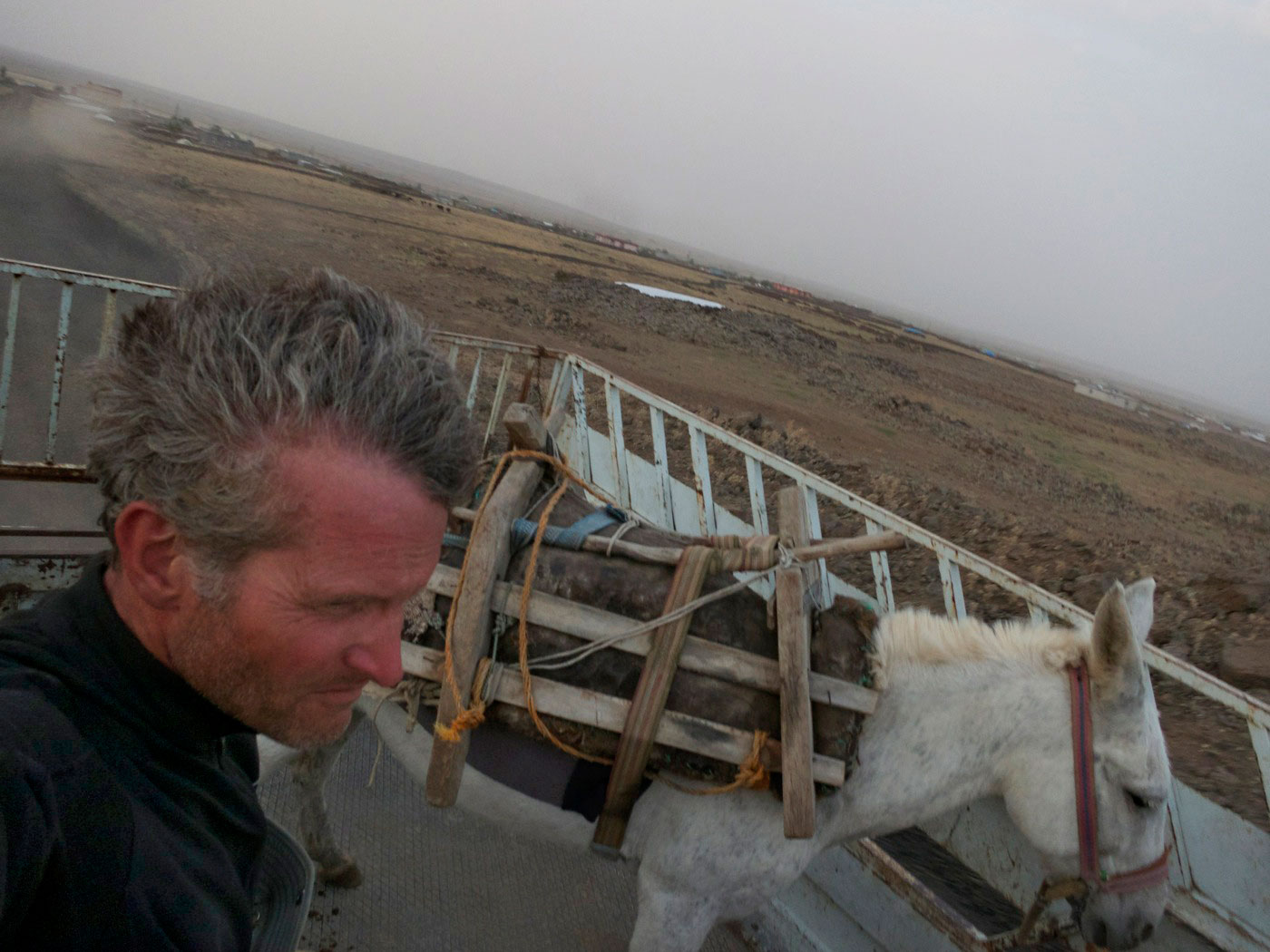
Walking out of Africa, I personally have encountered hundreds of homeless Syrians along the trail. They are everywhere.
Some picked table vegetables in Jordan for $11 a day. (They put me up in their grubby tents.) They begged on street corners in the Turkish port of Mersin, their children so filthy as to be untouchable. The officers aboard the old livestock boat that carried me across the Red Sea couldn’t sail for home. They didn’t have one: They were Syrians.
There are about three million Syrians hunkered, simmering, homeless and unmoored from normal lives, from hope, across the Middle East. Probably more. Include the Iraqis shoved aside by spillover fighting, and the total number of destitute, uprooted people in the region now scrapes five million. If you think this exodus won’t touch you, you are a fool. Your grandchildren will be grappling with the fallout from this calamity.
A skinny man named Ismail lay on a mat with his family in an abandoned grocery in the swamped Turkish town. He had tried to make a stand with 20 other men against the Islamists. His village is called Xaneke. The Kurdish positions folded two days before. “They had tanks and armored vehicles,” he said, exhausted, staring at the ground. “We had only Kalashnikov rifles.” The tanks were probably well-built American hardware abandoned by the retreating Iraqi army. His brother had been taken captive. He had been calling his brother’s cell phone over and over but there was never a reply.

A family of Syrian refugees now living in an abandoned gas station enjoy tea given to them by a local Turkish family in Suric.
John Stanmeyer/VII/National Geographic
“What is this for?” he asked of my note taking. He waved a hand dismissively. “What good is it to us?” His brother’s wife, a wrinkled woman, wrapped in red, began to wail.