The Earth rolls in its silent groove about the sun.
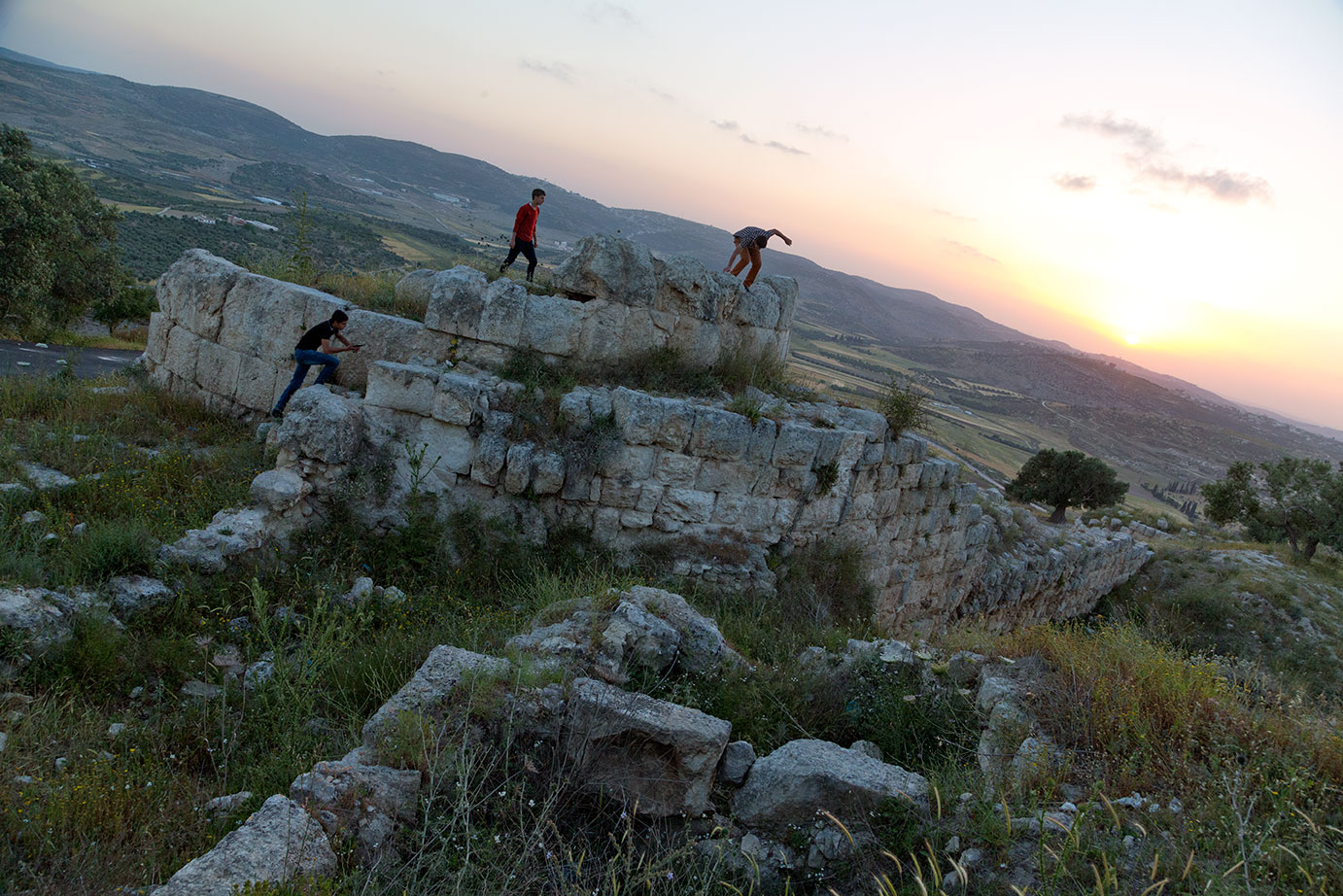
The planet spins. It leans 23 degrees off plumb. The northern hemisphere tilts away from the warm hearth of its star. Grass steppes begin to grow stiff, to yellow. Temperatures drop. Winter deepens the long blue shadows of the barren hills. In one corner of a continent, on an iron plain where civilization was born, a war bleeds into its fourth year. Intelligent animals kill each other en masse. With metal pellets propelled by exploding gases. With flying machines. With swords.
My new walking guide, Murat Yazar, and I retreat from it. We step briskly, aiming north, for the snowline of the Caucasus. We make more than 20 miles a day. But it is not enough. It is too late. The war catches up. It stops us.

Guide Murat Yazar navigates the stone plains of southeastern Turkey minutes before being detained by a posse of armed Kurdish villagers.
Paul Salopek
The men appear as we trek the high, cool, stony pastures of southeastern Turkey, a hinterland of sheep nomads, of hardy shepherds:
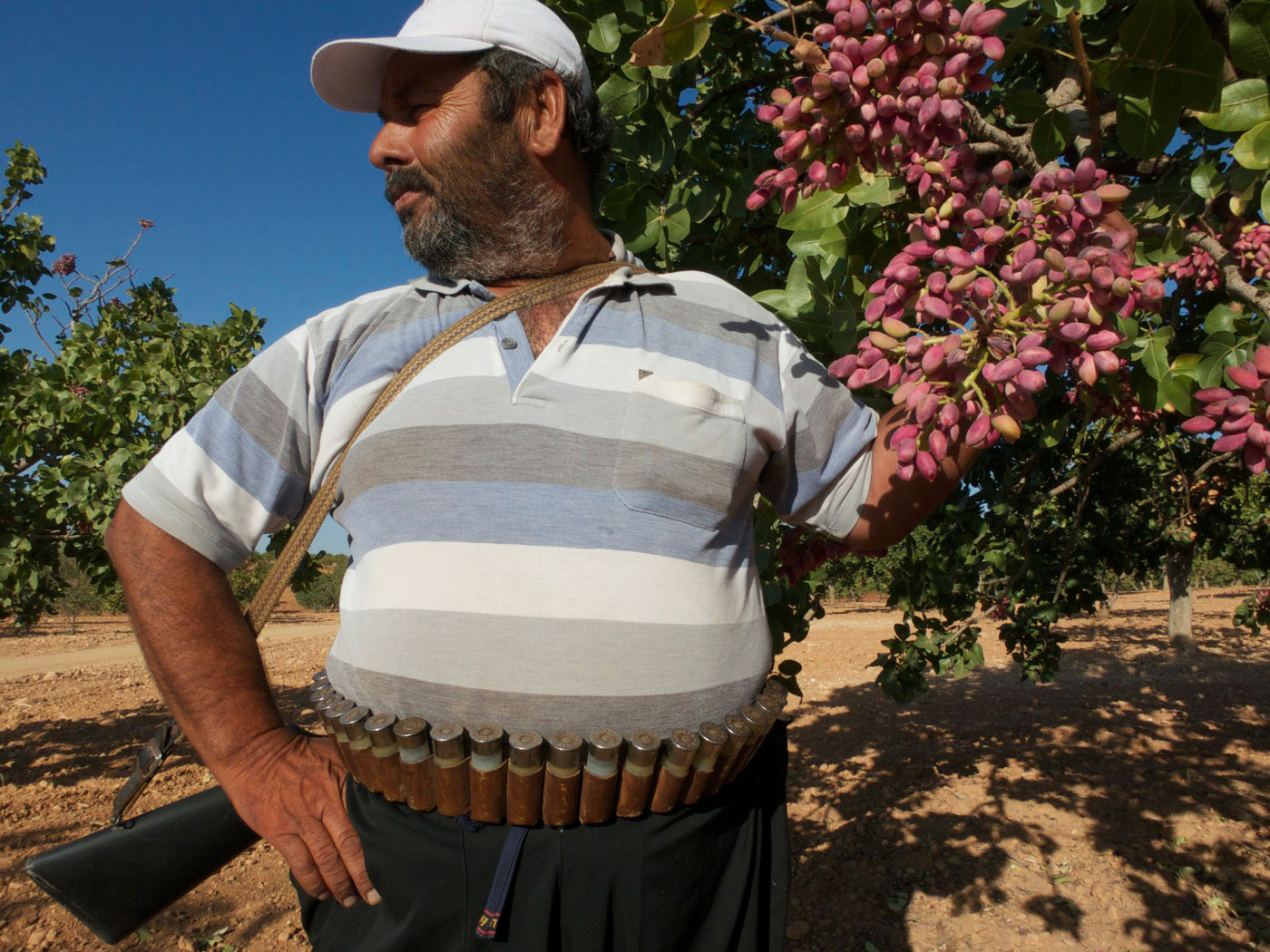
A ring of dark figures on foot. Some wrapped in keffiyehs, the checkered scarves of the Middle East. They carry old bolt-action rifles and hunters’ shotguns. They close in, surround us. We stop in our tracks. They order us to their cinderblock village. There, crowds of schoolboys skip beside us, hooting and swinging wooden clubs. All are Kurdish. They are as frightened as we are. They think Yazar and I are infiltrators sneaking up from the south, from Syria. They demand: “Are you Daesh?”—the head-chopping zealots of the Islamic State? They rummage through our pack mule’s load.
“This man”—Yazar says bleakly, gesturing at an armed villager—“he says he wants to kill me.”
Then they serve us tea. It comes on a silver tray. The glass cups are shaped like belled flowers.
Briefly, here is what is going on:
The cancer of Syria is spreading. The war’s death toll approaches 200,000. More than three million civilians are uprooted—a humanitarian calamity of historic scale. This festering chaos has dismembered Iraq. And now it is infecting Turkey, only a few weeks ago a stable Western ally. Turkey’s case is complex. (Of course it is: This is old Byzantium, the crossroads of shifting empires, of dueling interests, of the entanglements of history, of geography.) The brutal fanatics of the Islamic State, having gained the upper hand among the rebels battling the Assad regime in Syria, are firing artillery within a mile of the Turkish border. They are bombarding a rival Syrian rebel group that consists mainly of ethnic Kurds: the suddenly famous battle of Kobani. And yet Turkey, with the hounds of war baying at its door, seems oddly apathetic. True, it has admitted 180,000 terrified Kurdish refugees. But while it opposes rise of the Islamist terrorists, its troops massed at the border do not intervene. They watch. They wait. Why? Because Turkey has waged its own bloody civil war against separatist Kurds for more than 30 years. It fears that saving the besieged Syrian Kurds will empower its homegrown insurgents. It demands instead that Syria’s regime be toppled—preferably with U.S. involvement. This hands-off stance to the deepening violence has enraged Turkey’s Kurdish minority. Nearly 40 people have died in pro-Kurdish riots in Turkish cities. Turkey’s fragile peace process with its Kurdish rebels is unraveling fast. The country’s southeast, the Kurdish heartland, is quaking. And fear of the Islamic State ripples far, stoking paranoia. We are more than a hundred miles from the border.
The village posse releases us.
“Don’t call the police,” one of them says, angrily. “No police.”

Suspicion: Villagers—including members of the local militia—watch as the mule is about to be loaded onto a pickup truck.
Paul Salopek
The next stories from the Out of Eden Walk trail will be about Kurdish culture, about maternal rivers, about neurotic mules—about the now-familiar ritual of leaving old walking guides and greeting new ones. But war will hum in the background.
We cannot sleep in this terrified village. We cannot walk on: The villagers will not permit us. For the first time on land, in roughly 3,000 miles of journeying out of Africa, I must load my pack animal onto a truck and drive away from my footprints. Yazar and I have no idea where we are bound. Nobody does in this part of the world. We are simply going. The rocky plains of Mesopotamia stretch away grayly in the dusk. And winter is closing in.