“Why aren’t you married, kek?”
They’re after Murat Yazar again.
Mustafa Filiz, my second walking partner, the earthbound flight attendant, is older, more clean-cut. He is safe. He can report to the villagers that he is a freshly minted husband. In fact, he has shortened his honeymoon in Istanbul to walk with us. (What this bodes for his marriage, only he and his young wife, a champion kick-boxer, can judge.) But with Murat, who is bohemian and single, who is long-haired and in his mid-30s, there is no excuse, no cover. Within an hour of stopping to sleep in a hut, he must explain his scandalous bachelorhood. He laughs, embarrassed. He waves off the ritual matchmaking offers. I watch him gaze ruefully at the strong-handed young women coming in from the fields in their flowered smocks. He is grappling with a vagabond heart.

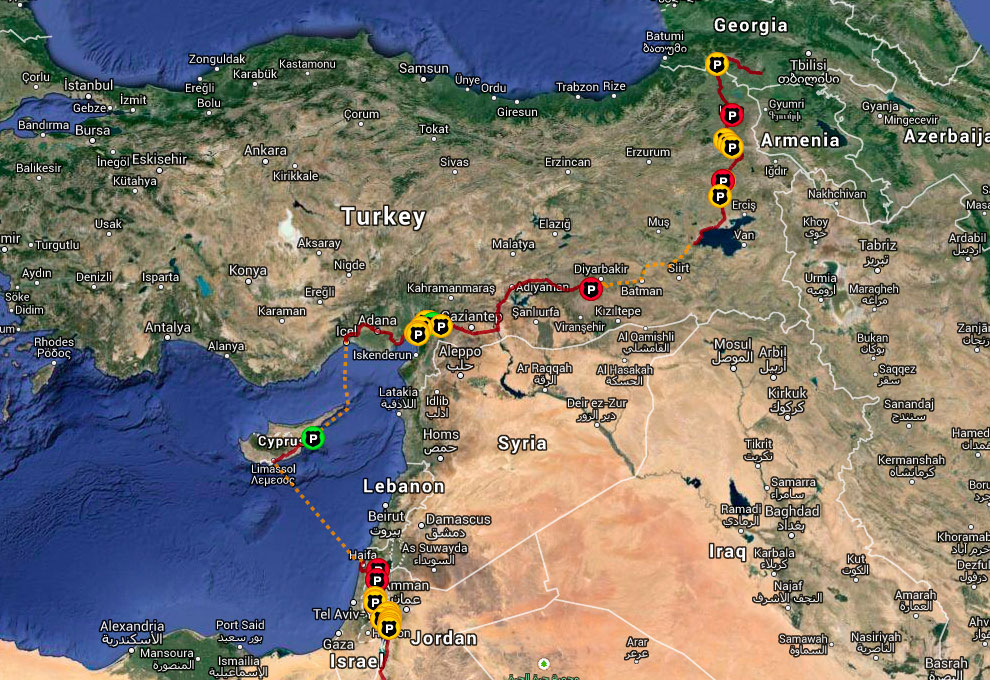
Adagio passage: approaching the threshold of the Lesser Caucasus Mountains, serenaded by village weddings.
Mustafa Filiz
“I have been married more than 50 years,” Hazare Aydin, a grandmother in a mountain outpost called Paşli, chides Murat. “It has been good, thank God. I have many grandchildren—ah, I can’t count them. And my husband owes me money!”
Her husband, a round man in a porkpie hat also named Murat, grumbles theatrically. When I take their photograph, he pulls out a chair for Hazare. He draws himself up formally next to her side, standing, as in a 19th-century daguerreotype.
“The good life”—Bertrand Russell writes—“is one inspired by love and guided by knowledge.”
Walking through Anatolia, we learn that the verbs could easily be swapped.
We slog north across bronze pastures, over high and wild plateaus, navigating by the sound of cupid’s arrow—by where it falls: distant wedding music. All of Anatolia seems to be getting married. Riding the chilly, lonesome winds from Kurdish hamlets, we hear ripples of autumnal odes called payizoks. We hear blasts of jaunty circle-dance melodies called dîlok. There is the tapestry of reedy horns. There is the heartbeat of drums. They dance for days, the Kurds.
There comes an old, old longing while walking through the world. Walking, you learn each new landscape the way you might explore the face of a lover—up close, by grazing your fingertips over the features, without distraction, with a sort of doomed attentiveness, acutely aware that each mile sliding by is gone forever, knowing it won’t hold. The best walking and writing must happen this way. You begin to move forward, eyes closed.