Paul Salopek is walking the global trail of the first humans who migrated out of Africa in the Stone Age. His continuous 21,000-mile foot journey, called the “Out of Eden Walk,” is recorded in dispatches.
Horses were first domesticated in Kazakhstan. Most archaeologists and all proud Kazakhs will tell you this.
In the northern steppes of this sprawling Central Asian country, scientists have unearthed 5,500-year-old horse teeth grooved by the telltale wear patterns of metal bits. Geneticists who track the gene flows of ancient horse DNA confirm that horse wrangling likely originated here: Up to 90 percent of the bones unearthed near the villages of humankind’s first cowboys—an ancient Kazakh herding culture called the Botai—came from tamed horses. (They ate their horses too, as Kazakhs still do.)

A stylized horse engraved into a medieval gravestone. Mangystau, Kazakhstan.
Paul Salopek
Even today, the role of horses in the iconography of modern Kazakh culture cannot be exaggerated. “The hero of most Kazakh tales is the batir, or warrior, and his unfailing steed, who serve the elder and protect the lives and herd of the clan,” writes Martha Brill Olcott in her book The Kazakhs. Indeed, so esteemed are horses in the pastoral psyche of Kazakhstan that a typical curse goes: “May you have neither horse nor camel, and always go by foot.”
Which is, of course, how I’m going.
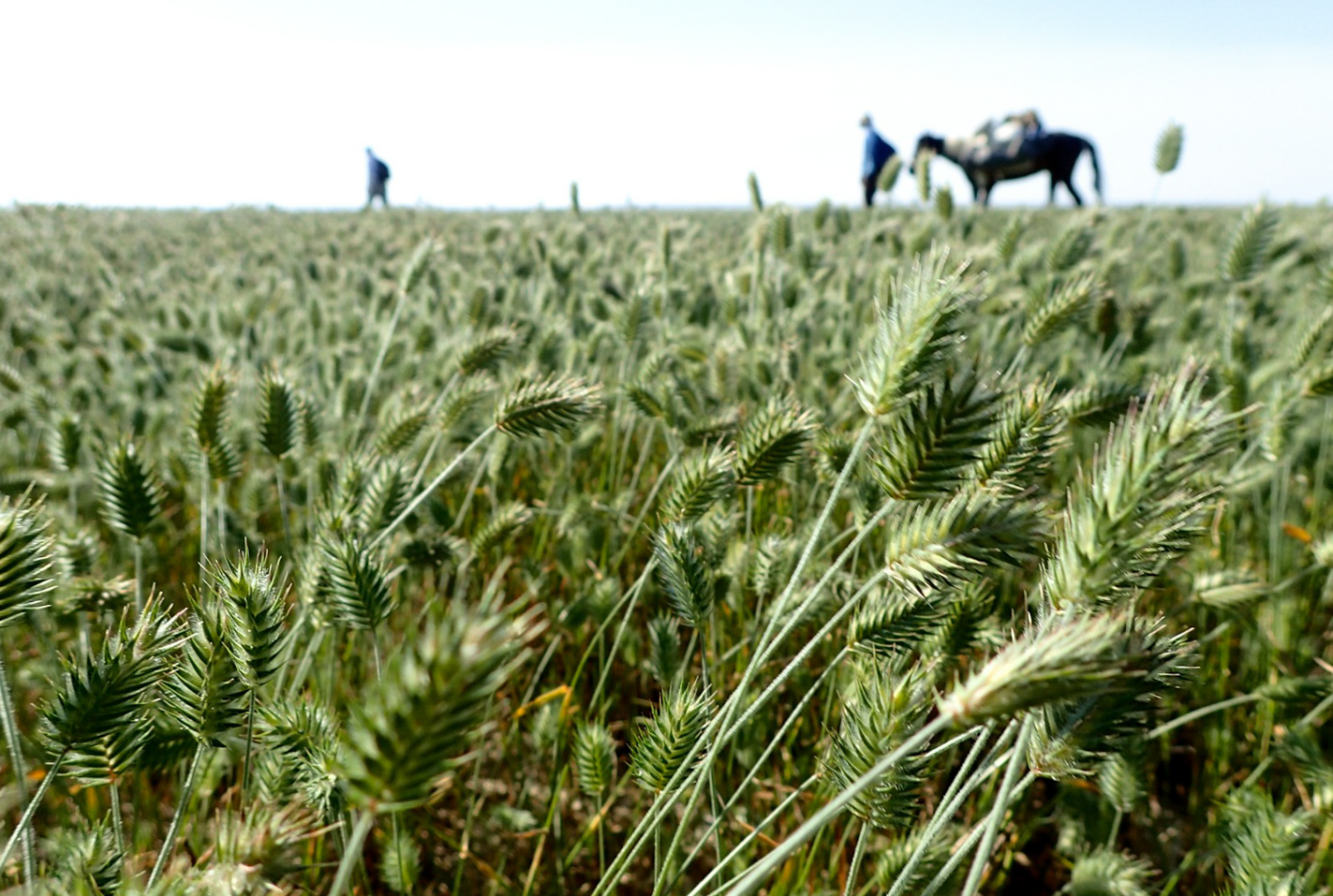
I am walking across 400 miles of arid western Kazakhstan, inching toward China on the Out of Eden Walk, a journey retracing of the first human migration out of Africa in the Stone Age. I am looking for a pack animal. The obvious candidate: One of the thousands of hardy little ponies that roam the steppes, stumpy in appearance but famously strong and tough—the sort of mount that carried the Mongol cavalry to the gates of Europe and beyond. I require it to help haul my food, my water, along the old Silk Roads. One would think this would be easy.
“Nobody uses them to carry cargo anymore,” warned Talgat Omarov, my new walking partner, who has a butcher shop in the remote Caspian port city of Aktau, Kazakhstan. (Talgat’s doesn’t sell horse meat—only inferior beef.) “Keep in mind, most people here have never touched a live horse.”
And it was true. My Kazakh friends, urbanites all, offered impractical suggestions. To use a horse cart. (Impossible on the bumpy steppes.) To buy a horse at the hippodrome. (Skittish racing steeds worth their weight in Euros.) To take the train. (Tempting.)
One windburned horse breeder, kindly contacted by the local government, was bemused. A half-wild horse proffered by an oil contractor sprang away like a jackrabbit. Weeks passed. Anxiety mounted. Until Omarov, my guide, found Amanjan. Big-handed and burly, Amanjan wore the long, hennaed beard of a conservative Islamic cleric. He listened to recitals of the Koran on YouTube on his mobile phone. He admitted to a checkered past, involving run-ins with the law. (“Those days are behind me.”) People moved gingerly about him.
“We look,” he said. “You choose.”
We looked. The horses galloped across the grasslands in herds, turning this way and that against the sun, like shining schools of fish. We stunned the shepherds: a medieval Muslim wrestler and a skinny American, spilling out of opposite doors of an SUV. I chose. And suddenly, prospects improved. A group of seamstresses at Kamal Atelier, in Aktau, masters at sewing chic jackets and wedding gowns, stitched together my saddlebags. For the design they consulted their elderly uncles in villages. This makeshift global walk, conceived in part to record fading life-ways, was rekindling them.

The team of seamstresses at Kamal Atelier, in Aktau, toil on canvas saddle bags.
Paul Salopek
Last week a truck delivered my horse, my Bucephalus, my Rocinante, to the city. It wasn’t necessarily the one I chose. I smiled. I was ready to go.