Paul Salopek is walking the global trail of the first humans who migrated out of Africa in the Stone Age. His continuous 21,000-mile foot journey, called the “Out of Eden Walk,” is recorded in dispatches.
Amir Khan is a certified sage.
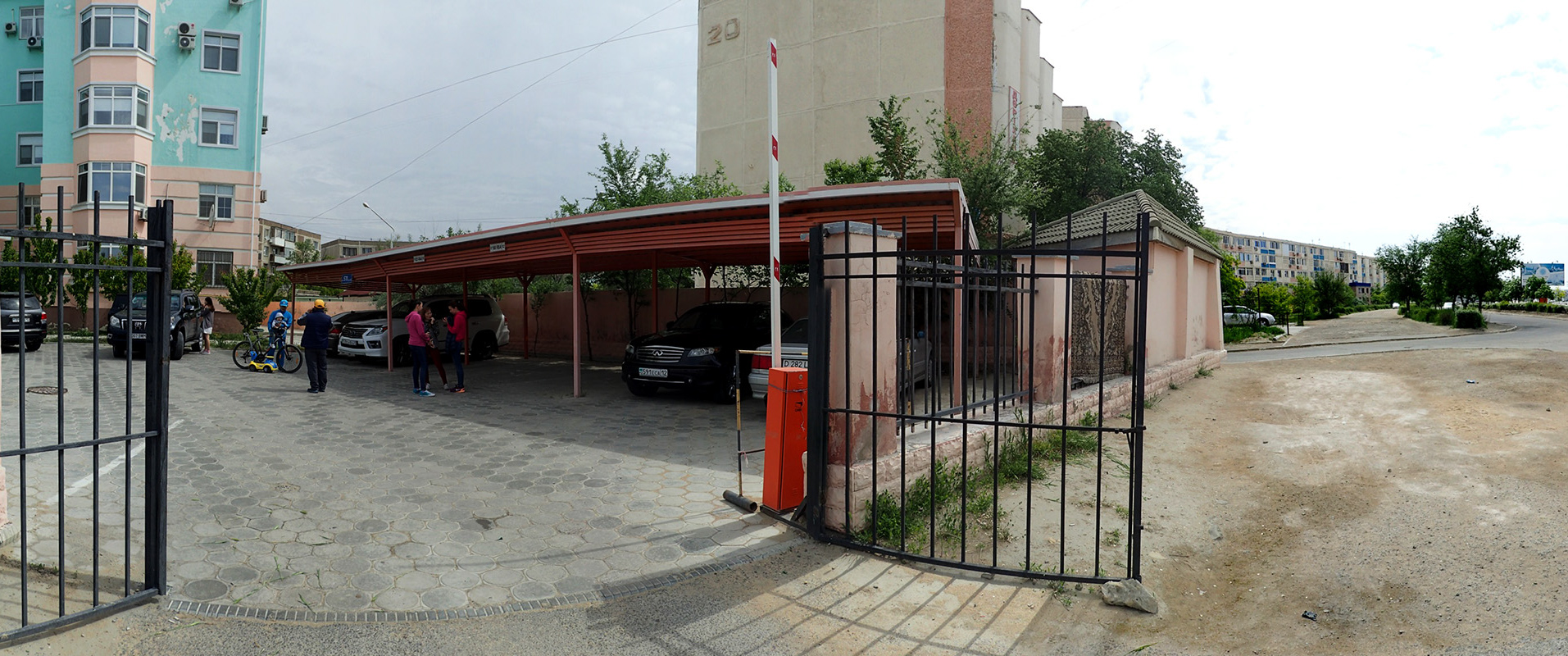
Eleven diplomas—issued by various regional and national associations of faith healing—hang in Khan’s brightly lit office. This office is located in a large walled compound on the grassy outskirts of Aktau, a remote city in western Kazakhstan. Also inside this impressive facility: Khan’s blocky mansion, a dusty yard, and a detached complex of examination rooms, a big kitchen, and a shower block. A tent-like waiting hall is crammed with about 200 sick and unhappy people. These are Khan’s patients. They are driven here by desperation, by botched diagnoses, by chronic ailments, by grim prognoses, by stories of miracles. Hope shines in their eyes. They have given up on modern medicine.
“In the summer I sometimes see 2,000 people a day,” Khan says with a dismissive shrug. He is a bulky man with the stone face of a clairvoyant. For him, healing people is simply a duty, a calling. The ancestors came to him in a dream. They offered him the ability to see diseases inside the human body with X-ray-like vision. He began to cure. His fame grew. It is an old story.
“Apart from helping many Kazakhs,” he says, “I have healed the sick of Greece, Cyprus, Nigeria, and the Vatican.”
Kazakhstan’s old practices of folk healing are making a revival. After being suppressed as a superstition under the secular Soviet Union, the rite has returned as a symbol of cultural pride, of nationalism. Most of today’s practitioners are of course Muslim: the state religion. Yet their traditions are steeped in faiths that long predate Central Asia’s conversion to Islam. The steppe nomads were nature worshippers, believers in Tengrism—a shamanistic religion that reveres the eternal power of the blue sky overhead, and that reveres the dead. Even Kazakhstan’s version of Islam is unorthodox, rooted in the mystical teachings of Sufism.
“We pray to the ancestors. We read the Koran to them,” Khan says. “This makes them happy with us, because we remember them. They protect us.”
A former security officer—a customs agent—Khan paces his private revival hall with a microphone. He asks patients to stand and testify.
One woman tells how Amir Kahn cured her muteness and chronic nosebleeds. Another woman says her fatal cancer is in remission. (“I massaged her veins,” Khan explains.) Yet another woman, once a cripple, can now walk. (“She has a successful business today and travels often to Turkey!”) Khan says the crowds of his grateful followers grows and grows. He asks for no payment. But donations are accepted. And in its discharge protocols, a local hospital now warns parents of newborns against folk healing, advising mothers not to delay modern medical treatment for babies.
A mass ceremony goes like this:
The faithful gather at an ancient burial ground, a necropolis for Khan’s clan, in the vast steppes outside Aktau. They feast at a guesthouse as the sun sets. They line up in the night before blazing bonfires. They ceremonially “wash” themselves in the smoke of burning sheep fat. Khan then blesses them beside the grave of a saintly ancestor. He blows into their ears, their eyes, their heads. He is driven back home in the dark by a chauffeur at the wheel of an SUV. He stares at the night road. He says nothing. The master at rest.