Paul Salopek is walking the global trail of the first humans who migrated out of Africa in the Stone Age. His continuous 21,000-mile foot journey, called the “Out of Eden Walk,” is recorded in dispatches.
They look like a giant’s discarded playthings: enormous rock spheres, some the size of beach balls, others bigger than cars, strewn atop the desolate plains of western Kazakhstan.
They lie clustered by the dozen—by the hundreds, by the thousands. They are ruddy red, yellow-ochre, tan, black-gray. They feel iron-hard under the fingertips. Many appear to be almost unnaturally perfect: flawlessly round, as if produced by machines.
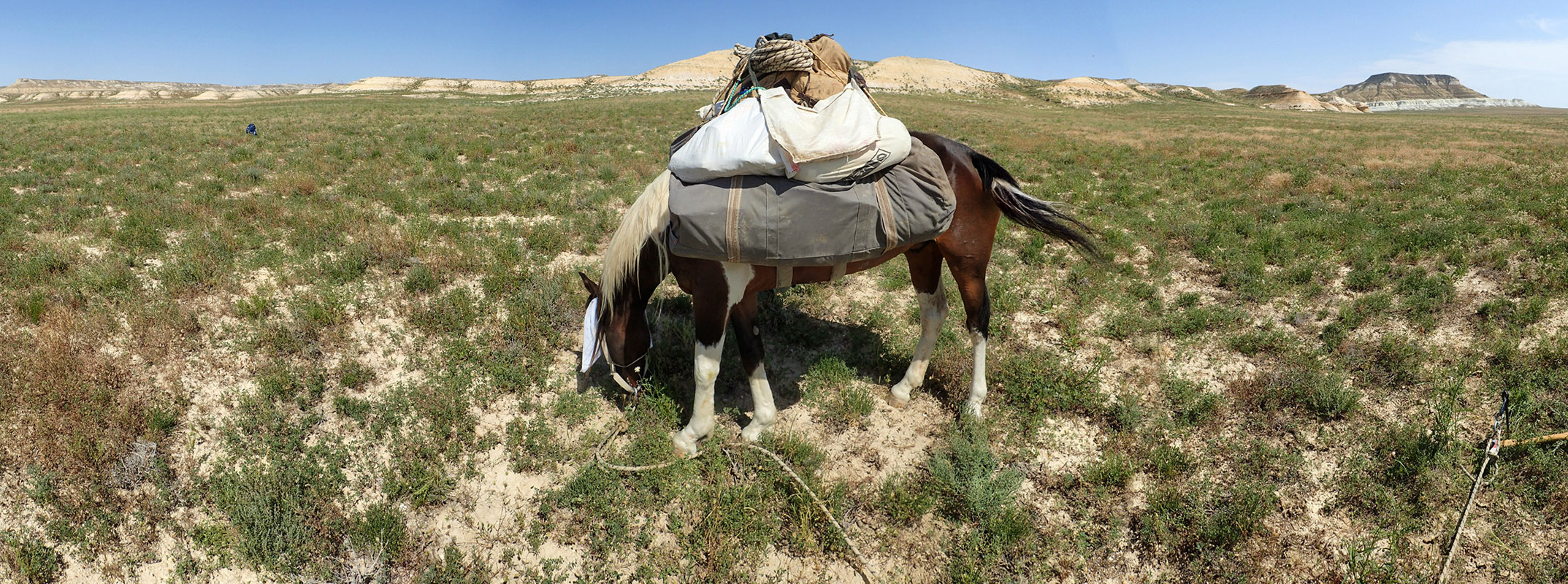
These strange formations, called concretions, occur in many places across the globe: in New Zealand, Europe, North America, and elsewhere. But few such boulder fields are as striking as those in the remote Mangystau district of Kazakhstan, a frontier region isolated from the world by ramparts of barren mountains, waterless salt pans, and enormous tablelands of parched grass.
Concretions make any walk across this Central Asian wilderness a haunted, otherworldly experience.
The spheres appear unexpectedly, as if dropped from the sky. They perch on hilltops. They lurk in ravines. They lie scattered across the steppe like colossal billiard balls. They resemble cannonballs, or minimalist New York public art, or prehistoric eggs. Sometimes the stones appear in ragged lines, like necklaces of massive beads, snaking for miles across the plains.
How these marvels of natural geometry form remains a mystery.
According to the folklore of the pastoral Aday, the dominant ethnic group in Mangystau, the spheres represent the bodies of attacking invaders frozen into place by a powerful Aday holy man.
Most scientists believe the balls develop over millennia as minerals in liquid solution cement themselves together around a nucleus of debris—a pebble, a fossil—much in the manner of an oyster coating a particle of grit to form a pearl. (This part of Kazakhstan once was an ancient seabed.)
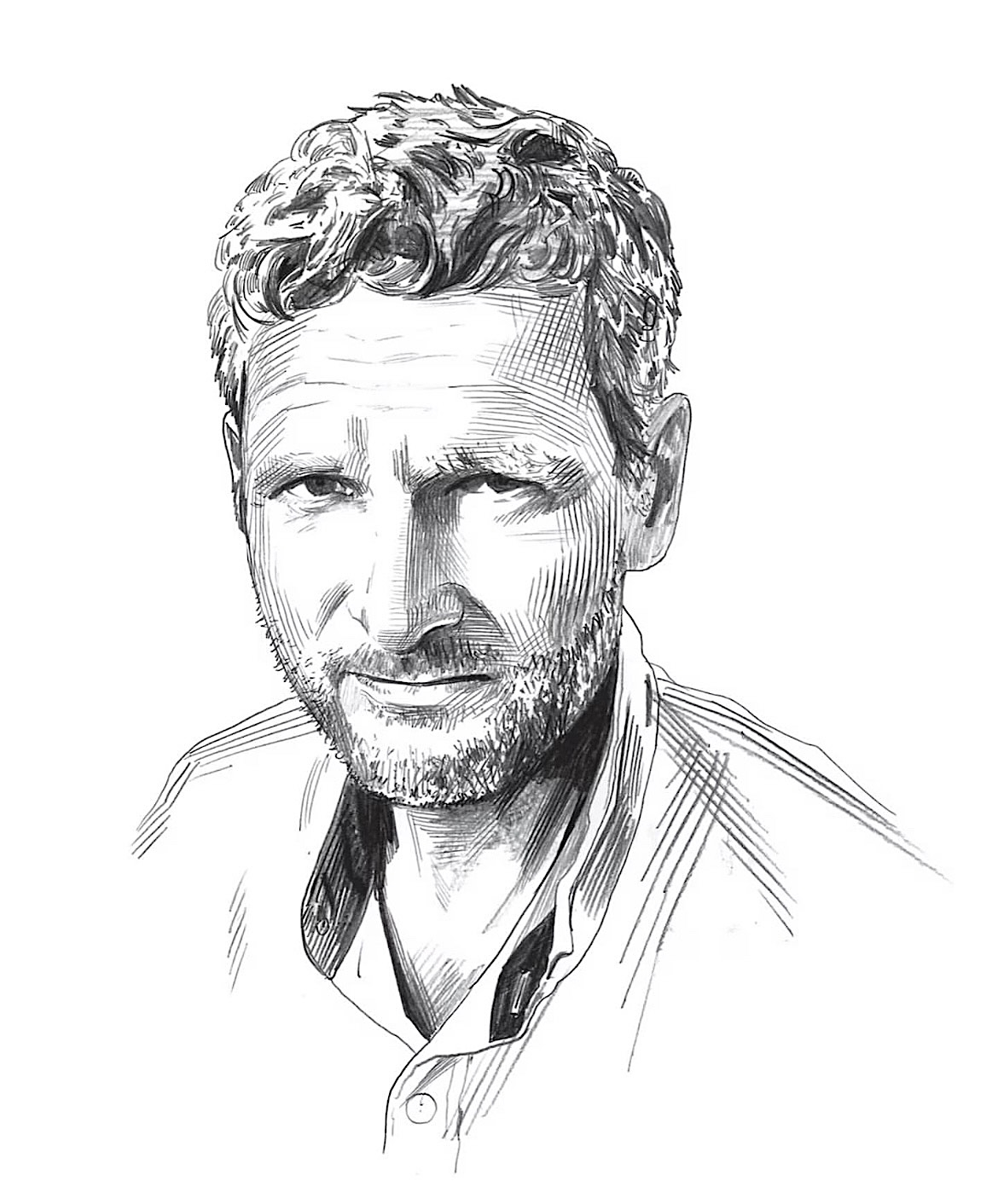
But Gennadiy Tarasenko disagrees.

Gennadiy Tarasenko says underground lightning strikes created the rock nodules strewn about the steppes.
Paul Salopek
Tarasenko, a gangly geologist from the regional capital of Aktau, thinks Mangystau’s trademark concretions are the result of electricity in the Earth’s crust. According to his theory, underground lightning strikes many miles long—sparked by volcanism and plate shifts—create “plasma fireballs” that then accrete minerals.
“These balls roll between layers of rock,” Tarasenko says. “They are like millstones grinding the rocks to flour.”
Tarasenko’s hypothesis is complicated and infinitely less boring than the conventional explanation. He also believes the Earth is hollow. In his makeshift lab in Aktau, a gardeners’ shed on the grounds of a local university, he uses salvaged parts from a disassembled Soviet nuclear power plant to test his ideas. Connecting raw copper wires to an aging dynamo—“The whole Earth is a dynamo!”—he fired up his equipment one recent afternoon and made a tiny blue lightning bolt sizzle between steel plates. He warned the university’s maintenance man before throwing the switch in case the demonstration caused a blackout.
Out on the steppes of Mangystau the concretions loom like alien monoliths.
Some are halved like oranges. Others glom together into cartoon heads, into mammoth sexual organs, into fantasy menageries. They are objects of waiting.
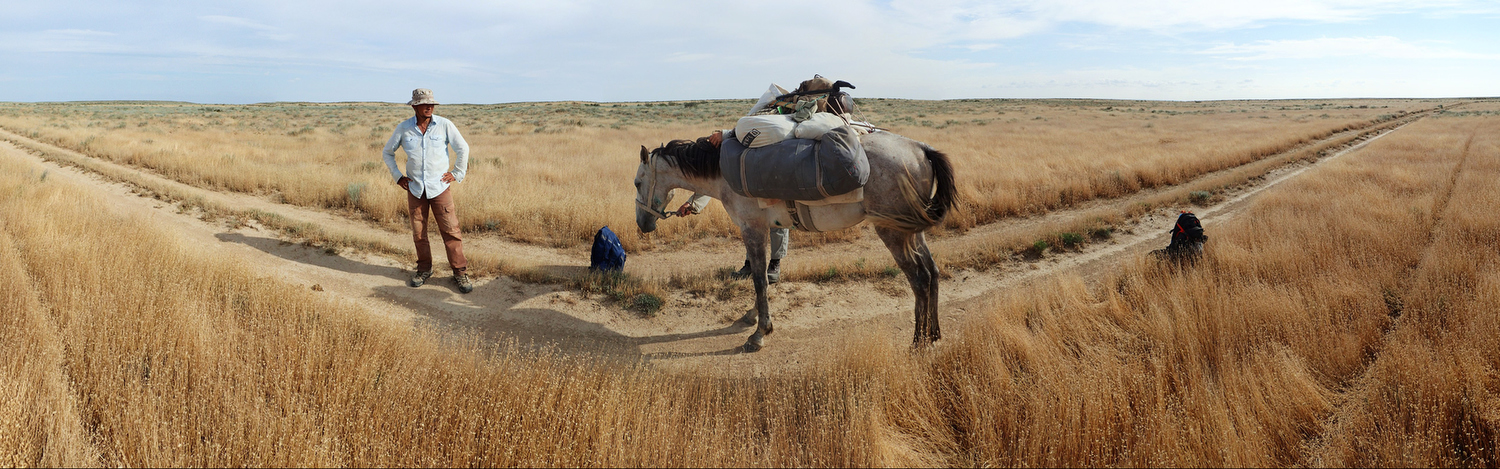
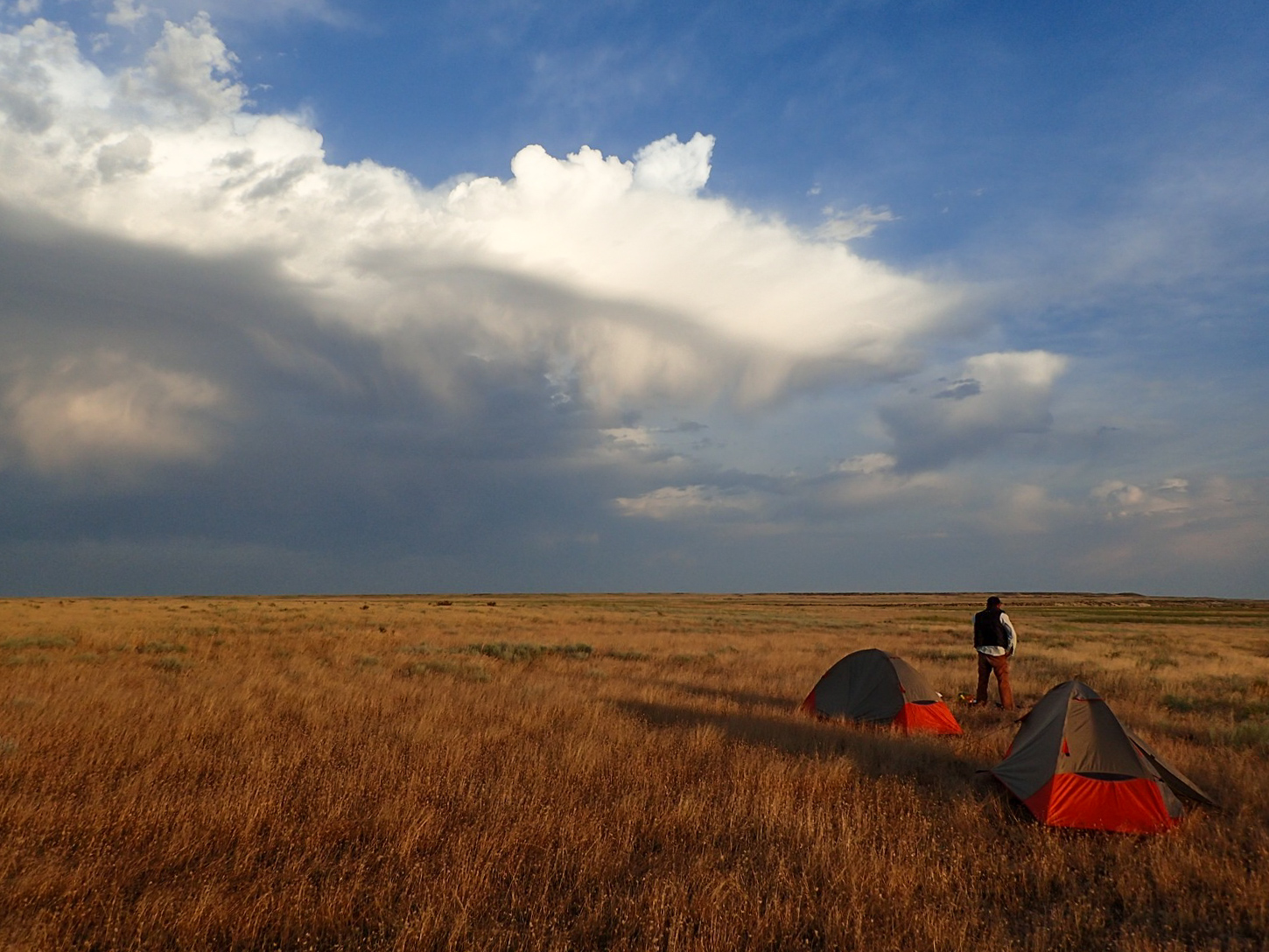
I stride among them on my walk to Uzbekistan. I camp in their pale blue spheroid shade. Sometimes, I pause to listen for subterranean rumbling—Tarasenko’s planetary ball bearings on the move—but all I hear is the wind.