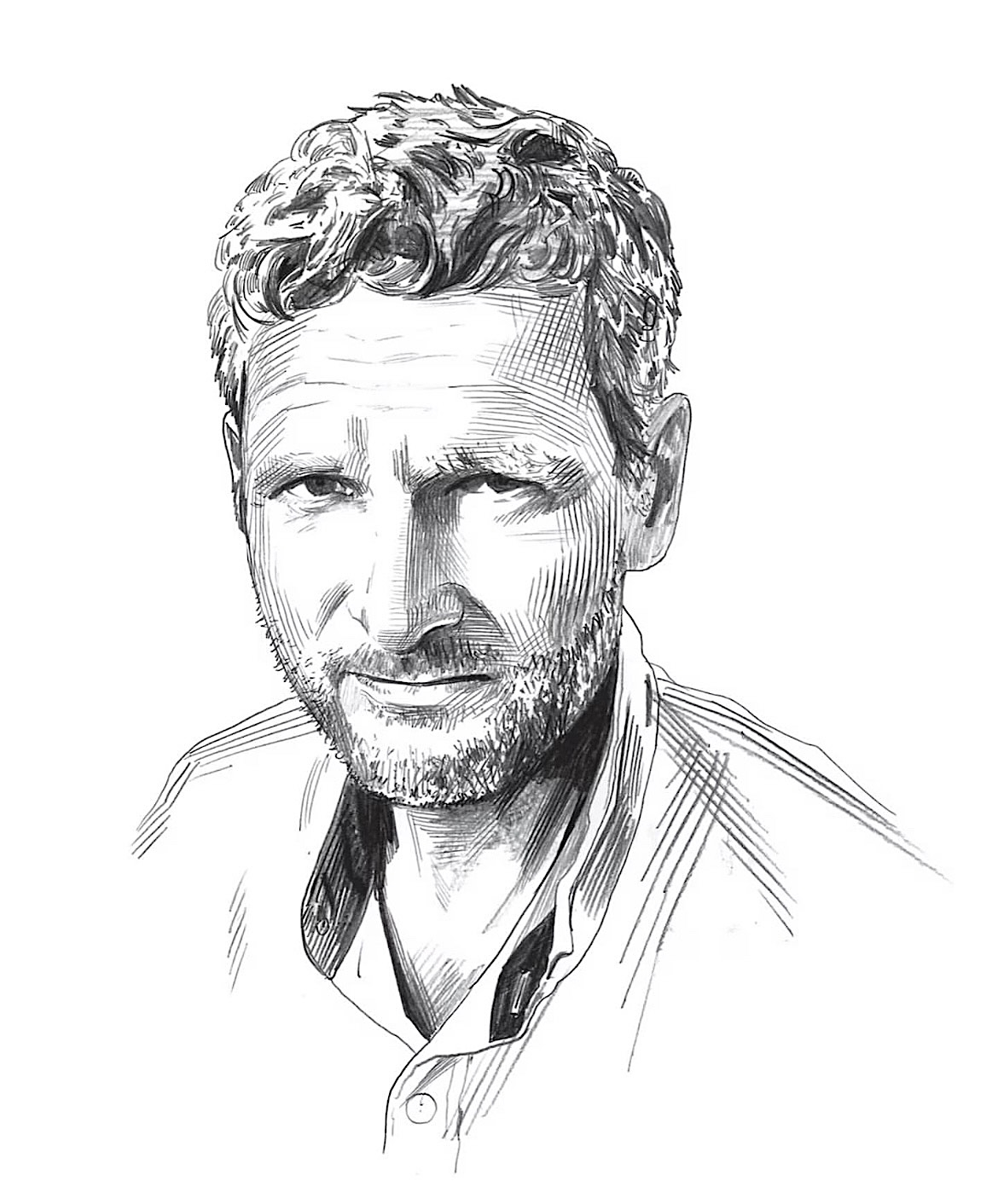
Meet Nurseyt Abdullaev: Uzbek university student. Wiry. Adventurous. Energetic. Always positive. Another innocent victim of walking across the world.
“How are you doing?” I shout back at Abdullaev. (He is lagging far behind on a farm road.)
“Good! Good!” he hollers, waving and smiling.
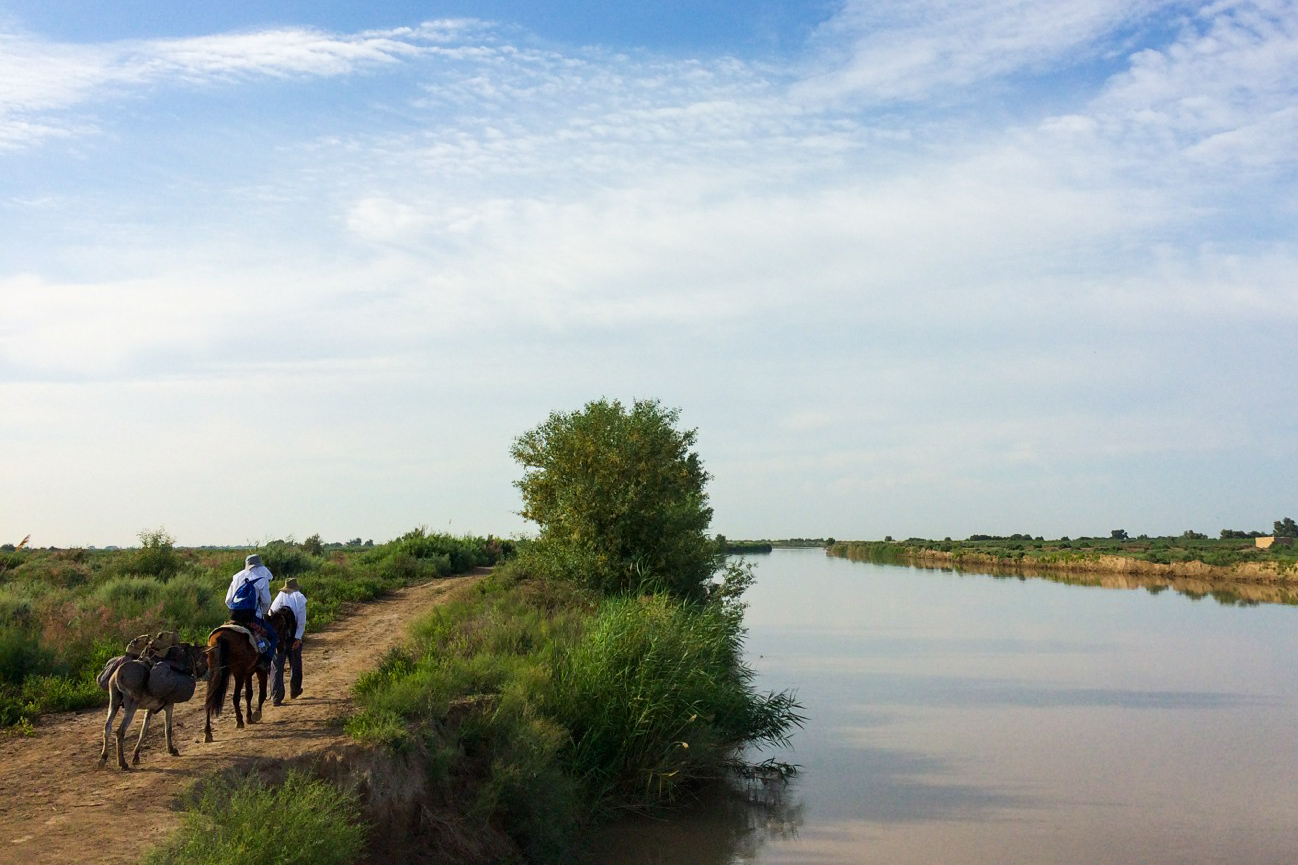
But Abdullaev is not good. My temporary walking guide through the scorching summer afternoons of western Uzbekistan is visibly limping. Because four blisters have turned his feet into pendulums of misery, of torture. At the next village, Abdullaev eases what appear to be 1950s-era bowling shoes off his steaming feet. Onto the soles of his socks are taped women’s sanitary napkins.
“I am surprised,” Abdullaev says. “This was supposed to be the best way to prevent blisters.” (When I later share this remedy with a New York friend, she emails: “Proof that maxi-pads really are entirely useless.”)
Welcome to a painful reality—to the hidden yet ugly podiatric truth—of plodding across four continents: It raises blisters.

Nurseyt Abdullaev’s (failed) anti-blister device: women’s sanitary pads.
Paul Salopek
I am walking across the planet. I write stories along the way. I conduct interviews. I take photographs. I become lost and found and lost again. And constantly I beg my local walking partners to warn me when their feet begin to heat up, to get sore, to pause before real damage is done, to take preventive action. They never do. Not once. (We all know how to walk!) And so: I have applied acres of bandages. I have unspooled miles of medical tape. I have deployed hydrogen peroxide, iodine, rubbing alcohol, sheep’s fat, cooking oil, talcum powder, ice, salt water, and my own spit against a vast constellation of holes burned into peoples’ feet. Such remedies are infinite. I am an alchemist in the treatment of blisters.
In Uzbekistan young Abdullaev is filling in for my usual walking partner, Aziz Khalmuradov, who has been sidelined by a flu bug and … a fiery shotgun scatter of blisters across his toe pads.
Before Khalmuradov, there was Daulet Begendikov. Begendikov and I traversed 250 miles of wild Kazakh steppe. His feet were mummified with bandages. He consumed our entire medical kit’s supplies and then emptied all the village pharmacies en route. Yet Begendikov soldiered on. (“Go! Go! Go!” he’d croak to himself every time he stood up, as if bracing to go over the top in trench warfare.)
Before Begendikov, there was Ana Jegnaradze, an amiable companion for a week in the rumpled country of Georgia. She removed her shoes at every break. (“Let your blisters breathe.”) To her smoking feet we applied Chacha, a powerful Georgian brandy.
Before Georgia, my Kurdish guide, Murat Yazar, hopped hot-footed through eastern Turkey. Yazar’s feet are the size of canoes. No boots ever fit him. At one point, with his bandaged big toe waving a white flag of surrender, he ended up plodding miles in flip-flops.
Etcetera. I punctured blisters all the way back to the starting line of the Out of Eden Walk, to the Rift Valley of Ethiopia. The honor roll of feet sacrificed to this insane project marches endlessly on.
Hence a guilty confession: For reasons I cannot explain I don’t get blisters.
I’ve suffered just two over the past 5,000 miles, since leaving Africa more than three years ago. The first erupted atop the blazing asphalt roads of midsummer Cyprus. My friend Zoe Anastasiou, scouting ahead in her battered pickup truck, was guiding me from bakery to bakery archaeological site to archaeological site across the island. “I know a good place to eat,” she said one day. “It is only 25 kilometers.” It was 40. And that night I stared woefully at a painful crater in my foot, suddenly aware of my own mortality. One continent later, in Kazakhstan, a cargo horse stepped on my boot and raised a second blister. (Horses are not immune; they get hoof-sore.) But that’s it. It’s a mystery.
I try to contain my pride at being almost blister-proof. But I am human. A high point of my winter trek across Azerbaijan was observing my partner, Rufat Gojayev—an iron man, his nation’s “Sportsman of 2012,” a world-class athlete who walked me easily into the ground—get a blister. Sorry about that, Rufat. Ha.
Blisters, I suspect, have been with us since the dawn of bipedalism. Or at least since the dubious invention of the shoe. (Which is claimed by the Armenians, from the discovery of a size seven slipper in a 5,500-year-old cave site in the Caucasus. Yet here’s the rub: The anatomical weakness of our pinky toes suggests the practice of tenderizing our shod feet, and blisters, began much earlier, perhaps 40,000 years ago.)
Meanwhile, my regular walking buddy in Uzbekistan, Aziz Khalmuradov, is now back on duty.
“Look what I’m wearing,” he says proudly.
Feminine napkins pad the insoles of his boots. Women’s nylon ankle stockings are pulled over his thick hiking socks. An old family friend, a retired infantry colonel, has recommended these remedies. They are foolproof against the terrible friction of the road. This anti-blister method has been field tested by boot-leather troops in the Uzbek army.
We walk a day. Khalmuradov gets blisters.