Small bands of Stone Age humans first walked out of Africa—scientists tell us—roughly 100,000 years ago and began exploring the wild Earth.
Children were part of that epic journey.
Never mind Marco Polo. Or Columbus. Or Lewis and Clark. Or any other “famous” explorer: All were Johnny-come-latelies. Because kids beat them to every blank spot on the map. Children reached Asia, the Americas, and the Louisiana Purchase first, thousands of years ago, on foot, rambling alongside their hunter-gatherer parents. Kids participated in the original discovery of the world.
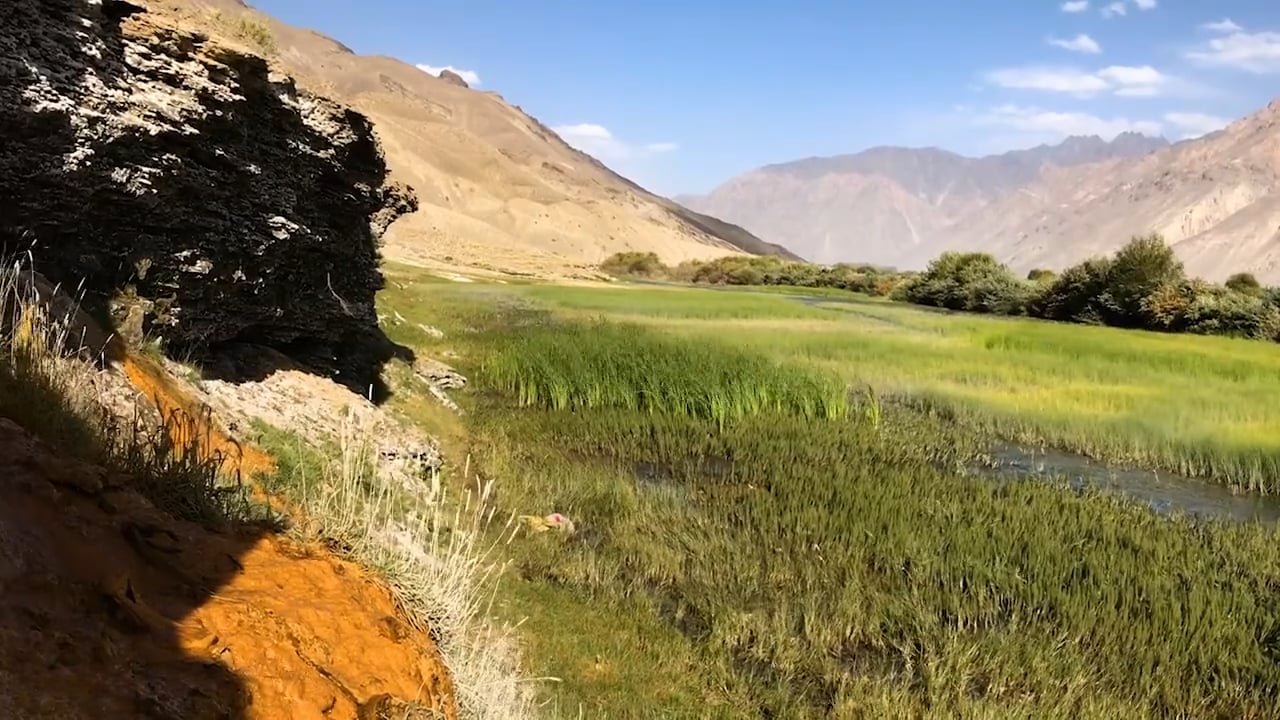
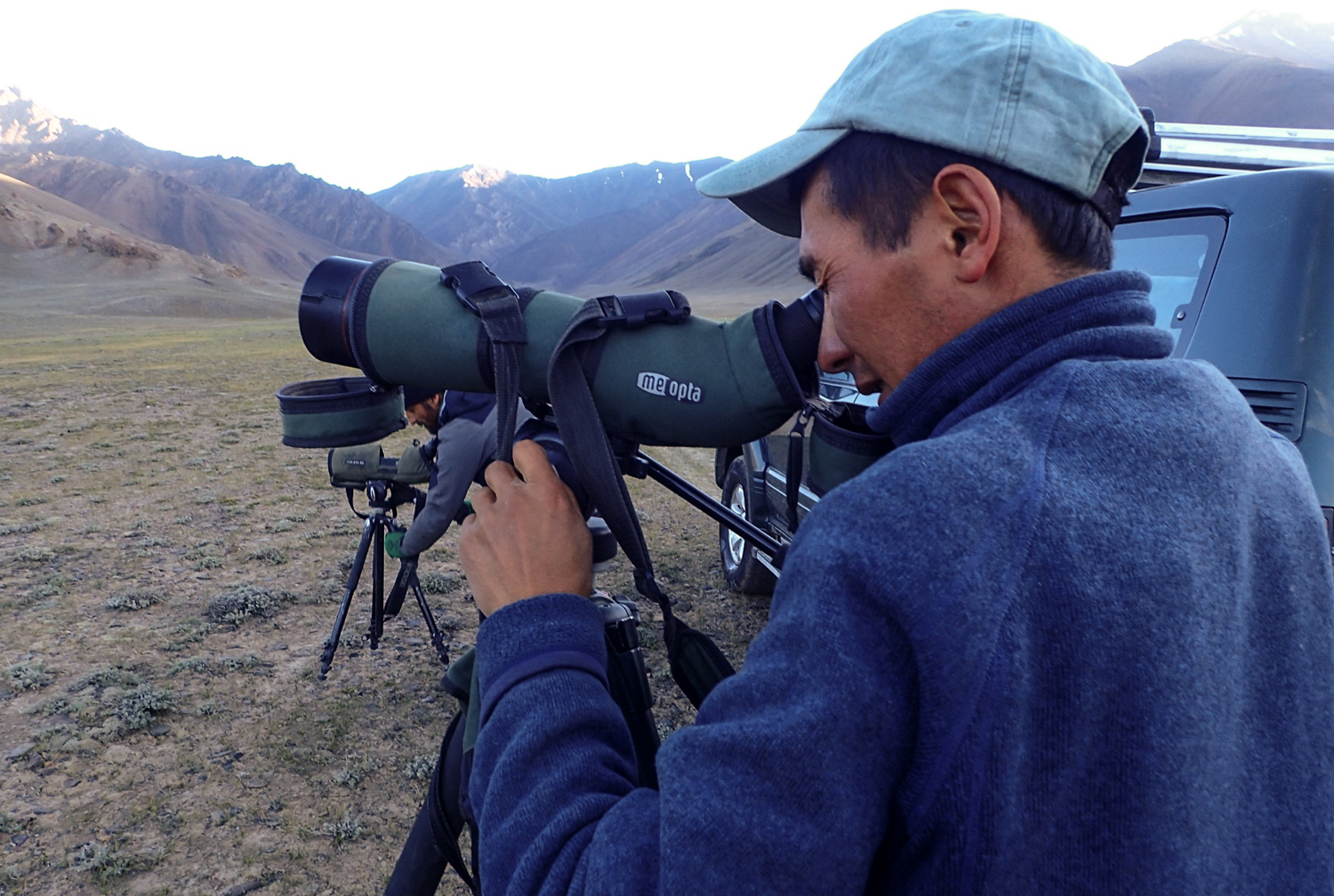
I think about this as I set out from the empty, wind-raked plateaus of the Pamir Mountains of Tajikistan, en route for the snowy, saw-toothed peaks of the Hindu Kush, the towering range that guards the frontier of Afghanistan. Abdullah Osmonov leads the way pulling my cargo donkey. Abdullah is nine. He marches across the cold desert gravel in plastic sandals. His father, the leader of a small village of ethnic Kyrgyz sheepherders, has permitted the boy to walk with our caravan for a few miles, just for fun. Abdullah chats to the donkey. He sings snatches of song. He dances and he stomps. He has turned our work into play.

Kids greet the author on his trek through eastern Turkey.
Paul Salopek
It must have always been like this.
I am walking across the world. I am retracing the vanished footsteps of the ancestors who made the planet ours. And today, wherever I wander, it is often children who hail me first. They wave from fields of ripe wheat in Turkey. Or grin from village doorways in Georgia. Or shout hello from a passing bus in Palestine. Once, two boys threw rocks at me from a hilltop in Jordan. It was a game. I was so far away as to not even be human. Yet with surprising frequency—in our age of fear and wariness of strangers—kids walk along with me through their small, busy little worlds, down their dusty streets, or across their lush green animal pastures, holding my dangling hand.
The adults? They stiffen for a moment. Their brains work furiously. For an eye-blink, they pause to analyze our encounter for possible danger, for consequences, for embarrassments, before offering a greeting. But the kids—their eyes burn with raw curiosity. They brim with a thousand questions. Who as a child has not dreamed about walking away from home? To the farthest corner of the world? To the edge where the seas falls off? Children remember. Children understand.
We all come from Africa, the mother continent.
The scientist Spencer Wells, in his book on ancient human migrations titled The Journey of Man: A Genetic Odyssey, tries to imagine himself that ancient African parent who bore the first child who was noticeably “human” perhaps 150,000 years ago. That is, he conjures the startling novelty of the first Stone Age baby born, through a sheer accident of genetics, with all the faculties we now associate with our clever species:
“Although he is a strong, healthy child, he worries you because he seems so unlike the other children. For one thing, he has already learned to speak—at age two—while the other children do not do this until they are at least three. He also seems to be much better at making things than the other children in the clan, and enjoys playing games with the small pieces of stone that lie scattered around the camp . . . The strangest thing, though, is that he has begun to trace images in the dust that are similar to the animals that you bring back to camp.”
Curiosity. Imagination. Play. These things have delivered us the world.

A Turkmen mother and daughter at a refugee camp in Turkey.
Paul Salopek
All children want to learn, of course. (The best gift for young people in the less privileged corners of the globe: a pen to write or draw with.) But we forget that children teach as well. This is particularly true for me while walking through rural landscapes where children still work alongside their parents. Where families survive as a team. These are places where wisdom comes not only from a classroom but also through lessons offered by nature, through calloused hands.
A young boy in Ethiopia taught me how to curl a tree leaf into a cup, to sip daintily from a stream. A girl from Kazakhstan showed me how to knot a horse’s legs together, to keep the animal from straying too far from camp. And a toddler in Khiva, the ancient Silk Road city in Uzbekistan, offered me a lesson in royal manners: He stood gravely, confidently, potbellied, and naked as the day he was born, with his right hand outstretched in bold greeting on an antique street corner: a welcoming king, a pasha, a khan.
As I walk the world, I think of the children who blazed the trail before me.
Of energetic Abdullah Osmonov, my young donkey wrangler in the high Pamirs of Central Asia. When he grows up, he wants to be a pilot, he says, though I am fairly sure he has never laid eyes on a plane.
And of a boy I met once many years ago—long before this slow journey—when I was lost on mule-back in the fractured canyons of northern Mexico.
I rode up to a shack in that rumpled wilderness, asking for directions. And the father, an indigenous Cora herder, quietly told his son to saddle up a donkey and guide me to a nearby town. Our ride together took two days and nights. The route threaded a maze of rusty crags and boiling white rivers. We covered perhaps 40 miles. Along the way I told the boy jokes. He laughed before all the punch lines. And when we finally reached the town, and after I’d paid him, he quietly declined the offer of an ice cream and thumbed the brim of his hat in polite goodbye. He turned his donkey around.
I cannot remember his name. I recall I wished I were like him. He owned his world. He was eight years old.
A Turkmen mother and daughter at a refugee camp in Turkey.
Paul Salopek
All children want to learn, of course. (The best gift for young people in the less privileged corners of the globe: a pen to write or draw with.) But we forget that children teach as well. This is particularly true for me while walking through rural landscapes where children still work alongside their parents. Where families survive as a team. These are places where wisdom comes not only from a classroom but also through lessons offered by nature, through calloused hands.
A young boy in Ethiopia taught me how to curl a tree leaf into a cup, to sip daintily from a stream. A girl from Kazakhstan showed me how to knot a horse’s legs together, to keep the animal from straying too far from camp. And a toddler in Khiva, the ancient Silk Road city in Uzbekistan, offered me a lesson in royal manners: He stood gravely, confidently, potbellied, and naked as the day he was born, with his right hand outstretched in bold greeting on an antique street corner: a welcoming king, a pasha, a khan.
As I walk the world, I think of the children who blazed the trail before me.
Of energetic Abdullah Osmonov, my young donkey wrangler in the high Pamirs of Central Asia. When he grows up, he wants to be a pilot, he says, though I am fairly sure he has never laid eyes on a plane.
And of a boy I met once many years ago—long before this slow journey—when I was lost on mule-back in the fractured canyons of northern Mexico.
I rode up to a shack in that rumpled wilderness, asking for directions. And the father, an indigenous Cora herder, quietly told his son to saddle up a donkey and guide me to a nearby town. Our ride together took two days and nights. The route threaded a maze of rusty crags and boiling white rivers. We covered perhaps 40 miles. Along the way I told the boy jokes. He laughed before all the punch lines. And when we finally reached the town, and after I’d paid him, he quietly declined the offer of an ice cream and thumbed the brim of his hat in polite goodbye. He turned his donkey around.
I cannot remember his name. I recall I wished I were like him. He owned his world. He was eight years old.