We are slogging, my walking partner Naveed Khan and I, down a cruel blacktop highway in the Karakoram range of northern Pakistan. Behind us: the air-blue mountain passes leading to the parched deserts of western China, to the alpine wilds of northern Afghanistan. Ahead of us: the lush green Punjab plateau, and, eventually, the scorched coast of the Arabian Sea.
But first—a refueling stop: a roadside hut of corrugated tin. Two slabs of flat, gray stone, propped heavily on rusty iron legs, serve as rustic tables. The star of the menu: nature’s own elixir, sea buckthorn juice.
“Once you swallow it, it flows into your blood and cures your illnesses,” says Inayat Bakht, the middle-aged proprietor. Offering a tablespoon of the bright orange liquid as a free sample, Bakht adds gravely, “Experts have come to study sea buckthorn. It has at least 27 different medicinal uses. It treats acne, cancer, infections, and obesity.” A mustachioed man beside her clutches his round belly. This is Bakht’s husband, Gulam Samad Shah. “Two spoonfuls a day,” Shah says, grinning. “I lost five kilos.”
What is sea buckthorn?
Hippophae rhamnoides—as the plant is known by its Latin name—is an obscure, deciduous shrub with silvery leaves, needle-sharp thorns, and a wide distribution across the Old World. In Western Europe, it often grows as a weed along salty coastlines. (Hence the common name.) In Central Asia, where I have encountered it for hundreds of miles along the route of my journey across the world in the footsteps of our Stone Age ancestors, it is a common plant of the dry highlands. Farmers in Tajikistan planted it as living barbed wire to fence their pastures. The rural Afghans nibbled its berries—small, round, and bright orange as salmon roe—as they led their sheep across canyons and gullies. So did I. Eaten raw, the berries taste lies somewhere between a tart lemon and a sweet apricot. It is delicious and refreshing.
“For centuries it’s been like our trail food,” my guide in Afghanistan, Inayat Ali, told me. “We also drink sea buckthorn as a tea. It’s loaded with vitamins.”
In the rugged Himalayan uplands where Ali and Bakht live, the drab plant is known in the local Wakhi language as khorz zag—“sweet thorn.” Farther afield, it is being called much more: a cure-all and a super-food. Recent laboratory analyses show that its fruit is indeed rich in vitamin C, fatty acids, and many other nutrients. Dr. Mehmet Oz, the star of a popular health show on American TV, recently displayed two mice, one grotesquely fat and the other thinned by a diet that included sea buckthorn, as proof of the slimming effect of the “miracle berries.” And China, which has employed sea buckthorn in traditional medicine, is cashing in on the plant’s new popularity. At one time it sowed large sea buckthorn plantations mainly to stabilize desert sands. Now it grows the shrub for its promising medical and even cosmetic qualities: The fat-rich berries are used for rejuvenating wrinkled skin. Tubes of sea buckthorn hand and face creams can sell for $10 to $40.

Sea buckthorn juice. The taste is acerbic. Many consumers water it down.
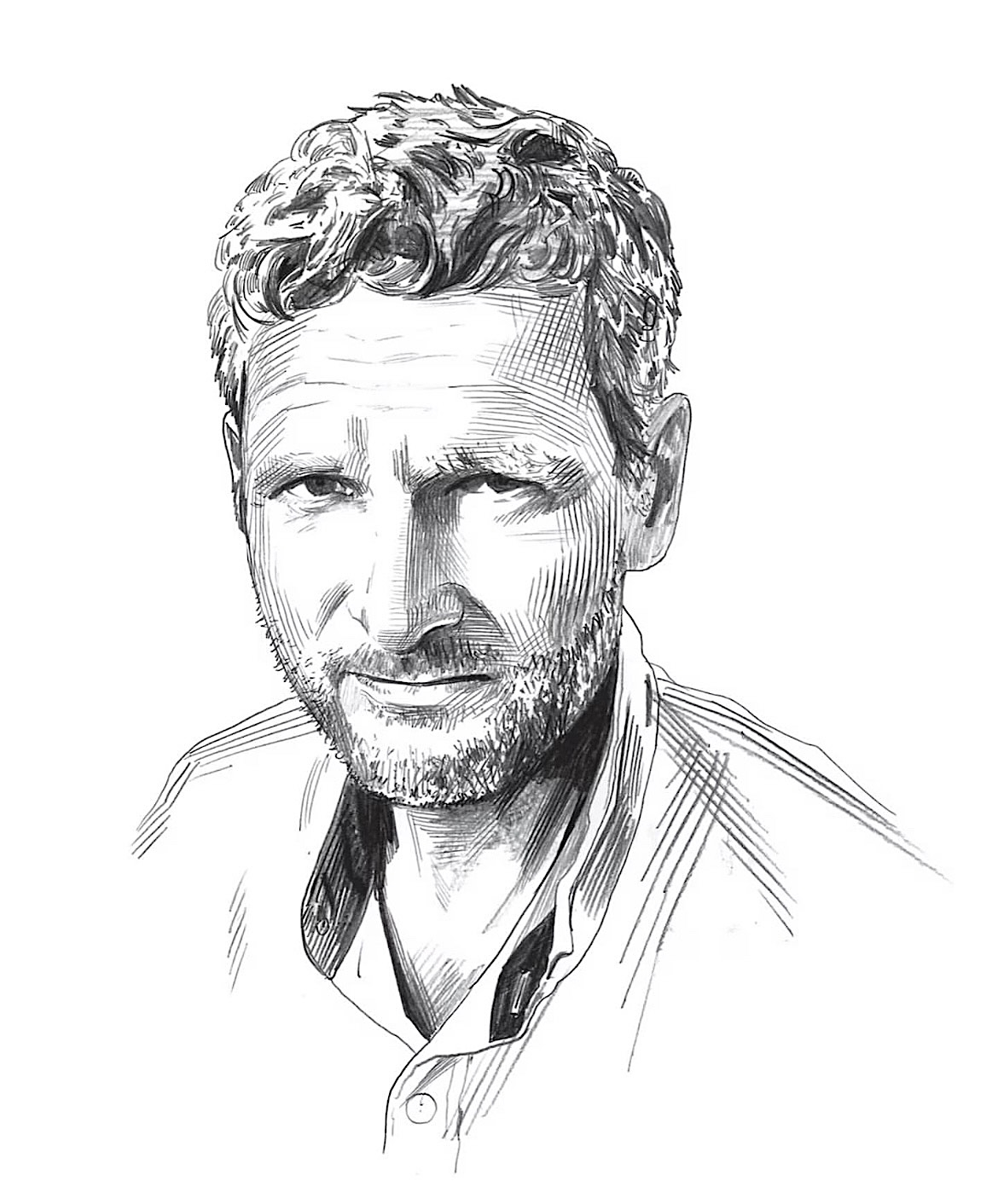
Paul Salopek
“A company is taking me to China this winter,” Bakht, the roadside berry entrepreneur, says proudly. “They want me to teach them how to harvest by hand.” At her highway shack, she sells the wild sea buckthorn fruits fresh and dried. She offers sea buckthorn jams. Sea buckthorn tea. It takes Bakht ten arduous days to pick barely five pounds of berries.
Experts advise caution on the more exaggerated claims about sea buckthorn’s magic.
Mice are not people. More experiments are required. Science is a slow, laborious process. There are no shortcuts. There are no easy breakthroughs, swift conclusions. It boils down to repetition, to statistics. There is a test, a formula, called the chi-square: It measures the relationship between two variables. Are they significant? Or are they random? If you could somehow quantify them, I suppose you could calculate the significance of human vanity, or fear of aging, or hope against pain and death in this manner.
Naveed Khan and I thank Bakht. We thank her husband Shah. We walk onward atop the punishing asphalt.
I carry a small bag of sea buckthorn fruit in my rucksack. And I think of Bakht’s strong hands: scratched and punctured by thorns in the grueling process of harvesting berries. Is her sacrifice, I wonder, the true variable that makes all the difference?