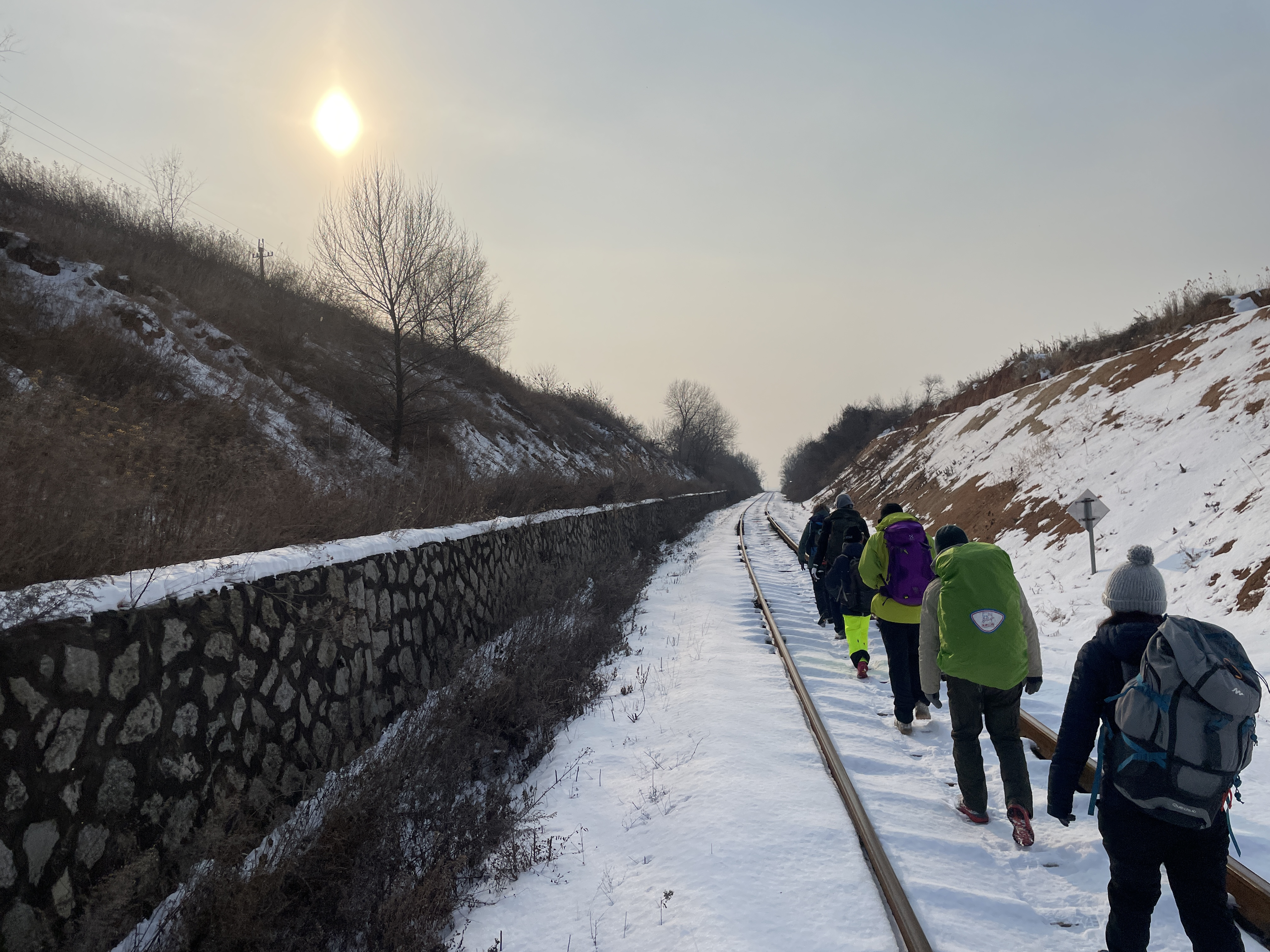
For going on three years now, I’ve been walking across China. When done, I’ll have logged some 4,200 miles. Starting in the southwest in October 2021 and rambling northeast, I’ve roughly followed an imaginary geographical divide called the Hu Line, which separates China’s lusher, densely populated east from its more arid and roomier west. I haven’t spotted too many motorized Chinese out stomping my trails. In a nation of 1.4 billion, this felt odd sometimes, to claim horizons for myself. Which isn’t to say I’m not meeting ghosts.
When you walk the world—and I’ve been trekking from Africa to South America for almost a dozen straight years, following the pathways blazed by our prehistoric ancestors out of Africa—you begin to read terrain like a palimpsest. Some places barely offer up a passing word. Others are layered with the whispers of feet and time. China is like this, a densely narrated landscape.
In Yunnan Province I walked the Burma Road, sluiced with the sweat and blood of 200,000 village laborers in World War II. Later, I hunted the cobbled remnants of the thousand-year-old Silk Roads in Sichuan Province. And in Shaanxi Province, my boots raised puffs of dust on the Qin high- way, built more than two millennia ago to speed galloping imperial cavalry to the frontiers of Mongolia—a distance of 450 hilly miles—in just three days. Or so legend goes. But the one phantom trail in China that resurfaced often to mind, particularly in the hinterlands, was the Chang Zheng—the Long March.
Every Chinese schoolchild knows the tale: Ninety years ago this October, in 1934, as China lurched through a terrible civil war, the fledgling Communist Party and its peasant Red Army fled their bases in southern China, routed by the Nationalist government of Chiang Kai-shek. To escape total destruction, the Communists walked. They embarked on a 6,000-mile retreat over the eastern Himalaya, across rivers defended by artillery, and through swamps where men and pack animals vanished whole. More than 80,000 troops and camp followers—men, women, children—began this exodus. A year later, only 8,000 still stood. After holing up in the caves of Shaanxi, the survivors rebuilt their revolutionary movement, and by 1949 they’d swept across China, changing the country and the world forever.
Read the full story in National Geographic magazine here. You'll be asked to provide your email address.