What are you doing, Natia?
“I am staining my lips with walnut juice.”
Walnut juice?
“Yes. When I was a little girl we used it as lipstick.”

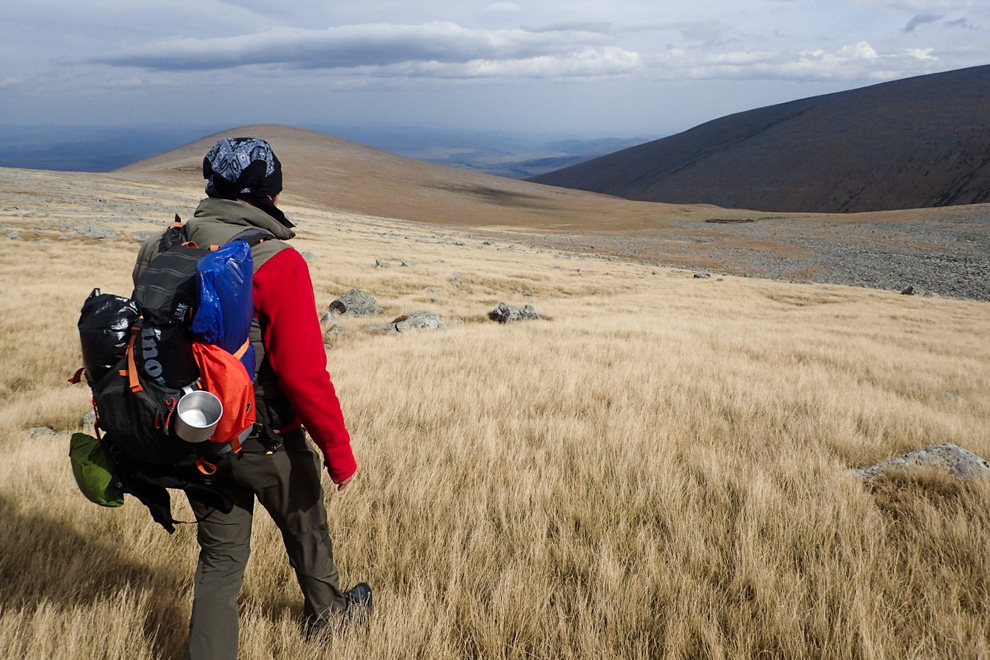
A poetic traffic jam in the Pshavi mountains of eastern Georgia.
Paul Salopek
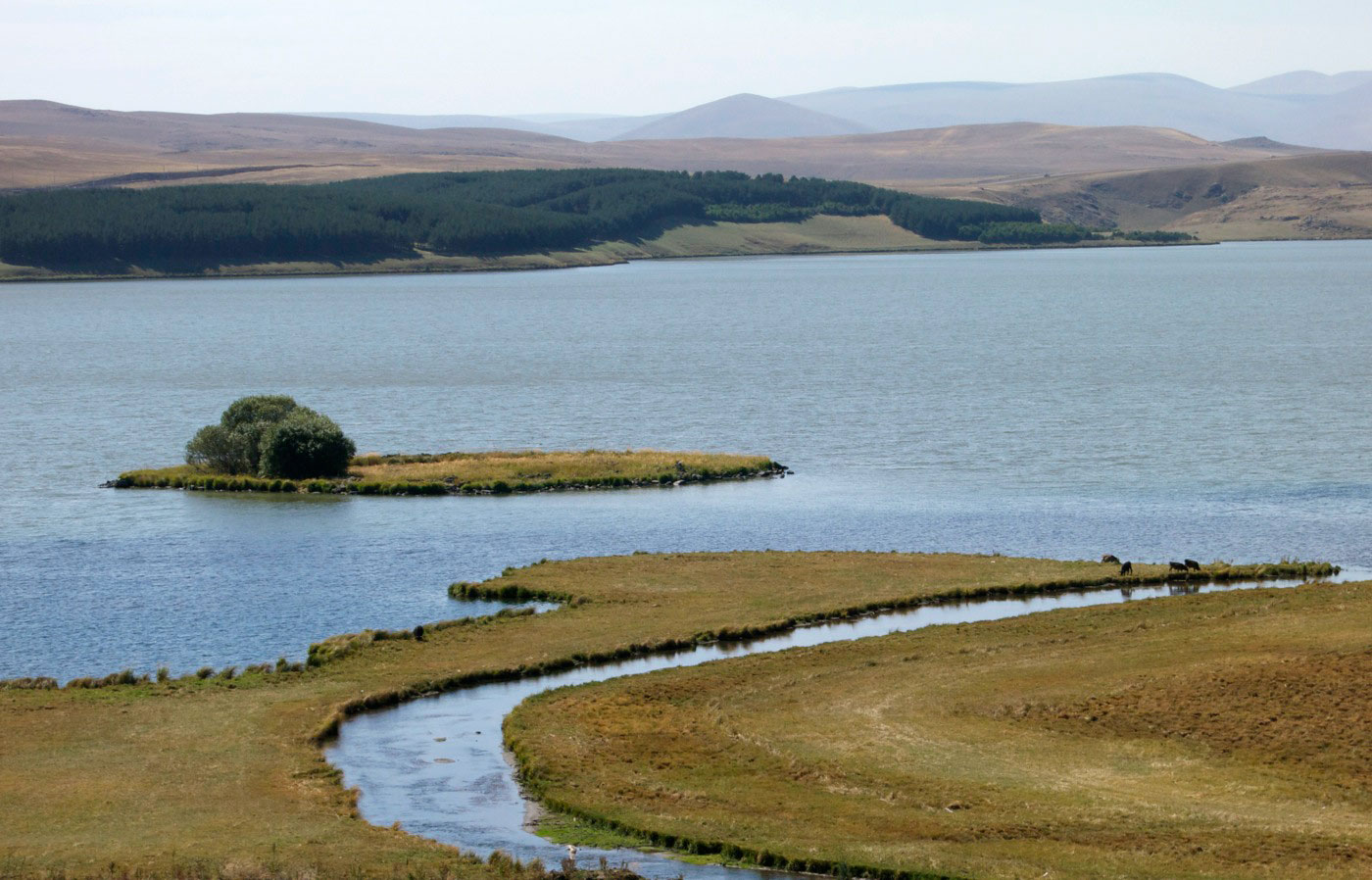
Natia Khuluzauri, my guide in the hills of eastern Georgia, rubs the walnut’s sun-yellow hull against her lips. I watch her doing this. I look at her pretty little girl, Nutsa, playing in the grass field with a tethered black mare. I look at the long, woolly string of sheep raising pale dust on a country road—sheep driven by whistling, long-legged shepherds burned by the summer sun, their pack horses in tow. I look at the picnic lunch of bright red tomatoes. At the rumpled Caucasus that hems us in with lush folds of conifers, wild lime trees, hazelnuts, crab apples. At the powder blue sky. I hear a bell, gonging and fading like a distant, iron heart. I realize: I am living a Vazha Pshavela moment.
Who is Vazha Pshavela?

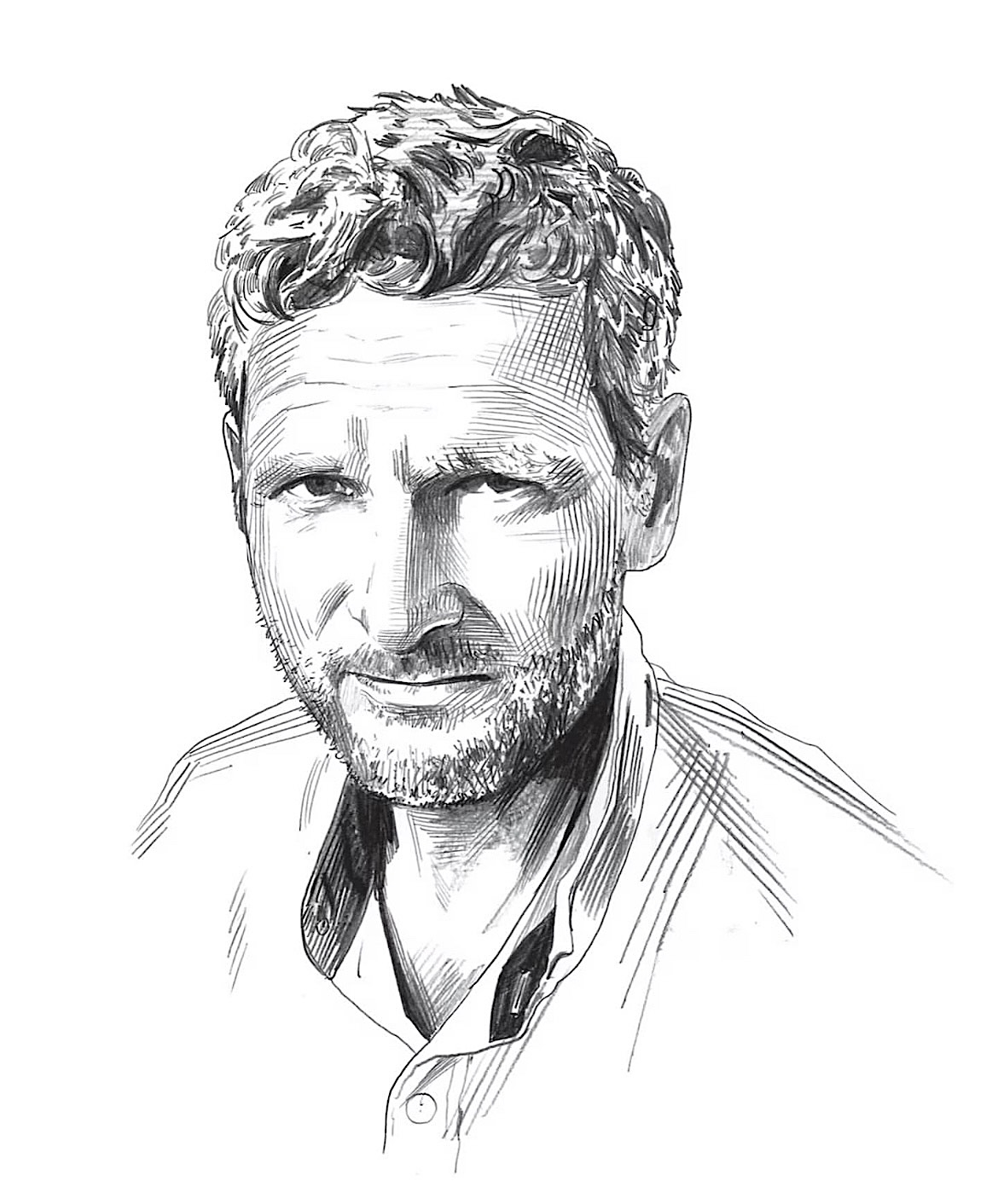
“I, by fate, am doomed to wander…” A portrait of Vazha Pshavela at a museum in Chargali.
Paul Salopek
Vazha Pshavela is the revered mountain bard of Georgia: a Walt Whitman of the Caucasus, a composer of epic verses dedicated to ordinary hunters, to herders, to the tough women of remote villages that hang like swallows’ nests in the crags of Pshav-Khevsureti: the Appalachia of Asia Minor. A genius born in a stone cabin. A patriot. A rustic with the lumpen hands of a boxer who walked 1,600 miles behind a horse cart, all the way to St. Petersburg, to study law. A defender of the older human values against “false civilization,” who plodded, penniless, back to Georgia to write more than 400 poems that worshiped nature, that bled with feuds, that pitted the free man and woman against the hidebound group. The opening of his tragic ballad, “Host and Guest”:
Veiled in the gloom of night The sweet face of Kisteti Appears, among hills around, A rocky throne among cliffs. The river moans in its dark ravine, Turbid, with grief at its heart. The mountains too are bowed down, Laving face and hands in the water; On their breasts, many have died, Unfitting is the blood on their flanks. Seeking the blood of his brother’s killer, A man travels along the road …
Most countries lionize their founders. Their history books sing praises to generals. They celebrate strongmen, politicians. Their patriotic myths star revolutionaries, religious prophets, even glorified shopkeepers—entrepreneurs. But Georgia? Georgia worships its poets.
For a nation of only five million people, who speak one of the world’s smaller languages, Georgia has produced a startling legacy of world-class literature.
If there can be only one Georgian “father of the nation,” it must be Shota Rustaveli, the 12th-century bard. (His masterpiece, “The Knight in the Panther’s Skin,” plumbs the nature of friendship.) The international airport and 10,000 streets are named after him. Children declaim ten minutes of his memorized verse on national holidays. Betrothed couples exchange snippets of his ritual rhyme.
It is true, the Georgian capital, Tbilisi, is dotted with monuments to kings on horseback. But it also displays countless statues depicting Rustaveli and many other dreamy-eyed scribblers clutching books, manuscripts, pens. Akaki Tsereteli. Ilia Chavchavadze. Titsian Tabidze. No fewer than three published poets are inked onto the national currency, the lari. (Other figures stamped on Georgian banknotes are a linguist, a painter, a musician, two royals, and a soldier.)

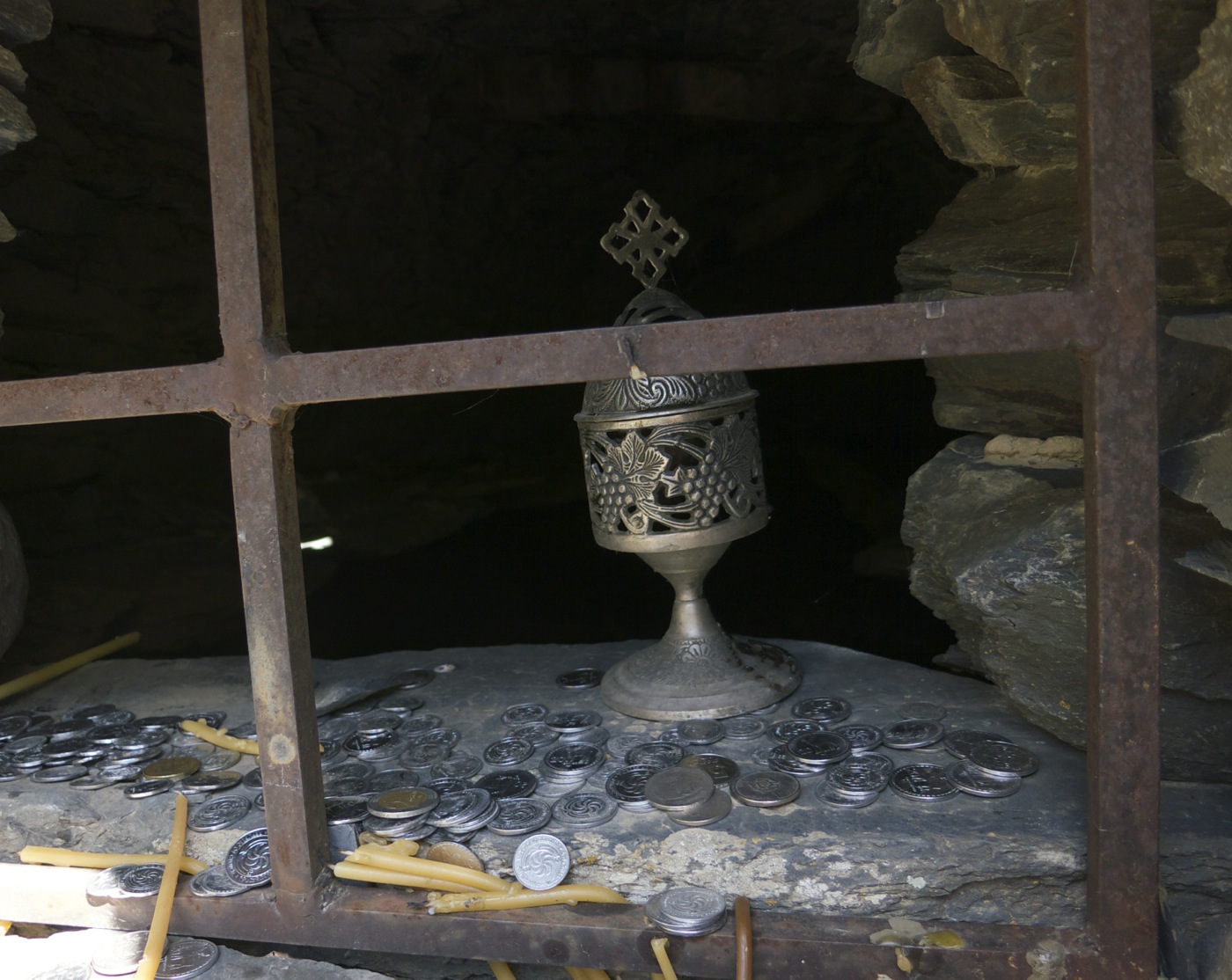
The poet-hero’s tomb on a Tbilisi hillside.
Paul Salopek
“For us, poetry is a tool of survival,” Nodar Dugladze, café owner, former newspaper publisher, bodyguard, and expert on Homer, informs me. “We have been invaded so many times by everybody—from north, south, east, west—that we sit the all conquerors down at a table, drink lots of wine with them, get them drunk, and recite very long poems. We coopt them. We seduce them.”
Natia Khuluzauri—she of the walnut-stained lips—takes me to see the village of Chargali, where the mountaineer Vazha Pshavela was born in 1861. She tells me this family story:
“My grandmother was from this area. When she was a very, very, very little girl, she attended a feast in Vazha Pshavela’s village. He was sitting outside his cabin, writing on the step. She brought him khinkali”—meat filled dumplings—“and he got very angry. He said, ‘What? Why do I want with dumplings now? Can’t you see I am thinking bigger things?’ He was very unfriendly. He sent her away.”
Natia smiles, dreamily, reverently.
Chargali is very remote: almost empty, a quiet, pastoral, beautiful dead-end high in the green forest. The state has turned the poet’s hut into a shrine. The master’s cosmic head, carved in heroic style towers, glowering, outside a museum. It is the size of a house. It probably can be seen by satellite.