Where is Ipnari?
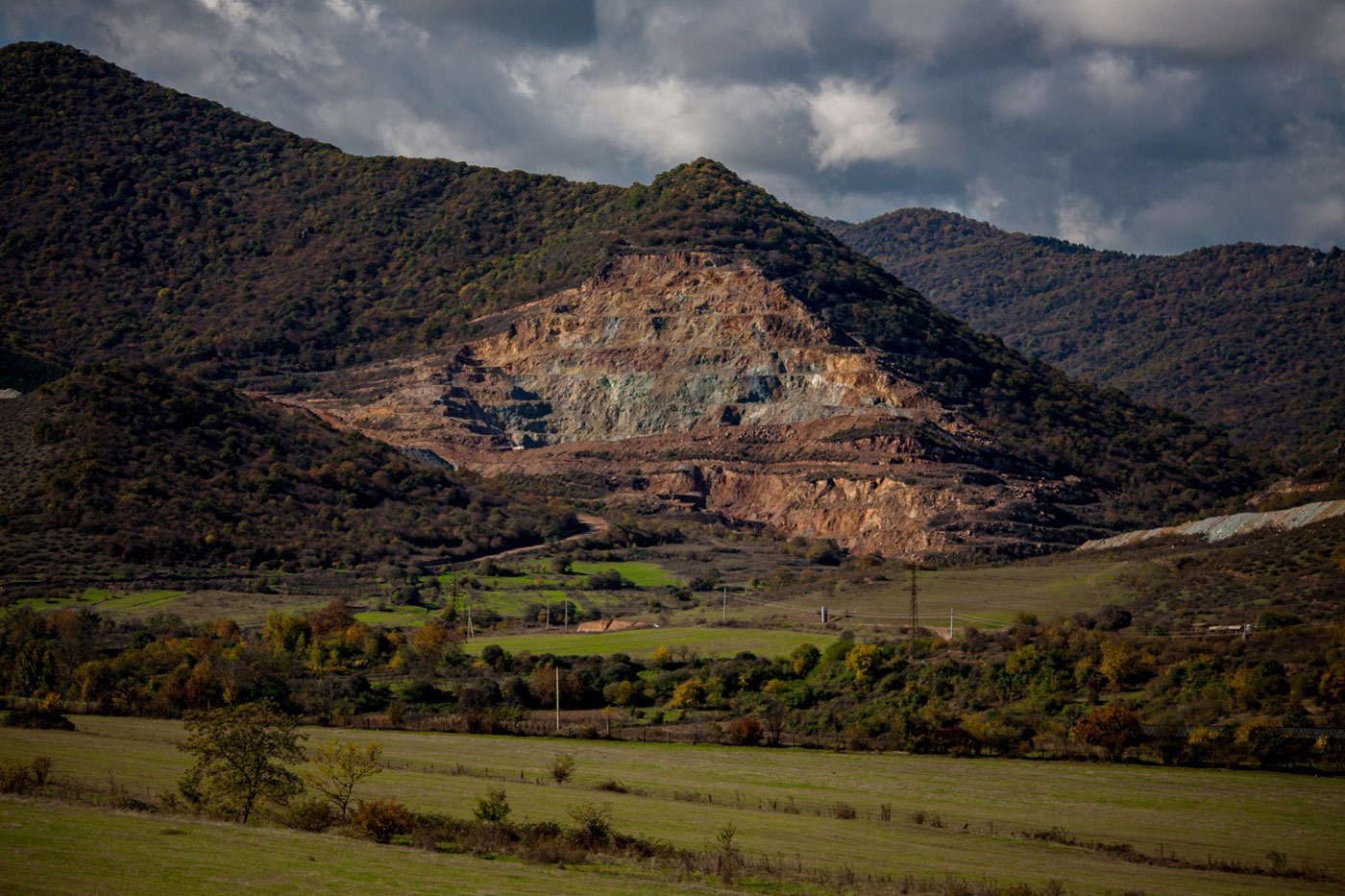
Is it to the right? The left? Does it lie straight ahead? Or does the tiny, elusive village recede behind us? It is impossible to know. It is impossible to see. We stagger blindly, my Georgian walking guide Dima Bit-Suleiman and I, through the foggy, rainy, dripping mountains of southern Georgia. We grope our way ahead in near-zero visibility. It is like stumbling through a landscape smothered in icy smoke. Dense mists collect in our mouths as we pant up and down muddy slopes: the cleanest taste in the world, like wet steel.

Cattle are the only pedestrians in misty Ipnari, a former German colony in the Caucasus. The steeply gabled house is of German vintage—possibly a hundred years old.
Paul Salopek
These spectral ranges seem lifted from the pages of European fairy tales, from books of dragons and knights. Their cloud villages materialize and dissolve along dank and haunted forest trails—a shrouded landscape fit for ghosts. This is apt: We are searching for relics of a vanished nationality in Georgia: the Germans of the Caucasus.
“We can’t say anything bad about the Germans,” says Rafik Aliyev, a ruddy-faced, gum-booted, retired factory hand in Ipnari village, which Bit-Suleiman and I finally locate by accident. “They built things up. We tear things down.”
Aliyev glumly shows us the five surviving German houses in his village: sturdy rock mansions with shingle roofs gabled for the deep snows of continental Europe. The homes’ doors and windows are arrayed to form a cross. Azeri families occupy them now. Ipnari today is nominally Muslim.

In Mamishlari, a typical farm breakfast: homemade cheeses. creams, bread, and winter-chilled apples.
Paul Salopek
The first Germans migrated to the Caucasus in the early 1800s, bringing their rage for order, their right angles, their good Swabian cheeses and beers, and their Protestant work ethic. Their colonies (Katharinenfeld, Elisabethtal, other Teutonic names) multiplied, flourished, grew rich. They had a German newspaper and German schools. By the 1940s, more than 24,000 Germans thrived in 20 colonies in Georgia alone. But the guarantees the imperial Russian Tsars had extended to these invited, “civilizing” colonists Stalin wrenched away. In 1941, when the Nazis invaded the Soviet Union, virtually all the Germans in the Caucasus were entrained to the gulags of Siberia or to Central Asia. Few returned.

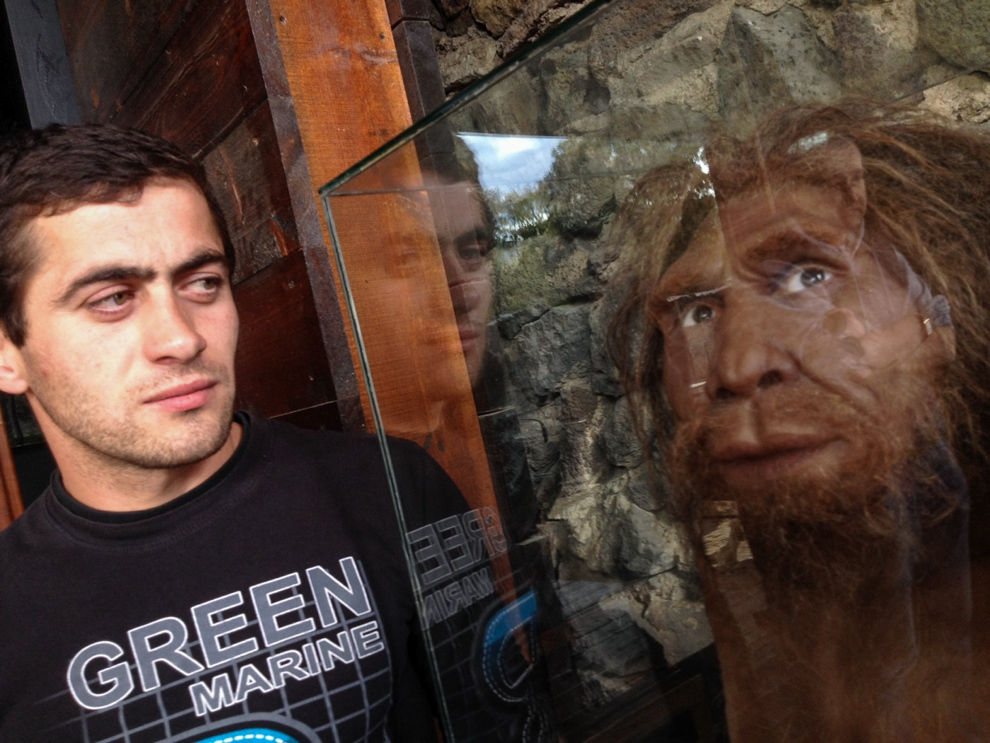
More ghostly faces: In Kazreti, a fading memorial to Georgian villagers killed in World War II.
Paul Salopek
“My father was just a simple shepherd,” Aliyev says. “He was given one of the German houses. He told me how he pressed a button on the wall and lights came on. It made him jump from fright.”
Fatima Aliyev, 70, lives in the “Steiger house,” named after its original builder. The smiling old woman and her family feed us their homemade apple butter, their homemade cheese, their new-baked bread, their raspberry jams, and fresh-cracked walnuts from their trees. They invite us—two damp strangers walking to Azerbaijan—to sleep in their beds, in cavernous bedrooms. They point proudly to a few sticks of “German furniture,” which may or may not date from the mass deportations.
“Some young Germans came to our garden 15 years ago to dig up gold their parents buried there,” Fatima Aliyev says—pushing her tart pickles and snow-white cream across the table. She whispers of more such hoards. As if that were the real treasure of the Caucasus.