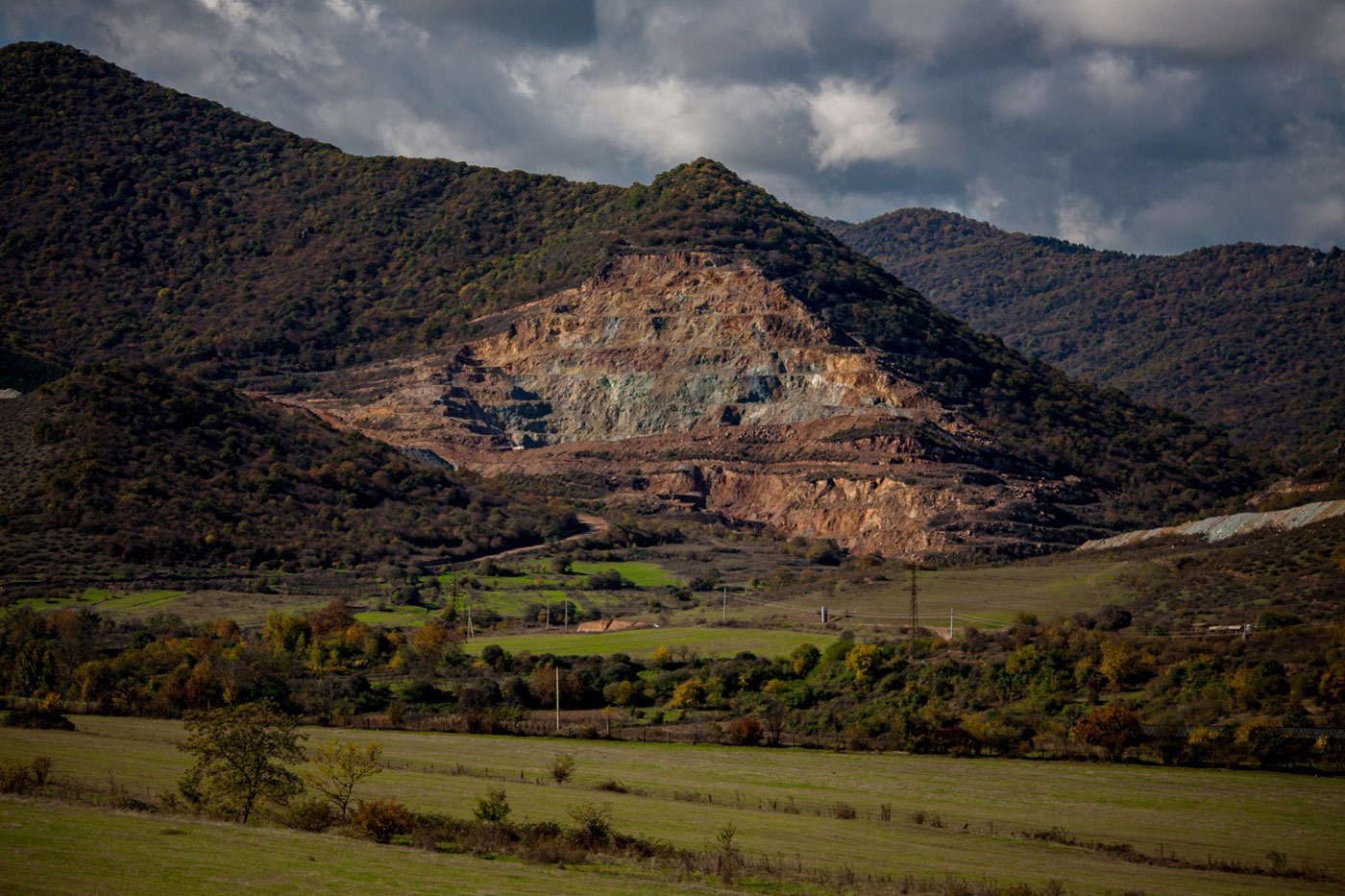
The oldest hominins ever found outside of Africa were unearthed atop a rocky promontory in the Republic of Georgia, in the lush southern Caucasus. Their bones lay—gnawed on, in some cases, by giant prehistoric hyenas—beneath a medieval town. Under mossy ruins that include a church and a fortress. Under a cross. Under the sword.
I think about this primordial contrast in human aspiration while walking the Dmanisi archaeological site. When I hold the fossils in my hand, I can’t help but stare at my hand. Are we good? Shall I drink your blood?

The earliest clues to altruism have been found at Dmanisi, a site crowned by a medieval church and fortress.
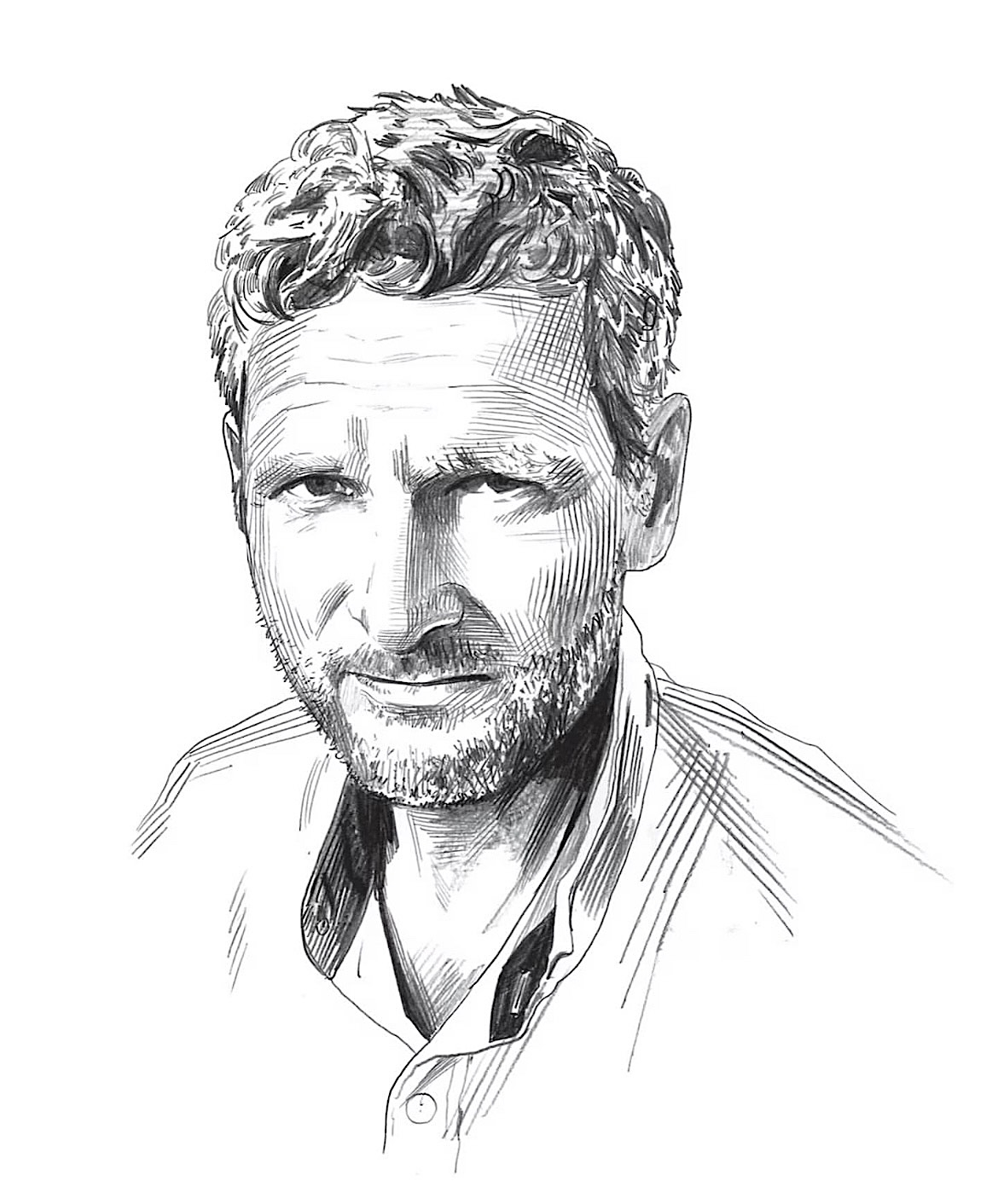
Paul Salopek
A fundamental tenet of Darwinian theory dictates that we should all behave like louts.
Why?
At its most basic level, “survival of the fittest” holds that any individual whose DNA gets replicated most within a population wins the evolutionary lottery. It doesn’t matter one whit how: Morality isn’t biology. Indeed, selfishness is rewarded. Cheating or violence is fine. Thus, a rogue who only looks out for Number One—who hogs the meager food supply, who never takes a risk to help a stranger, who kills competitors, who uses deception to sleep with others’ mates—would, in theory, survive longest and produce the most babies. He or she would become a gold medalist in the genetic Olympics.
And yet, we are not venal thugs. At least, not all the time. We grapple with our self-centered natures. We surrender seats to old ladies in buses (even when they aren’t our grandmothers). We endow hospitals and plink coins into beggars’ cups. Occasionally, we even lay down our lives for the weak, vulnerable, and downtrodden. For scientists this behavior is mystifying.
Evidence of such ingrained altruism is very old. It lies buried deep in the fossil record.
The most famous example is Shanidar 1, a Neanderthal man found in a cave in Iraq. His right arm was atrophied. He was partially deaf and blind. He was so crippled by arthritis and injuries, he could barely move. Still, he reached the ripe old Neanderthal age of about 40—only, it would seem, with the laborious support of other people in his clan. A useless old man was cared for. Why? We don’t know. He lived and died between 35,000 and 45,000 years ago.
Then, there is a child’s skull. It is labeled SH14. It was found at the Sima de los Huesos site in Spain. This small, frail cranium shows clear evidence of a brain deformity—a serious enough defect, in fact, that it probably resulted in a learning disorder. Yet the child was not abandoned, rejected, killed. Instead, he or she was raised and nurtured, probably at some cost to the parents, for at least five years. SH14 is an extraordinary 500,000 years old.
Dmanisi in Georgia, however, holds the world record for the ancientness of this strange human trait: benevolence.
“We found an old individual with only one tooth,” says David Lordkipanidze, a paleoanthropologist and the manager of the Dmanisi site. “Can you imagine how hard it would be to survive with such a condition? So he had to be taken care of.”
Lordkipanidze is referring to a mandible catalogued as D3900. It is thick and round-chinned and archaic beyond imagining. It comes from some wandering creature that may have been a Homo erectus. D3900 gummed its last meal, possibly fed into its lips by another’s hairy fingers, 1.8 million years ago.

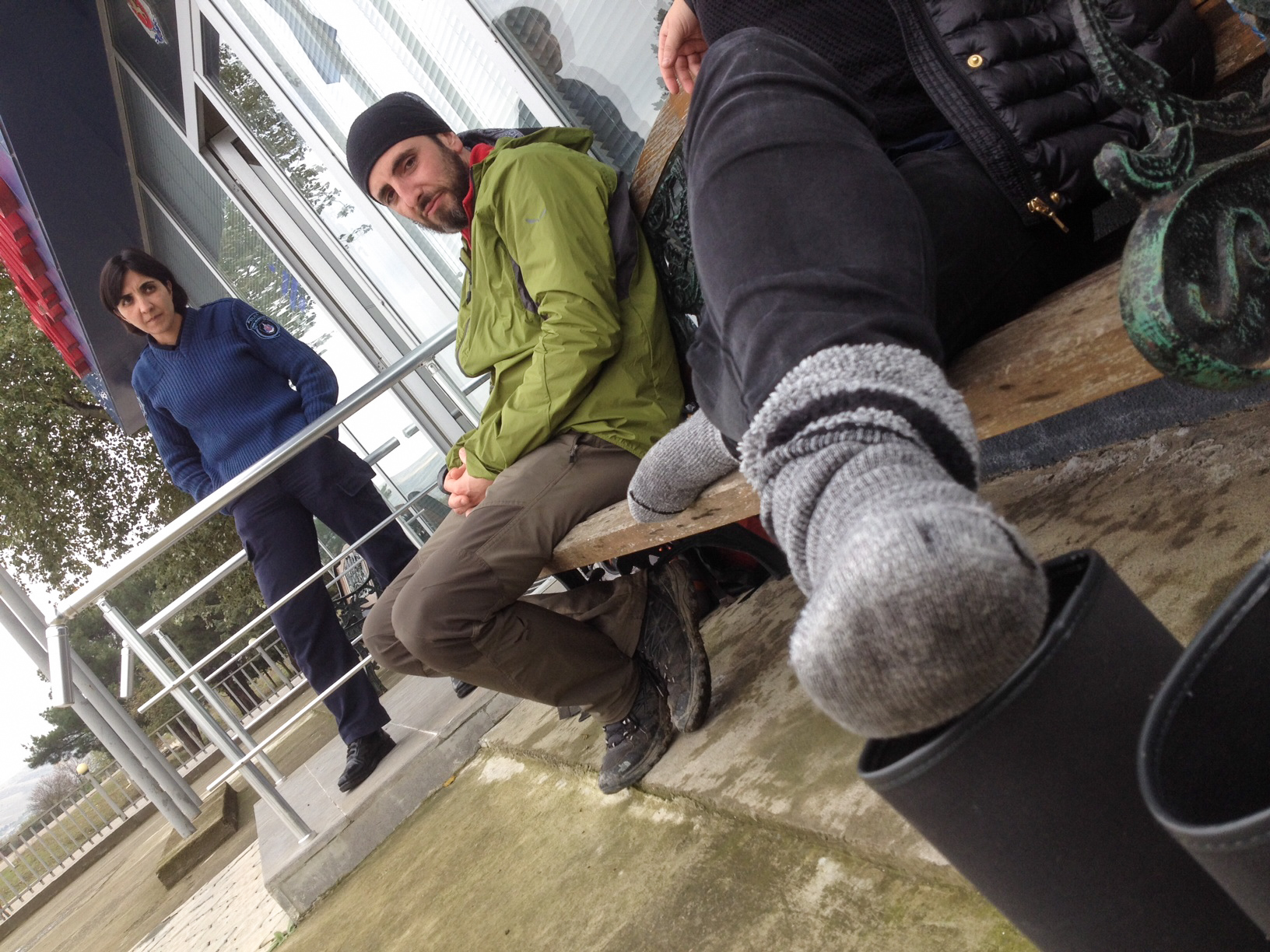
A shepherd packs his horse. His gift—directions to the next village in southern Georgia.
Paul Salopek
Some anthropological models endeavor to explain the Darwinian rationale of kindness.
“Kin selection” predicts that you will sacrifice your own well-being in direct proportion to your relatedness to the other humans you choose to help. The genetic math here gets a little tricky. And this hypothesis fails to account for how often we act—as humans constantly do—on behalf of biological strangers.
Group fitness theory, championed by the sociobiologist E.O. Wilson, points to the clear evolutionary benefits of empathy in the survival of “collaborative” groups of humans versus aggressively “selfish” ones. Throw in the advantages of cooperating, of sharing, while raising our big-brained, slow-maturing babies, and this sounds about right. We are a complicated hive.
I am walking the world.
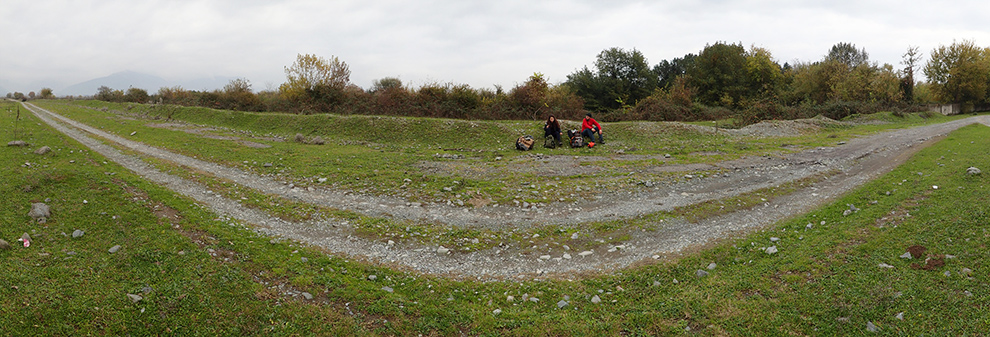
I knock on unfamiliar doors. I call out to the tents of unknown people. I slog onwards from Dmanisi, out of Georgia, into a vast and rumpled topography of human want and compassion.
Tonight, I sleep in the dilapidated farmhouse of a woman named Sveta. Her boy sits at a small oil-clothed table watching Hindi soap operas. A wood burning stove. Mice padding the rafters. Sveta displays, laughing, the iron bar she keeps by her bed. Her club. We sip a tea of wild herbs.
Do not be afraid.