What happens must be slow,
Must go deeper even than hand’s work or tongue’s talk,
Must rise out of the flesh like sweat after a hard day,
Must come slowly, in its own time, in its own way.
— “In Texas,” by May Sarton
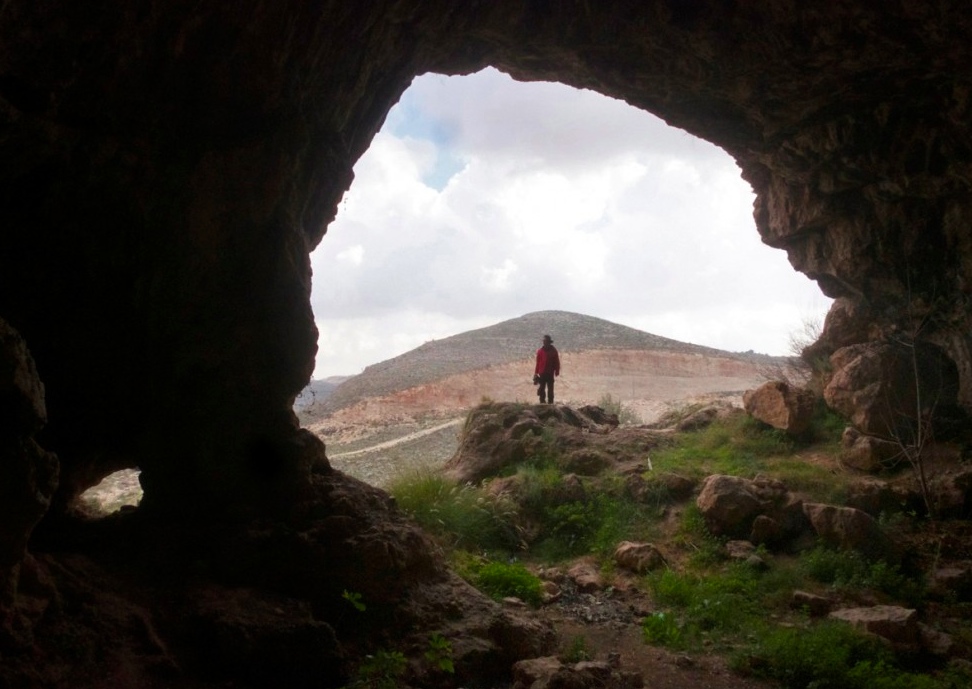
To celebrate my two-year anniversary with the Out of Eden Walk (during which time Paul Salopek traipsed from Saudi Arabia to Georgia), I took a week-long break from the Santa Fe, New Mexico-based office. It was my intent to explore some nearby regions of the Southwest that I’d only wondered about through a car window when relocating from the East Coast in 2013. (“Nearby” in this context meant three hours of driving at most — arm’s reach in a landscape whose vastness can provoke the same muted feeling of panic as looking out on an ocean.)
With apologies to Paul for the vehicular reliance, I planned a route that took me from Santa Fe to Alamogordo, New Mexico, where I saw the 275 square miles of zapping-white gypsum dunes known as “White Sands,” then veered south to El Paso, Texas, and returned by way of the small town of Truth or Consequences, near New Mexico’s Gila wilderness. Despite the imperfect time of year for bird-watching (early September), I made a final stop on the return loop at the Bosque del Apache National Wildlife Refuge, an important wintering home for tens of thousands of Sandhill Cranes, Snow Geese, and other migratory birds.
Every 100 miles across the route of the Out of Eden Walk, Paul records a storytelling vignette that we call a “Milestone”: a panoramic shot of the landscape, a photo of the sky, some audio and video, and a standard mini-interview with nearest human about identity. I decided to record a few Milestones of my own along my New Mexico and Texas route. I discovered that asking strangers the Walk’s three ritual questions — Who are you?, Where are you from?, and Where are you going? — quickly takes you from breaking ice to breaking bread. And, conveniently, the American Southwest has always lent itself well to film and video, which offset my lack of technical skill and equipment (I used an iPhone).
As OOEW’s Project Manager, I spend, obviously, a good many of my waking hours thinking about the Walk. Such a level of intimacy with the project drives home the realization that, though the journey may belong to us all, only Paul is living and breathing it 24 hours a day, seven days a week, in his utterly committed way. There have been significant ripple effects. In this year alone, 22,000 students at the Philmont Scout Ranch took up their own version of slow journalism; 10,000 students from over 900 classrooms in 40 countries will develop learning skills inspired by the Walk on the publicly-available Out of Eden Learn platform; 542 Kickstarter backers helped us raise over $50,000 to keep Paul walking through Year 3; our dedicated caravan of volunteer translators put out 50 dispatches in 16 languages, with more on the way; and one mule, the now-famous Kirkatir, found a peaceful retirement home in the foothills of the Caucasus.
These happy convergences, where the ideas behind the Walk intersect with the reality of Paul living it, are not surprising when one absorbs the implications of the simple fact that the Out of Eden Walk is now Paul’s life, and the strangers he encounters, some of whose stories he tells along the way, are his extended family. There are no breaks, no nights off, no weekends. This is not a way of being all of us can — or should feel compelled to — undertake. But existing at such a high velocity of curiosity, if not physical pace, as Paul’s doesn’t require a National Geographic fellowship, pack mule, or nonprofit organization. All it requires, ironically, is slowing down. Slowing down to observe and interact with our surroundings allows us to experience them in a deeper way: A fuller realization of this is one of the many gifts Paul’s journey has given me.
So I was only half-surprised to discover that I couldn’t leave the Walk in the office.
Over 730 days, across the expense-reporting and tax-filing, and the whole mundane-to-magical spectrum of tasks involved with maintaining this specific nonprofit, the stories had, as unintentionally and as inevitably as water drips from a stalactite, somehow been absorbed into my heart and my head, and now I carried them around with me.
Incorporating the Walk into my road trip in this way reminded me that the Out of Eden Walk project does belong to everyone. It is a collective journey. One of its core missions is to share the stories ‘behind the headlines’ — stories of the commonplace in which the extraordinary often hides — and inspire followers to do the same in their own lives.

Julia Payne

Julia Payne

Julia Payne

Julia Payne

Julia Payne
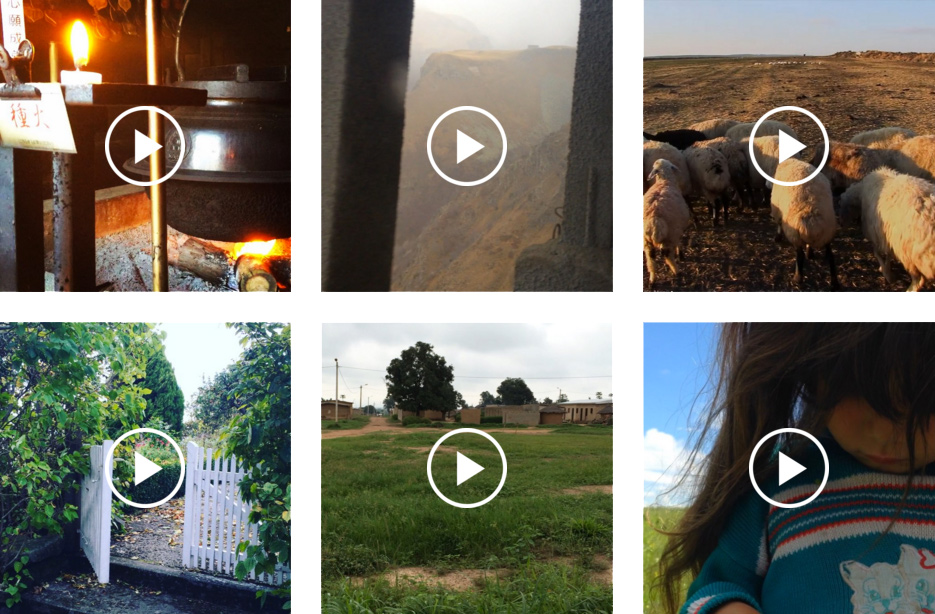
Later in September, we asked followers to share their own milestone “glances” via social media, as part of the Walk’s first Community Milestone.
The global response was a heartening indication of the impact of Paul’s storytelling — and the mindfulness with which those affected by it incorporate his methods into their own lives. We look forward to sharing more community milestones in the future.
How to participate:
Take a ten- to twenty-second video of the unique spot on Earth that you occupy, inspired by Paul’s Glances videos, or show us who you are by recording yourself answering the usual Milestone questions: “Who are you? Where are you from? Where are you going?”
Then, share your videos with us on Twitter or Instagram by mentioning @outofedenwalk and using the hashtag #digitalcampfire. At certain intervals, we’ll collect the results and publish a selection in a new Lab Talk blog post, showing the faces that give a grassroots pulse to this community of walkers — and how diverse are our ideas of home.
Julia Payne manages the Out of Eden Walk nonprofit organization.